Learn about the biodiversity of Morrison Creek headwaters

Comox Valley Nature is pleased to host the following free lecture at our December online meeting:

Title: Biodiversity of the Morrison Creek Headwaters
Speakers: David Stapley, Joy Wade and Chanchal Cabrera
Date: Sunday, December 11, 2022
Time: 7:00 p.m. PT

This webinar is facilitated by the Canadian Society of Environmental Biologists and is open to the public (see the registration link below).

Morrison Creek lamprey

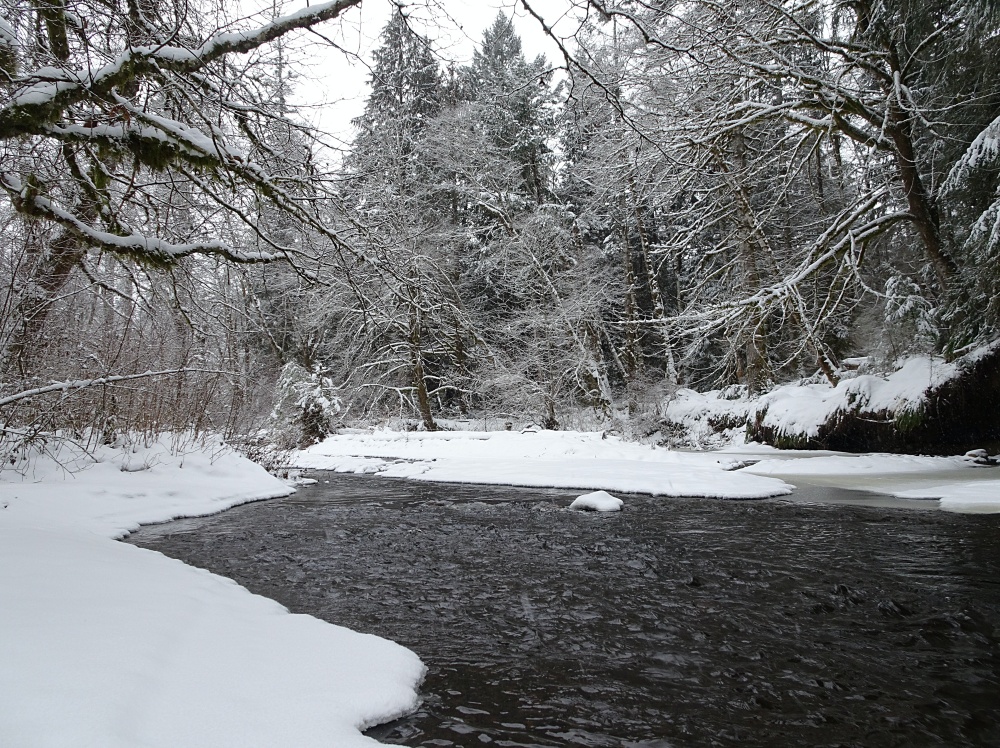
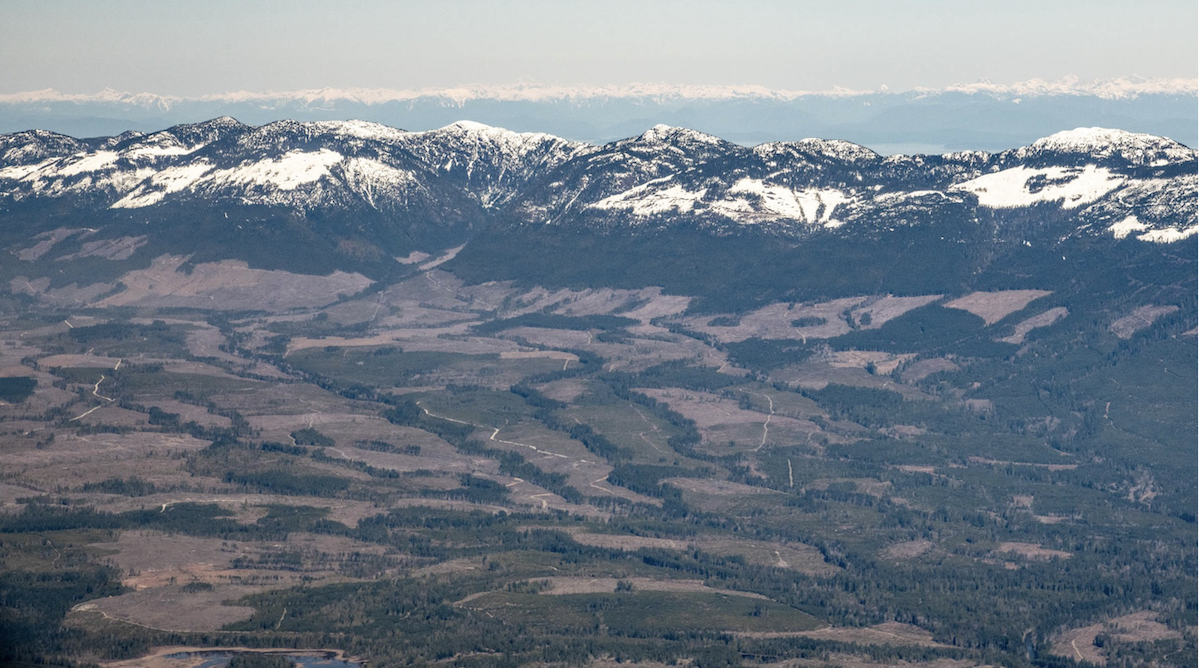
The unique environmental features of the Morrison Creek headwaters have resulted in a
biologically rich ecosystem, home to many endangered and threatened species including the one-of-a-kind Morrison Creek lamprey. Volunteers with the Morrison Creek Streamkeepers and with the Comox Valley Land Trust are trying to preserve a forested area around the Morrison Creek headwaters. The presenters will share their knowledge of the habitat and species of the headwaters and of the Comox Valley Land Trust project to protect them.

About the speakers

David Stapley was program manager for the Comox Valley Land Trust (CVLT) Conservation Partnership program for ten years and is currently a CVLT director. David has been a strong advocate for improved environmental policies and practices and played a key role in the Conservation Partnership’s notable conservation successes between local governments and the ENGO sector.

Joy Wade is a research biologist who works to address questions concerning the conservation of (what some may call) uncharismatic species at risk and their habitat. Most of that work focuses on scientific activities to help manage the species to minimize harm and ensure the environment is suitable to help them survive. She has worked on issues for Cowichan Lake lamprey and Morrison Creek lamprey for more than ten years, and more recently on species like Rocky Mountain ridged mussel, speckled dace and Pacific lamprey.

Chanchal Cabrera is a medical herbalist with 35 years of clinical practice. She runs a private herbal medicine clinic with a specialty in holistic oncology, and is also a certified Shinrin Yoku (forest bathing) practitioner, a certified Master Gardener and a certified Horticulture Therapist. Chanchal lives on Vancouver Island, British Columbia where she and her husband manage Innisfree Farm and Botanic Garden, a 7 acre internationally registered botanic garden. Chanchal is a former CVLT director.

Registration

“Seating capacity” for the talk is limited, and you need to register in advance. You can check the computer requirements for attendees here.

Register here

After registering, you will receive a confirmation email with instructions for joining the webinar.

If you are new to Comox Valley Nature, find out more about us here.

Although CVN lectures are free, donations of any size from non-members who attend are always appreciated ($4.00 is suggested).

Posted in Conservation and Restoration, Ecology, Guest Speakers | Comments Off on Learn about the biodiversity of Morrison Creek headwaters

Colourful coral fungus!

From an email by Jocie to the Botany Group on November 24. Click a photo to enlarge it.

Here are photos of a lovely red/pink coral fungus that I think you will all enjoy. The below message and photos are from Sandra P.

I am a volunteer and key contact for the Roy Creek Salmonid Enhancement Society. I came across this fungus this morning while at our fish hatchery for Roy Creek. This fungus was near the water source by the spring. Can you tell me what it is — very pretty. First I thought it was a pom pom on the ground but with a stick I poked gently and broke 2 pieces, realizing that it’s a fungus. Is it rare? poisonous?

This is a coral fungus in the genus Ramaria. There are a few species it could be…hard to determine without microscopic work and chemical tests according to Alison M. Could be R. araiospora or R. stunzii. Not toxic, but not a desired edible. Less common than the beige and yellow ramarias.

Posted in Plants and fungi | Comments Off on Colourful coral fungus!

Recording available for talk on impacts of salmon farms on wild salmon

Comox Valley Nature, facilitated by the Canadian Society of Environmental Biologists, recently presented the following webinar:

Title: What we need to do to rescue wild salmon from further decline
Speaker: Alexandra Morton
Date: Sunday, November 20, 2022

If you missed this event or would like to see it again, CSEB has made the recording available here. To access it you will need to provide your name and email address.

For more information about this talk, see the announcement in our earlier post.

Posted in Conservation and Restoration, Ecology, Guest Speakers, Shoreline and Marine | Comments Off on Recording available for talk on impacts of salmon farms on wild salmon

Miracle Beach part 2: Mosses plus

From an email by Jocie to the Botany Group on November 13. Click a photo to enlarge it.

Here is part 2 from our Miracle Beach outing on November 7: mosses and a taildropper slug. Thanks Veronique, Alison and Karen for submitting so many wonderful photos. I’ve decided to leave out the lichens for now, but we’ll revisit these on another winter walk, and I will keep the lichen photos on file.

  1. Rough goose neck moss, a.k.a. electrified cat’s-tail moss (Hylocomiadelphus triquetrus a.k.a. Rhytidiadelphus triquetrus)
  1. Trachybryum moss (Homalothecium megaptilum)
  1. Random assorted botanists looking at moss and lichen
  1. Stairstep moss (Hylocomium splendens)
  1. Dusky fork moss (Dicranum fuscescens) tufts on Douglas-fir
  1. Menzies’ tree moss (Leucolepis acanthoneura)
  1. Douglas’ neckera (Neckera douglasii): Note the long setas on the sporophytes.
  1. Juniper haircap moss (Polytrichum juniperinum)
  1. Liverwort: probably the tree ruffle (Porella navicularis)
  1. Yellow-bordered taildropper slug (Prophysaon foliolatum)
Posted in Field Trips, Plants and fungi | Comments Off on Miracle Beach part 2: Mosses plus

Miracle Beach part 1: Fungi

From an email by Jocie to the Botany Group on November 13. Click a photo to enlarge it.

We saw a wealth of things at Miracle Beach Park on November 7. Here’s Part 1, the fungi (mosses are coming up later). One of the most fun was Bondarzew’s polypore—as we circled an old snag they progressed from small to large! Thankfully, Alison & Loys were along to help out with identification.

  1. Bondarzew’s polypore (Bondarzewia occidentalis)
  1. Jelly rot/trembling phlebia (Merulius tremellosus)
  1. Orange chrysomphalina (Chrysomphalina aurantiaca)
  1. Sulfur tuft (Hypholoma fasciculare)
  1. Northern red belt (Fomitopsis mounceae)
  1. Turkey tail (Tremetes versicolor)
  1. Dyer’s polypore (Phaeolus schweinitzii)
  1. Veiled polypore (Cryptoporus volvatus)
  1. Circling a snag to look at Bondarzewia
Posted in Field Trips, Plants and fungi | Comments Off on Miracle Beach part 1: Fungi

Magical fungi!

From an email by Jocie distributed to the Botany Group on November 12. Click a photo to enlarge it.

Some fungi are appearing, though so scarce compared to a “typical year”—whatever that is! Here are a few photos sent in by Douglas P. and Kim D.

  1. The classic fly agaric (Amanita muscaria) from Douglas’s yard in east Courtenay. One of the most iconic mushrooms, with good reason!
  1. Rounded earth stars (Geastrum saccatum). This is truly one of the strangest fungi around…it looks like a miniature plastic rocket launcher. Kim found these on a walk to the Morrison Creek Headwaters with the CV Land Trust. We’ll explore this area with the botany group sometime.
  1. The fir-cone mushroom (Strobilurus trullisatus) is turning up everywhere right now, look out for it on Douglas-fir cones.
Posted in Plants and fungi | Comments Off on Magical fungi!

Fungi from Strathcona Park

This report by Alison M. was distributed to the Botany Group by Jocie on November 5. Click a photo to enlarge it.

In the last week of October we have been into three locations in the Park in the hopes that the recent rains have awakened the fruiting bodies of some fungi—Mckenzie Lake and Meadows on the 23rd (on Sunday to avoid the logging operations along Murex Main), Divers Lake on the 26th (where the gate was open!!) and Elk River Trail on the 28th.

There has been enough moisture, especially on the trails along Highway 28 that benefit from the weather coming in from the west coast inlets. However, not a single chanterelle—their look-alikes yes, namely the ubiquitous wooly pine spike Chroogomphus tomentosus (photo 1) and false chanterelle Hygrophoropsis aurantiaca, golden on the cap, bright orange on the underside (photo 2), and also the scaly chanterelle Turbinellus floccosus (photo 3).

We did find the unusual so-called blue/black chanterelle—Polyozellus atrolazulinus—on the ERT, a little past its best, with some hypomyces, but the general form and the veining on the underside are still clear. (photos 4 & 5).

On all the trails, clusters of the honey mushroom Armillaria mellea group were prolific. Most of the examples would be Armillaria ostoyae that parasitizes conifers ( photos 6, 7, 8)—the clusters of large shroom with obvious veil ring, scaly on top can be a whole range of browns. The spore print is white as can bee seen in photo 8.

Apart from the Polyozellus on the ERT, stunning was the Stropharia aeruginosa (iNat gives verdigris agaric as the common name), which when young has a cap like blue porcelain (photos 9 and 10). Distinctive features of the Stropharia genus include the very wooly surface of the stipe, and when the cap opens some of the wooly particles cling to the rim of the cap in a fringe.

Posted in Plants and fungi | Comments Off on Fungi from Strathcona Park

Learn about the impacts of salmon farms on wild salmon

Comox Valley Nature is pleased to host the following free lecture at our November online meeting:

Title: What we need to do to rescue wild salmon from further decline
Speaker: Alexandra Morton
Date: Sunday, November 20, 2022
Time: 7:00 p.m. PT

This webinar is facilitated by the Canadian Society of Environmental Biologists and is open to the public (see the registration link below).

Alexandra Morton will provide a brief overview of the impact of marine salmon farms on wild salmon, the current state of the salmon farming industry, and the powerful new science being used to understand what we need to do to rescue wild salmon from further decline.

About the speaker

Alexandra Morton settled in a remote archipelago on the BC coast in 1984 to conduct a long term study of the vocalizations of orca. When it became clear that the industrial salmon farms flooding into the area were harming the whales and the wild salmon that the whales depended on, she began a 35-year effort to convince government to halt the damage they were encouraging.

She published dozens of scientific papers on the impact, built a research station, filed five lawsuits and never lost, and then occupied the farms with First Nations for 280 days. This finally began the process of removing the farms from the archipelago and increasing the numbers of wild salmon. Morton continues trying to protect the rest of the coast by bringing the evidence of cover-up and the impact of industrial salmon farming on wild salmon to the politicians regulating the industry.

Registration

“Seating capacity” for the talk is limited, and you need to register in advance. You can check the computer requirements for attendees here.

Register here

After registering, you will receive a confirmation email with instructions for joining the webinar.

If you are new to Comox Valley Nature, find out more about us here.

Although CVN lectures are free, donations of any size from non-members who attend are always appreciated ($4.00 is suggested).

Posted in Conservation and Restoration, Guest Speakers | Comments Off on Learn about the impacts of salmon farms on wild salmon

Botany highlights from upper Puntledge trails

From an email by Jocie to the Botany Group on October 29. Click a photo to enlarge it.

Last Saturday we walked along the east side of the upper Puntledge River trails. We took a look at the bog, and walked as far as “Palm Beach” then looped back above the river. Despite the drought the Puntledge bog was looking quite moist and healthy!

A few highlights:

  1. Bog cranberry (Vaccinium oxycoccos)
  1. Sweet gale (Myrica gale): fruiting catkins
  1. River view
  1. Leathery grape fern detail (Sceptridium multifidum, formerly in the genus Botrychium) (Photo by Ruth Shapka)
  1. Dyer’s polypore (Phaeolus schweinitzii): a handsome brown suede!
  1. “The Unknown Polypore”: not able to ID this one…but amazing the way it grows right through and around twigs, leaves and needles.
  1. Fran showed us a bigleaf maple with blotches of speckled tarspot fungus (Rhytisma punctatum).
  1. Speckled tarspot closeup
Posted in Field Trips, Plants and fungi | Comments Off on Botany highlights from upper Puntledge trails

Recording available for talk on a regional parks service

Comox Valley Nature, facilitated by the Canadian Society of Environmental Biologists, recently presented the following webinar:

Title: Towards a Regional Parks Service
Speaker: Mark Harrison (CVRD Manager of Parks)
Date: Sunday, October 23, 2022

If you missed this event or would like to see it again, CSEB has made the recording available here. To access it you will need to provide your name and email address.

For more information about this talk, see the announcement in our earlier post.

Posted in Guest Speakers | Comments Off on Recording available for talk on a regional parks service