Rare orchid from White Ridge

Catching up with communications in the Botany Group during July. This is from an email from Jocie to the group on July 20.

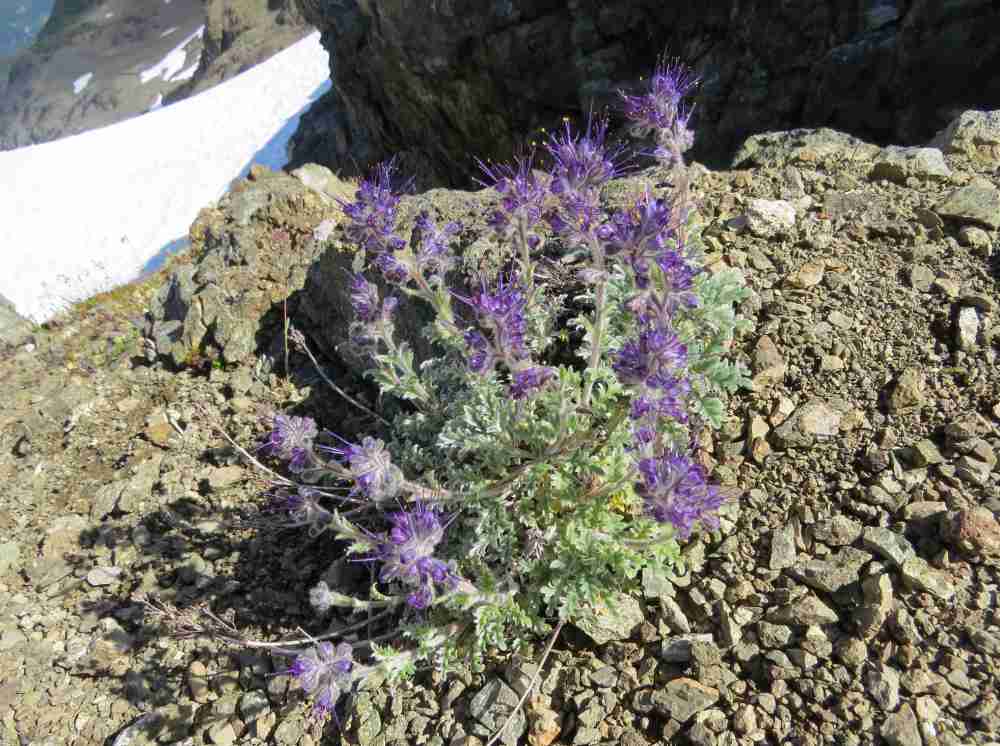
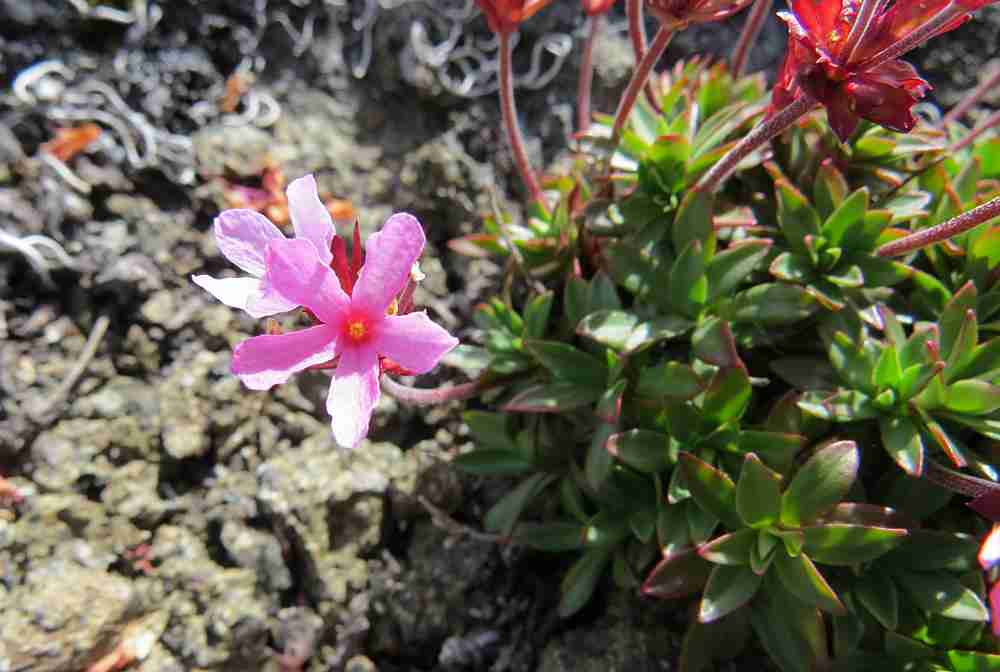
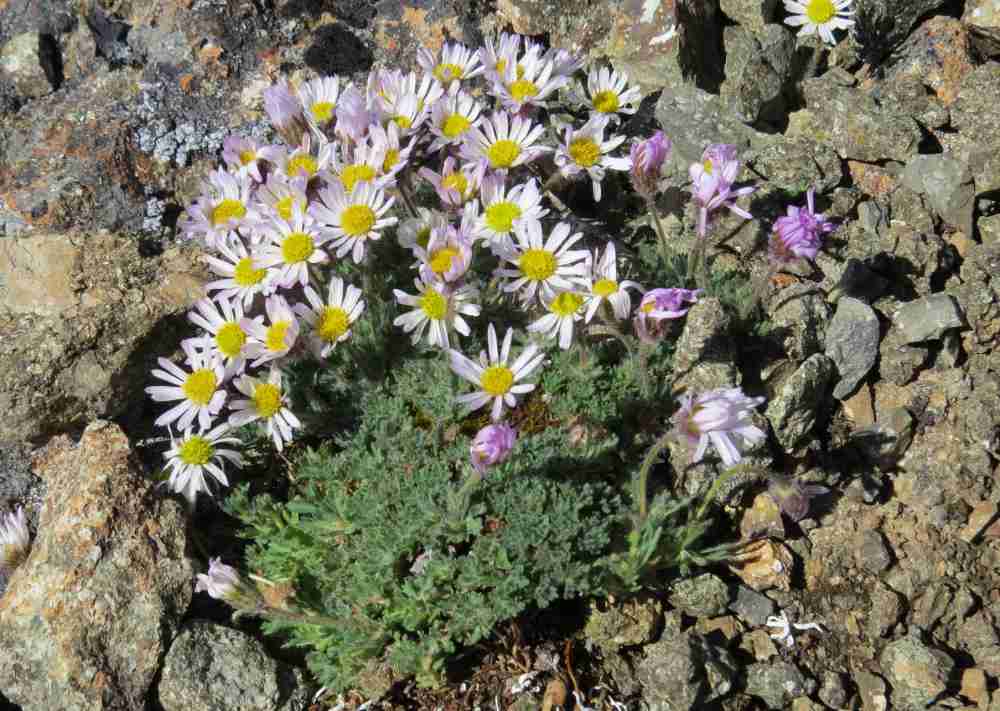
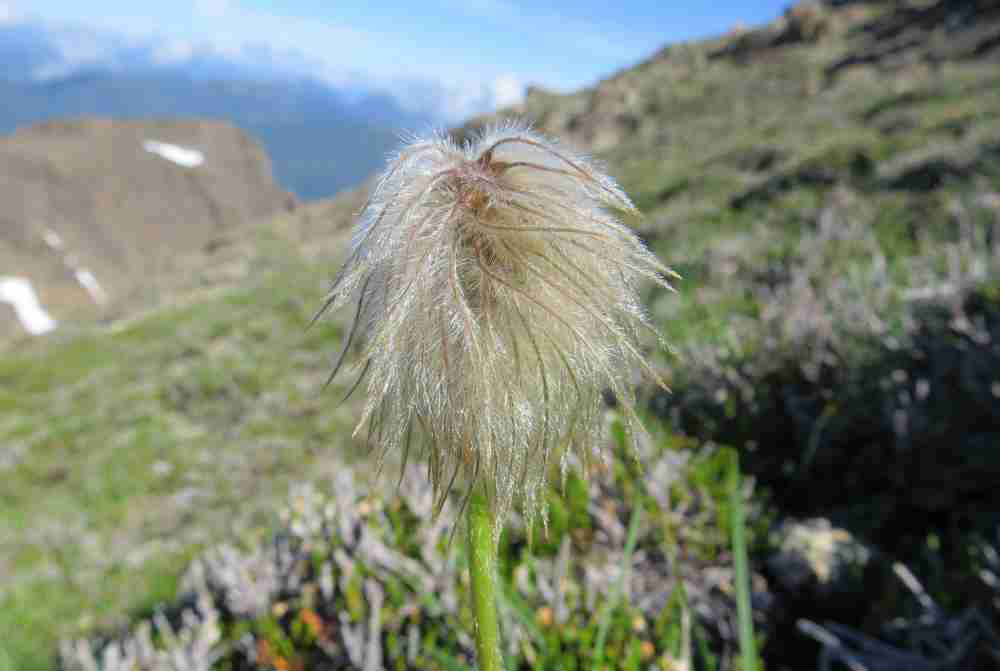
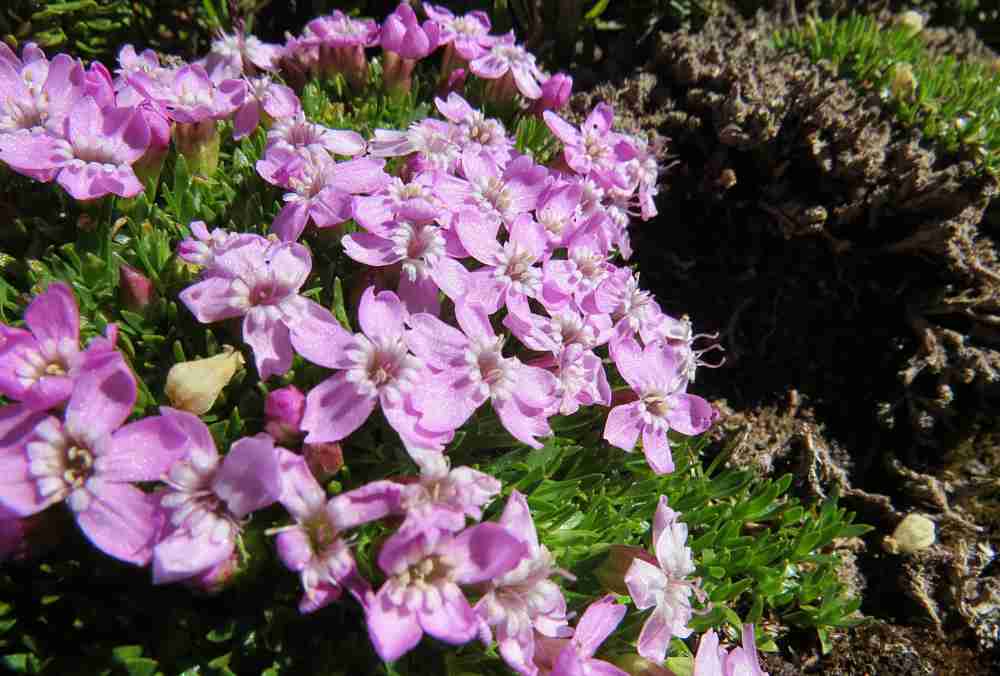
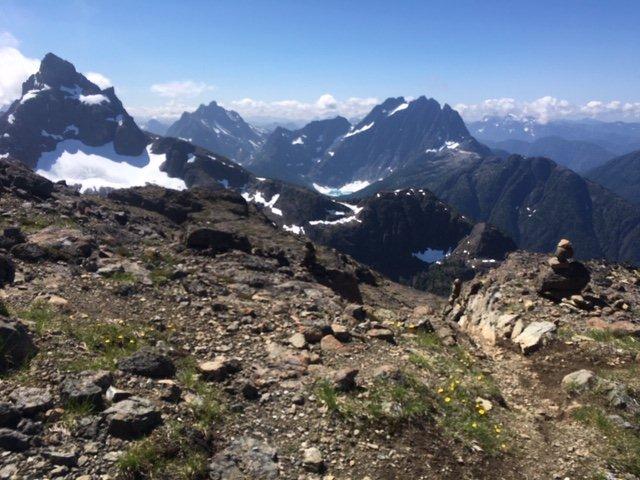
Frank Hovenden and Jack Bindernagel recently did a trip to White Ridge, a provincial park that is accessed from near Gold River. White Ridge has a lot of limestone and is home to many rare and unusual plants. It isn’t easy to get to—the logging roads are rough and the terrain is steep for hiking. So thanks to Frank and Jack for sharing their botanical adventure with the mountain ladyslipper with us!  This the only place that this orchid has been found on Vancouver Island.

Here are a few notes from Frank (all photos by Jack):

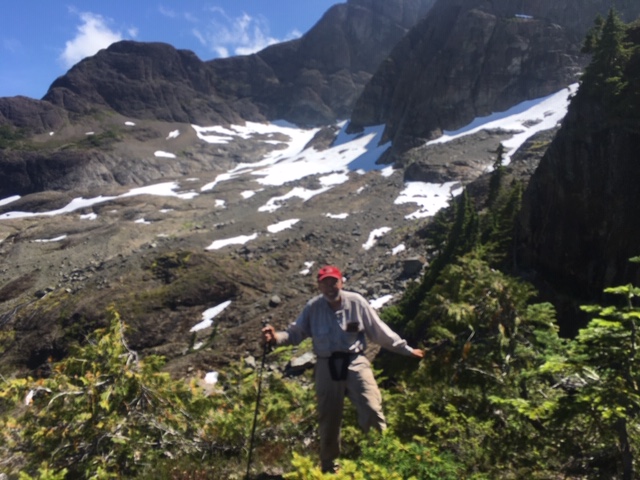
I revisited White Ridge this weekend after an absence of 20 years, hoping to relocate the mountain ladyslipper (Cypripedium montanum).  Orchid numbers have recovered on Site 1 following the avalanche in 1999.  On Site 2 the numbers have increased.

1. A closeup of the orchid.

2. Frank with the orchid patch.

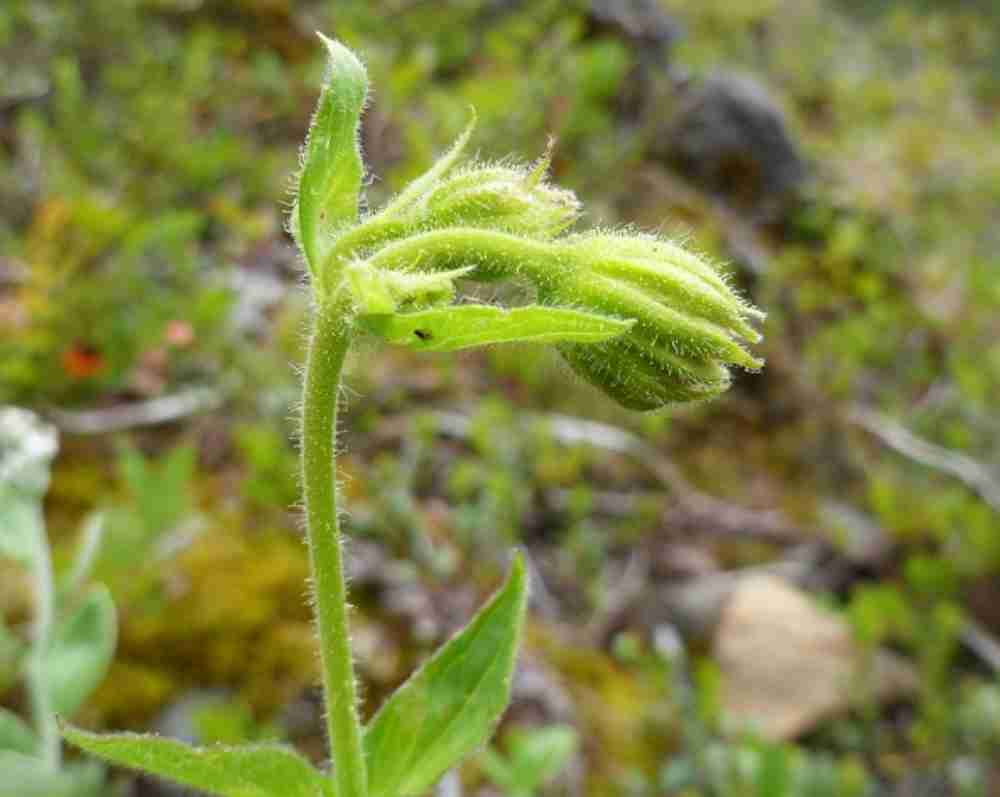
3. Western sweet-vetch (Hedysarum occidentale) growing in a limestone feature.  

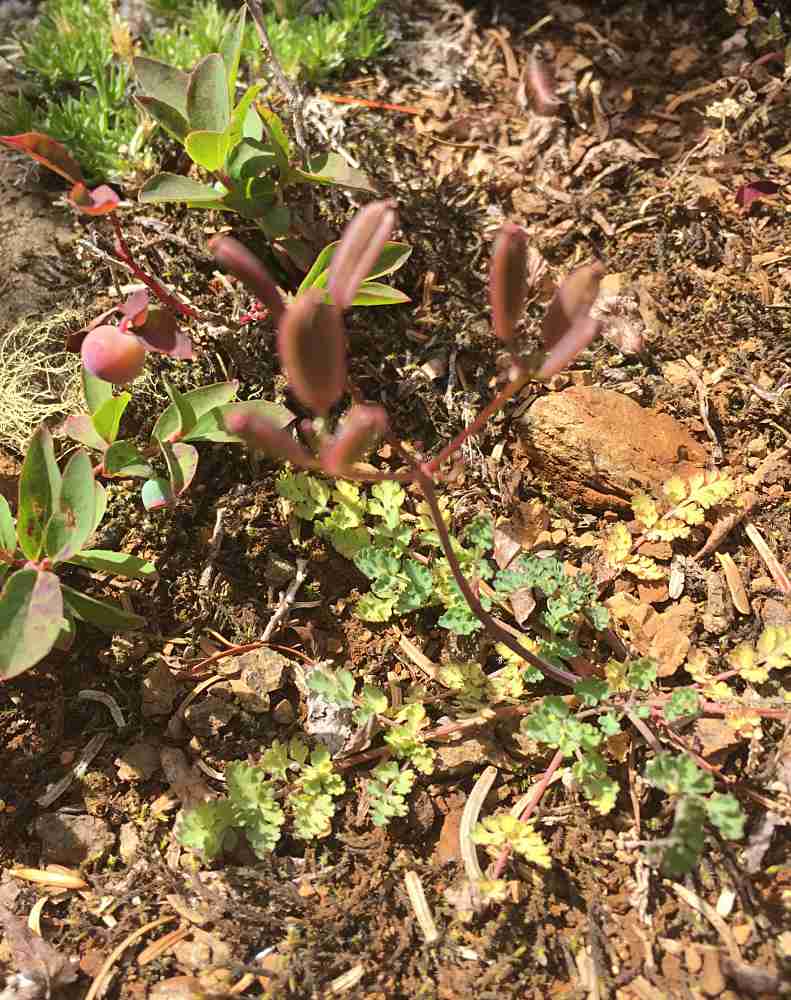
4. Spear-fruited draba (Draba lonchocarpa), a rare and interesting plant.

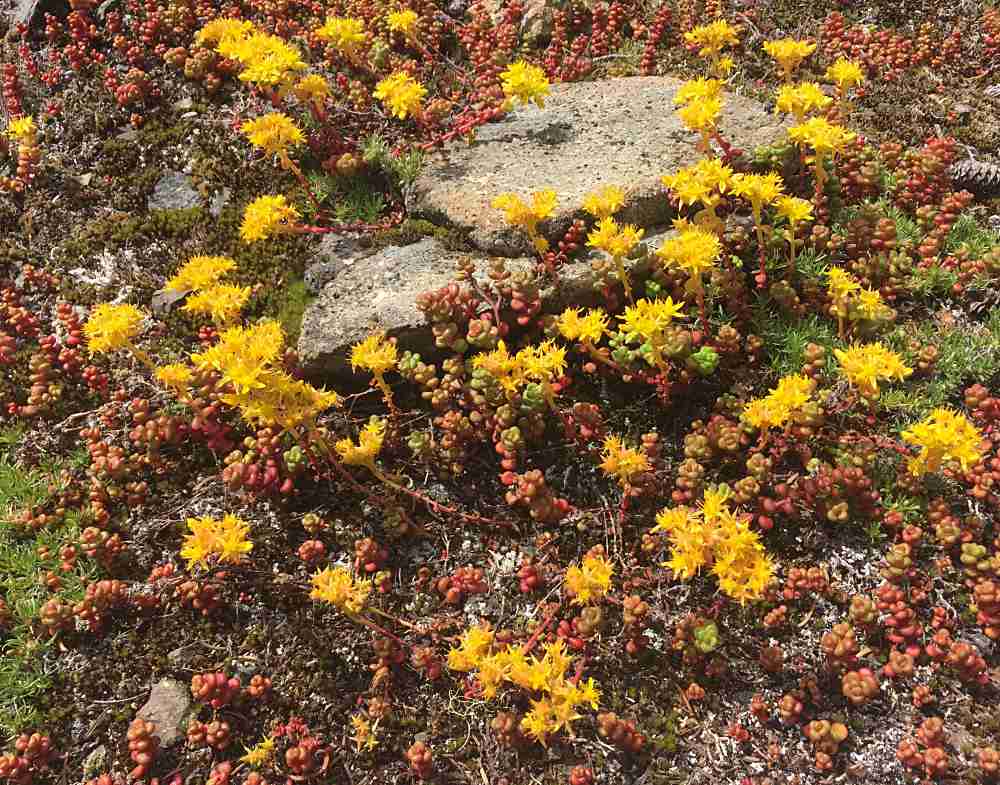
5. Spotted saxifrage (Saxifraga bronchialis), which was abundant. 

Posted in Plants and fungi | Comments Off on Rare orchid from White Ridge

Tennant Lake flowers

Catching up with communications in the Botany Group during July. This is from an email from Jocie to the group on July 19.

Last week I was camping with the family at Ralph River (south end of Buttle Lake, in Strathcona Park). Our trip included a hike up to Tennant Lake, a place I hadn’t been before. To get to the trailhead, one has to drive through the mine and then walk along the road for about a kilometre, passing the Arnica Lake/Phillips Ridge and Upper Myra Falls trailheads. The Tennant Lake trail follows an old service road that heads straight uphill over a jumble of rough granite. After about 2 hours of uphill slogging, one reaches the lake and the sublime subalpine landscape. Always worth it!

The chunky granite with a trickle of water was just the right habitat for pink monkeyflower (Erythranthe lewisii) which was abundant. Also, some nice green and bronze mountainbells (Anticlea occidentalis) were blooming.

There were more plants that looked interesting, but family members kept a brisk pace so I couldn’t stop and look at much…but then again, if I got looking at plants I never would have made it! Tennant Lake was lovely and we had some great views of Mt Myra.

Off topic from botany, we also had a nice look at a Pacific tree frog perched on a granite boulder.

Posted in Plants and fungi | Comments Off on Tennant Lake flowers

Wintergreens etc.

Catching up with communications in the Botany Group during July. This is from an email from Jocie to the group on July 18.

Here is a message from Gary and Katy with some plants of interest:

Below are photos of wintergreens and allies at the back of the woodlot Katy and I have on Forbidden. Thanks to Al Hopwood for his photos.

Pinesap (Hypopitys monotropa)

I think of these plants as being grouped into:

CHLOROPHYTES: Pink wintergreen (Pyrola asarifola) and white-veined wintergreen (P. picta)

SAPROPHYTES: Pinesap (Hypopitys monotropa) and Indian-pipe (Monotropa uniflora)

PARASITES: Leafless wintergreen (P. aphylla). This is blue-listed. It indirectly parasitizes Douglas fir through mycorrhizal fungi.

In addition there were other saprophytes, including gnome plant, pinedrops, and western coralroot. I have never seen such numbers of these leafless flowers before. Is it the weather? A harbinger of mushrooms to come?

Posted in Plants and fungi | Comments Off on Wintergreens etc.

Flowers from Quadra Island

Catching up with communications in the Botany Group during July. This is from an email from Jocie to the group on July 16.
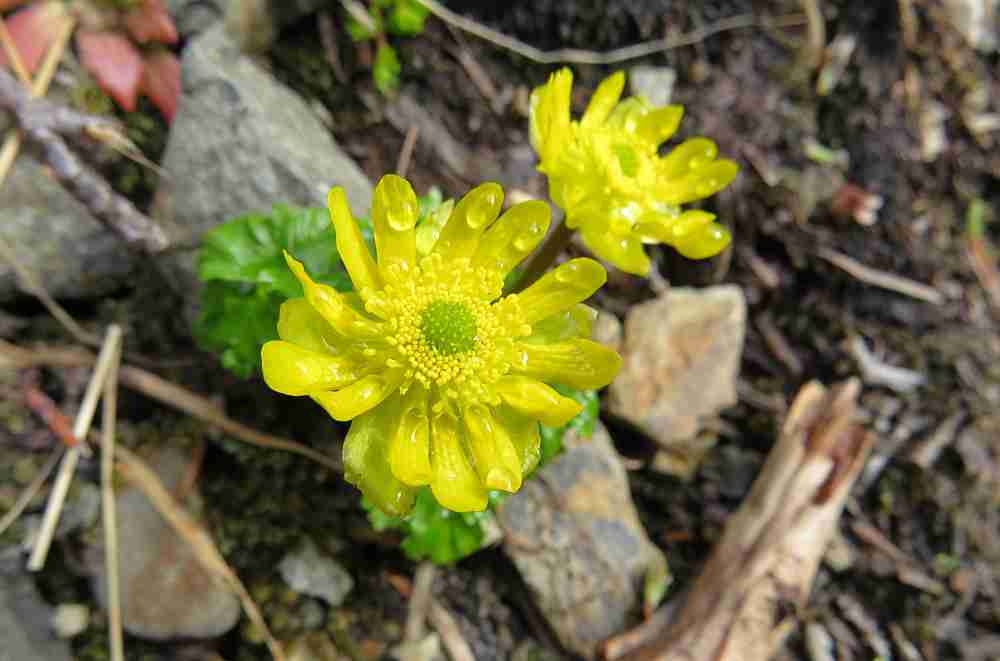
Here are some flower photos from John B. from Quadra Island, with a few notes.

  1. Scouler’s harebell (Campanula scouleri): from the Tsa Kwa Luten campground septic field. This plant is also found at spots along the Puntledge River and other sporadic locations in the Comox Valley. Note the exceptionally long style.
  1. Yerba buena (Clinopodium douglasii): on a rock bluff next to the beach at Open Bay on Quadra. This strongly scented plant is a member of the mint family. It was traditionally used to make tea, and hunters rubbed it on their bodies to mask their human scent.
  1. Hooded ladies’ tresses (Spiranthes romanzoffiana): found on Eagle Ridge on Quadra “one plant by itself exposed to blazing sun and weather, growing out of parched dry moss with solid rock underlay.” 
  1. Common eyebright (Euphrasia nemorosa). A pretty little flower, but introduced from Europe. Likes roadsides and waste places.
Posted in Plants and fungi | Comments Off on Flowers from Quadra Island

Gnomes and ghosts

Catching up with communications in the Botany Group during July. This is from an email from Jocie to the group on July 16.
Fred N. found a new population of gnome plant (Hemitomes congestum) on the Nymph Falls midland trail. There seems to be a lot of gnomes popping up this year!
Ghost pipe (Monotropa uniflora) is also putting on a nice showing just now. Here’s a photo of some that I saw yesterday [July 15] on the Wild Ginger trail near Ralph River campground up at Buttle Lake. 

Posted in Plants and fungi | Comments Off on Gnomes and ghosts

More estuary blooms

Catching up with communications in the Botany Group during July. This is from an email from Jocie to the group on July 10.

A not-to-be-missed July event is the blooming of Henderson’s checker-mallow (Sidalcea hendersonii) in the Komoks estuary. This is a large, showy plant in the mallow family (Malvaceae) that looks a bit like a hollyhock. Another name for it is “marsh hollyhock.”

Another plant that grows nearby in the same habitat is the springbank clover (Trifolium wormskjoldii), which peaks in late June (photographed here on June 25). First Nations peoples up and down the coast were very familiar with this plant, as the fleshy white rhizomes were dug up and harvested in the fall. According to Plants of Coastal British Columbia, the flavour is “sweet, similar to that of young peas.” Today, very few people are aware of the existence of this historically significant clover. 

Springbank clover (Trifolium wormskjoldii)

To see these plants, park at the Rotary viewing stand on the Dyke Road and follow the small trail from the corner of the viewing stand (Courtenay side). There are large clumps of checker-mallow there, and there may still be some springbank clover in bloom also. There’s more clover along the shore towards Comox, in front of the viewing stand (watch your footing here and proceed slowly!). 

Posted in Plants and fungi | Comments Off on More estuary blooms

July blooms

Catching up with communications in the Botany Group during July. This is from an email from Jocie to the group on July 9.

It’s bloomin’ July! (but doesn’t feel much like it). Here are a few flower highlight photos from John B.:

Swamp gentian (Gentiana douglasiana) from the Mount Washington Road bog. 

Grand collomia (Collomia grandiflora) from the Trent River estuary in Royston.

Pacific rhododendron (Rhododendron macrophyllum) from Rhodo Lake near Nanoose (accessible on a logging road). Here’s a link with more information about the rhodo: http://nanaimorhodos.ca/rhododendron-lake/

Posted in Plants and fungi | Comments Off on July blooms

Interesting plants at Kin Beach

Catching up with communications in the Botany Group during July. This is from an email from Jocie to the group on July 7.

Here are some notes from Helen R. about some interesting plants at Kin Beach:

These two plants, photographed by Terry Thormin, are blooming at Kin Beach.

The harvest brodiaea,  Brodiaea coronaria, is mostly in the tall grass between the playground and the huge burn pile which is covered with a tarp.

Harvest brodiaea (Brodiaea coronaria)

The prolific petrorhagia,  Petrorhagia prolifera, was a great surprise, as it used to be in the park many years ago in the 1990s, but has not been seen again until now.  It is a member of the pink family, Caprophyllaceae. It’s about 10’’ high, very slim, and is to the left of the sidewalk going down to the beach, and towards the heart sculpture.  There are lots of plants.

Posted in Plants and fungi | Comments Off on Interesting plants at Kin Beach

Paradise Meadows update (July 1)

Catching up with communications in the Botany Group during July. This is from an email from Jocie to the group on July 1.

Here are some updates from Alison M. on what is in bloom at Paradise Meadows [on July 1]. The snowmelt is quite rapid this year, so the flowers are in full swing:

The past two weeks of mostly warm sunny weather have brought on many blooms in Paradise Meadows, some earlier than expected.  So the insectivorous butterwort (Pinguicula vulgaris) and the green bog orchid, (Platanthera  hyperborea?) are widespread. We saw a couple of specimens of the scented white bog orchid (Platanthera dilatata) just beginning to open. 

Common butterwort (Pinguicula vulgaris)

By the way,  there is a researcher from VIU (Jasmine Janes) who is conducting a research project on orchid pollination and will be up in the Meadows very soon to set up her little cameras, which will be identified with signs.

We were also fortunate last Sunday to catch the nagoonberry (Rubus arcticus ssp. acaulis) in bloom. So close to the ground it is  often completely hidden by the vaccinia and other low-growing plants.  It is to be found on the extension of Paradise Meadows Loop, in the wet area  just after the wooded section and before you reach the platform with the bench that overlooks the deep trout pond.

So the Meadows continue to be awash with colour – don’t miss the treat.

Posted in Plants and fungi | Comments Off on Paradise Meadows update (July 1)

Elegant rein orchid at Woodhus Slough

Catching up with communications in the Botany Group during July. This is from an email from Jocie to the group on July 4.

John B. discovered a nice patch of elegant rein orchid (Piperia elegans) at Woodhus Slough, and sent along these photos:

John says there were 12 plants in an area with about a 12 ft radius.

Here are a few other notes of interest from John:

  • The beggarticks at Woodhus Slough is not in bloom yet, whereas on Quadra in a bog at about 750 ft it is fully in bloom. Climate does strange things.
  • The clustered broomrape mentioned recently for the Comox Lake Bluffs is also on Quadra (west side, private shore).
Posted in Plants and fungi | Comments Off on Elegant rein orchid at Woodhus Slough