More summer botany highlights

Notes and photos by Kim D. distributed by Jocie to the Botany Group on September 3. Click a photo to enlarge it.

  1. and 2. Pacific goldenthread. A dodder, likely Cuscuta salina, which parasitizes plants in the Goosefoot family, especially pickleweed (in the genus Salicornia). You can see pickleweed poking through in the photo.
  1. Japanese butterbur, maybe Petasites japonicus. Not native but of historical interest!
  1. Paintbrush (Castilleja sp.).

The first two pictures I believe are Pacific goldenthread/salt marsh dodder. I saw it along the shore on the north side of the road at the Little River Ferry terminal in July.  First I thought it was some kind of fish netting.  When I read more about it, I learned that it loves pickleweed and it was definitely intertwined with that.  

The third picture I saw on a Cumberland Museum tour through No. 1 Japanese Settlement just last week. I was told by the leader Dawn Copeland that it is Japanese butterbur or Japanese sweet coltsfoot. It was looking a little floppy with all the dry weather.  Apparently it is only seen near where the Japanese have lived. 

The final picture I took on a sea stack at San Josef Bay. I know it is paintbrush but nothing more specific than that.  Seemed quite dwarfed and definitely connected with the rock but that is all I know.

Posted in Plants and fungi | Comments Off on More summer botany highlights

Birding schedule

A message from Kelly Kline, leader of the CVN Birders Group.

Young Rufous Hummingbird
(photo: Charles Brandt)

The CVN Birders Group goes on bird-watching field trips every Thursday morning and on the first Sunday of each month. We skip the Thursday immediately following a Sunday outing.

Currently we are following COVID Protocols which include: current CVN members only may participate; must be fully vaccinated; maintain 2 metres separation; no sharing of scopes, binoculars or devices.

Any Comox Valley Nature member can join the Birders Group by emailing Kelly Kline at:
cvnbirds [at] gmail [dot] com.

Posted in Birds | Comments Off on Birding schedule

Learn about measuring plant elevation changes

The following free online lecture presented by the Strathcona Wilderness Institute (SWI) will be of interest to CVN members and others:

Title: Can community science measure vascular plant elevation changes in Strathcona Park?
Speaker: Steven Hayward
Date: Tuesday September 13, 2022
Time: 7:00 p.m. PDT

This webinar is facilitated by the Canadian Society of Environmental Biologists and is open to the public (see the registration link below).

One aspect of climate change and increasing summer temperatures is the prediction that plants will shift their ranges higher in elevation or northward in latitude to remain in their optimal growing conditions. Community science platforms such as iNaturalist can provide large datasets to researchers and have been used to document flora and fauna in Strathcona Park. Can this dataset be used to track vascular plant elevation changes in Strathcona Provincial Park?

Validation of an R package ‘rgbif’ that provides elevation data based on GPS coordinates and evaluating the current flora dataset of Strathcona Park are necessary first steps to see if answering this research question is possible. Further steps include analyzing this dataset and understanding the strengths and weaknesses of using this approach.

About the speaker

Steven Hayward is a university student who worked for SWI during the summer of 2022.

Registration

“Seating capacity” for the talk is limited, and you need to register in advance. You can check the computer requirements for attendees here.

Register here

After registering, you will receive a confirmation email with instructions for joining the webinar.

If you are new to Comox Valley Nature, find out more about us here.

Posted in Climate, Ecology, Guest Speakers | Comments Off on Learn about measuring plant elevation changes

Summer botanizing!

From an email by Jocie to the Botany Group on August 30.

On July 22-23 I attended Botany BC (along with some of you) and we had a lot of fun looking at subalpine plants. Here are a few highlights from that. Most of these are from the McKenzie Lake area [click a photo to enlarge it]:

  1. Queen’s cup (Clintonia uniflora). These white lilies contrast beautifully with the deep green leaves.
  1. Marsh violet (Viola palustris). A lovely mauve-coloured violet.
  1. Northern comandra or bastard toadflax (Geocaulon lividum). This is not too common in our area, but there is quite a lot along the shores of McKenzie Lake. Note the small yellow-green blooms.
  1. This creamy coloured slime mold (Ceratiomyxa sp.) was found on an old log on the McKenzie Lake trail.
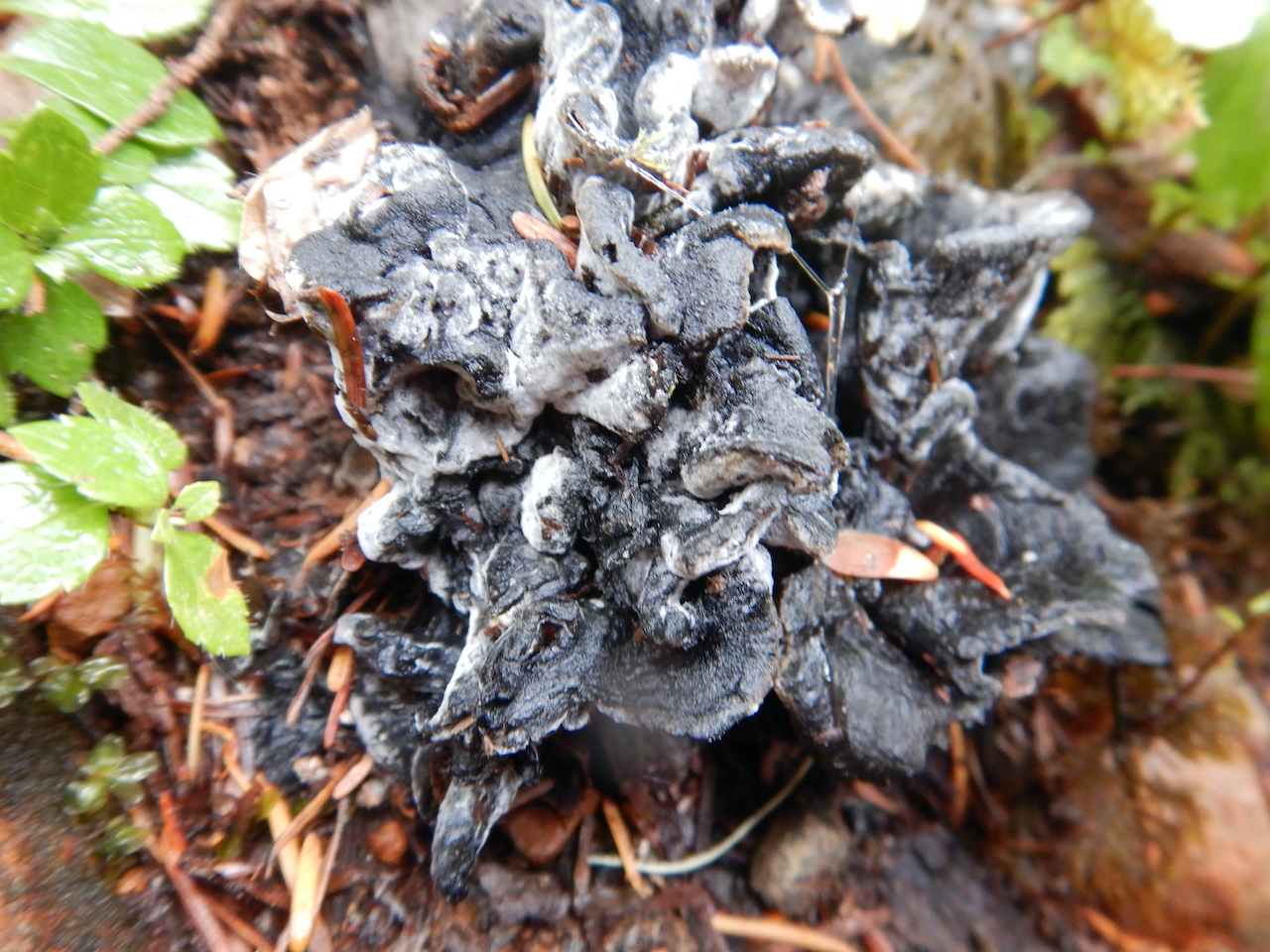
  1. This slime mold (Lindbladia tubulina) looks like a blob of tar! Near Diver’s Lake.
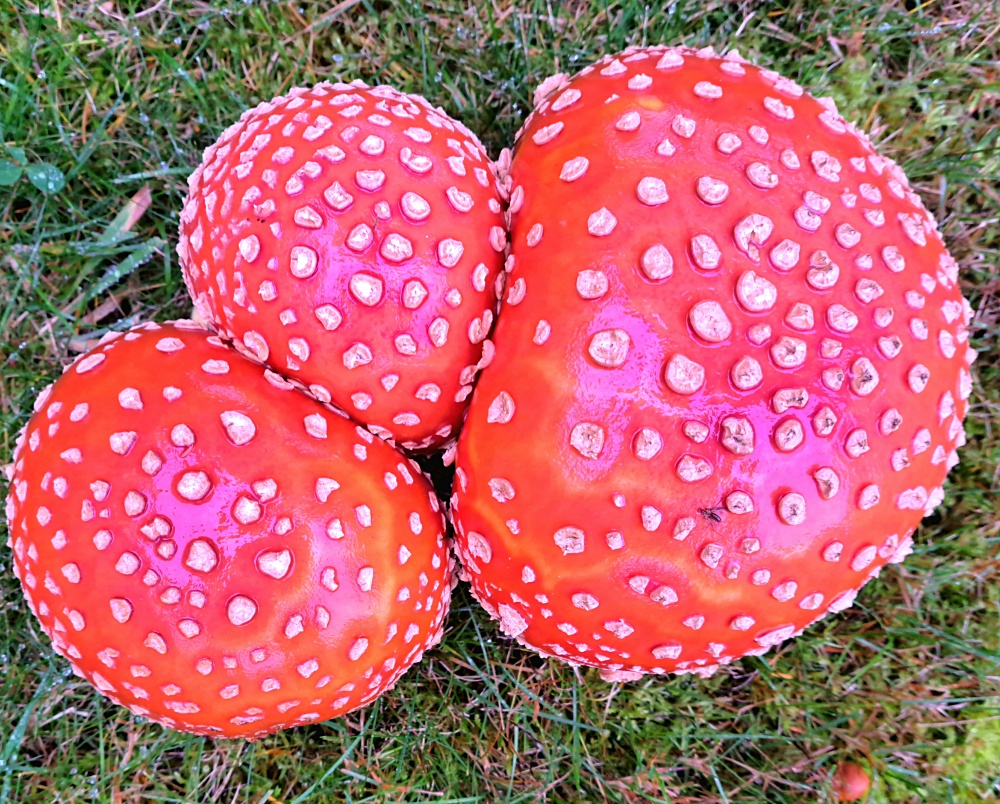
  1. The admirable bolete (Aureoboletus mirabilis) has a reddish suede-like cap.
  1. Botanists at large: Diver’s Lake area.
  1. Traversing the McKenzie Lake meadow.
Posted in Plants and fungi | Comments Off on Summer botanizing!

Learn about Strathcona species of conservation concern

The following free online lecture presented by the Strathcona Wilderness Institute (SWI) will be of interest to CVN members and others:

Title: Species of Conservation Concern in Strathcona Provincial Park
Speaker: Jack Bindernagel
Date: Saturday September 3, 2022
Time: 7:00 p.m. PDT

This webinar is facilitated by the Canadian Society of Environmental Biologists and is open to the public (see the registration link below).

Common Nighthawk (Photo: Jack Bindernagel)

Strathcona Provincial Park occupies a large part of Central Vancouver Island and encompasses a wide variety of ecosystems ranging from above treeline down to low-lying riparian and coastal areas. This diversity in landscapes and vegetation is responsible for the impressive number of species recorded in the park. Due to the park’s large size, many of the ecosystems found within it are comparatively intact. Given the park’s high diversity of habitats and large areas of relatively unmodified terrain, it is not surprising that many species which are globally or locally of conservation concern are found within the park.

This presentation aims to showcase a few of these imperilled species which utilize the habitats found in the park, and explore the significance of the park as it relates to their conservation. Some species discussed will include Donn’s small limestone moss (Seligeria donniana), Black Swift (Cypseloides niger), Common Nighthawk (Chordeiles minor), oldgrowth speckleberry lichen (Pseudocyphellaria rainierensis), Sticta weigelii (a foliose lichen), Salish daisy (Erigeron salishii), and cliff dwarf-primrose (Douglasia laevigata).

About the speaker

Jack Bindernagel is a student who worked for SWI during the summer of 2022. After his stint at SWI he resumes his studies at the University of Victoria. Jack has also been very active as a volunteer with CVN’s Wetlands Restoration Group, particularly at Courtenay Airpark.

Registration

“Seating capacity” for the talk is limited, and you need to register in advance. You can check the computer requirements for attendees here.

Register here

After registering, you will receive a confirmation email with instructions for joining the webinar.

If you are new to Comox Valley Nature, find out more about us here.

Posted in Conservation and Restoration, Guest Speakers | Comments Off on Learn about Strathcona species of conservation concern

2022 CVN Tree of the Year announced!

By Karen Cummins. Updated 2022-07-15 to add link to Kerri Scott’s podcast.

2022 Tree of the Year

Tree #13, a Garry oak located at 3015 Glacier View Rd. in Courtenay, amassed the most votes in the 2022 Tree of the Year event. The nominator was property owner Ruth Barry. It is a beautiful tree that has been lovingly protected and appreciated for a very long time.

The nominator of the winning tree receives a gift bag or basket consisting (mostly) of consumable treats. They also have the privilege of having an original tree painting in their home for the coming year. This year, Ruth will soon be moving to England so she has requested that the loan of the painting go to the nominator of the second place tree. Tree #5 Douglas fir at Kin Beach nominated by Bev Wolsey was second, so Bev will be the custodian of the painting until next year’s contest.

To hear more of the story of this tree, listen to Kerri Scott’s podcast.

Following close behind, in order, were:

  • #5 Douglas fir at Kin Beach
  • #2 Dawn redwood on Pritchard St. in Comox
  • #20 Douglas fir on the bluffs near Connemara in Comox
  • #9 Garry oak on Grieve Rd.
  • In a three-way tie for 6th place were #10 Apple in Courtenay, #32 Lazo Garry oaks, and #27 Garry oak on Ryan Rd.

We have had a lot of positive feedback about the number and diversity of the trees that were nominated this year as well as the pleasure of reading their stories followed by touring to see and appreciate the trees where they live. These are the goals of the event and it is both the people who nominate the trees and the people who tour and vote for their favourite that make it happen.

What we also heard was that it was very difficult to vote in favour of just one tree. All the trees are “winners”! The descriptions of the nominated trees and the tour maps will stay on the CVN website so that the stories can be shared and the trees toured throughout the year.

Our Tree of the Year Committee would be happy to hear any feedback CVN members wish to share to keep improving this event in the future.

For more information:

Posted in Tree(s) of the Year | Comments Off on 2022 CVN Tree of the Year announced!

Intertidal life at Willow Point Reef

Trip report provided by Kathleen W. with photos by Barbara N.

On May 18, despite a dismal weather forecast, 13 Shoreline Group members joined our enthusiastic trip leader Sandra Milligan for a productive low tide outing at Willow Point Reef, south of Campbell River. Sandra is a Biology instructor at North Island College, and a well-known participant in environmental activities in Campbell River. She previously led us on an outing to this location in 2019, and we were keen to revisit the area. This was the first in-person activity of our group in over two years.

We saw no nudibranchs this time, and fewer numbers of sea urchins, sea stars and anemones compared to our previous outing there, but several species of algae, bivalves, and gastropods were abundant. Here are photos of a few of the species seen [click a photo to enlarge it]:

Here is a species list (as a PDF file to download) compiled from observations provided to me by several of the participants.

Many thanks to Sandra, and our knowledgeable facilitators Ian G., Robin H. and John N. for their help with identifications, and to Kelly K. and Judy C. for help with the COVID protocol.

Posted in Field Trips, Shoreline and Marine | Comments Off on Intertidal life at Willow Point Reef

More fabulous plants!

From an email by Jocie to the Botany Group on May 25.

Here are a few examples of our amazing local flora, courtesy of John B., with some habitat notes [click a photo to enlarge it]:

  1. Small-flowered woodland star (Lithophragma parviflorum): meadows, bluffs
  1. Pink twink (Microsteris gracilis): gravelly/sandy
  1. Yellow sand verbena (Abronia latifolia): dunes, sandy upper beach
  1. Pale spring-beauty (Claytonia exigua): dunes, sandy upper beach
  1. Changing forget-me-not (Myosotis discolor): introduced, but has pretty 2-toned flowers
  1. Deltoid balsamroot (Balsamorhiza deltoidea): sparse at Oyster Bay and Campbell River estuary; red-listed (imperiled) in BC
  1. Paintbrush (Castilleja sp., maybe C. miniata or one of them-there paintbrushes): lots of different habitats, often on bluffs
Posted in Plants and fungi | Comments Off on More fabulous plants!

Identifying insect pollinators: a visual guide

Yellow-faced bumble bee (Bombus vosnesenskii). Photo by Kevin Cole from Pacific Coast, USA, CC BY 2.0, via Wikimedia Commons.

Many CVN members want their gardens to attract pollinators, and carefully select native plants for this purpose. But how much do we know about the pollinators themselves?

As a joint project, the Environmental Youth Alliance and an organization named Border Free Bees prepared a booklet in 2017 to educate the public about insect pollinators:

Common Pollinators of British Columbia: A Visual Identification Guide

This booklet is a useful introductory guide in PDF form that you can download for free and use to learn about the different groups of insect pollinators: honey bees, bumble bees, other bees, hover flies, butterflies, and wasps.

It begins with some general information, including a diagram of basic insect anatomy. Then the section for each of the six groups of insects covered also has a diagram, followed by clear labelled photos of a few examples from the group.

This is not a field guide, but it’s a fun way to enhance your knowledge of the insect pollinators that visit the flowers in gardens and in the wild. For those who want to identify the insects more specifically, this guide can lead beginners to the correct section of their detailed field guides.

Posted in Insects and spiders | Comments Off on Identifying insect pollinators: a visual guide

Kin Beach botany walk

From an email by Jocie to the Botany Group on May 14.

Last Monday (May 9) we enjoyed a rare sunny day at Kin Beach Provincial Park. There were lots of plants in bloom. Special thanks to Helen R. for helping lead the group, and for showing us a secret patch of camas!

Though we had our heads down looking at plants most of the time, the birders in our group noticed a pairing of American Kestrels atop a Douglas-fir tree! This was a highlight. Thanks to Kim D. for passing along the falcon pics.

Here are a few photos from this outing (click a photo to enlarge it):

  1. Menzies’ larkspur (Delphinium menziesii)
  1. Western buttercup (Ranunculus occidentalis)
  1. Small-flowered woodland star (Lithophragma parviflorum)
  1. Barestem desert parsley, also known as barestem biscuitroot, and formerly as Indian consumption plant (Lomatium nudicaule)
  1. Small camas (Camassia quamash)
  1. Streambank springbeauty (Claytonia parviflora): the most uncommon of 5 species of miners’ lettuce that are found in Kin Beach park!
  1. Coastal mugwort (Artemisia suksdorfii)
  1. Botany Group in action!
  1. American Kestrel pair (Falco sparverius). Photos courtesy Kim D.
Posted in Field Trips, Plants and fungi | Comments Off on Kin Beach botany walk