Catching up with communications in the Botany Group during July. This is from an email from Jocie to the group on July 10.
A not-to-be-missed July event is the blooming of Henderson’s checker-mallow (Sidalcea hendersonii) in the Komoks estuary. This is a large, showy plant in the mallow family (Malvaceae) that looks a bit like a hollyhock. Another name for it is “marsh hollyhock.”
Henderson’s checker-mallow (Sidalcea hendersonii)
Another plant that grows nearby in the same habitat is the springbank clover (Trifolium wormskjoldii), which peaks in late June (photographed here on June 25). First Nations peoples up and down the coast were very familiar with this plant, as the fleshy white rhizomes were dug up and harvested in the fall. According to Plants of Coastal British Columbia, the flavour is “sweet, similar to that of young peas.” Today, very few people are aware of the existence of this historically significant clover.
Springbank clover (Trifolium wormskjoldii)
To see these plants, park at the Rotary viewing stand on the Dyke Road and follow the small trail from the corner of the viewing stand (Courtenay side). There are large clumps of checker-mallow there, and there may still be some springbank clover in bloom also. There’s more clover along the shore towards Comox, in front of the viewing stand (watch your footing here and proceed slowly!).
Catching up with communications in the Botany Group during July. This is from an email from Jocie to the group on July 9.
It’s bloomin’ July! (but doesn’t feel much like it). Here are a few flower highlight photos from John B.:
Swamp gentian (Gentiana douglasiana) from the Mount Washington Road bog.
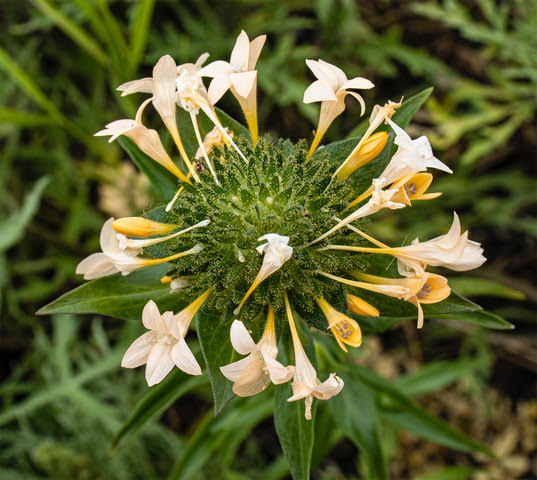
Grand collomia (Collomia grandiflora) from the Trent River estuary in Royston.
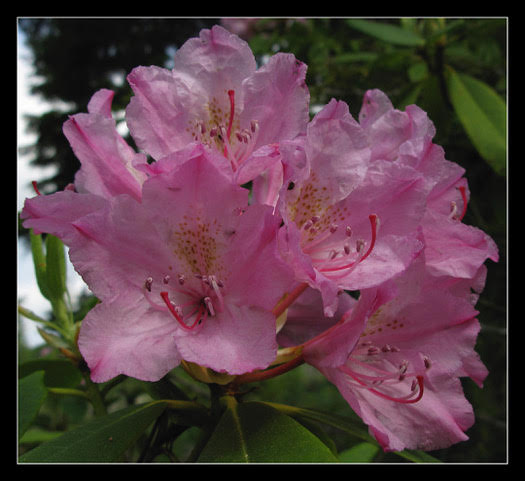
Pacific rhododendron (Rhododendron macrophyllum) from Rhodo Lake near Nanoose (accessible on a logging road). Here’s a link with more information about the rhodo: http://nanaimorhodos.ca/rhododendron-lake/
Catching up with communications in the Botany Group during July. This is from an email from Jocie to the group on July 7.
Here are some notes from Helen R. about some interesting plants at Kin Beach:
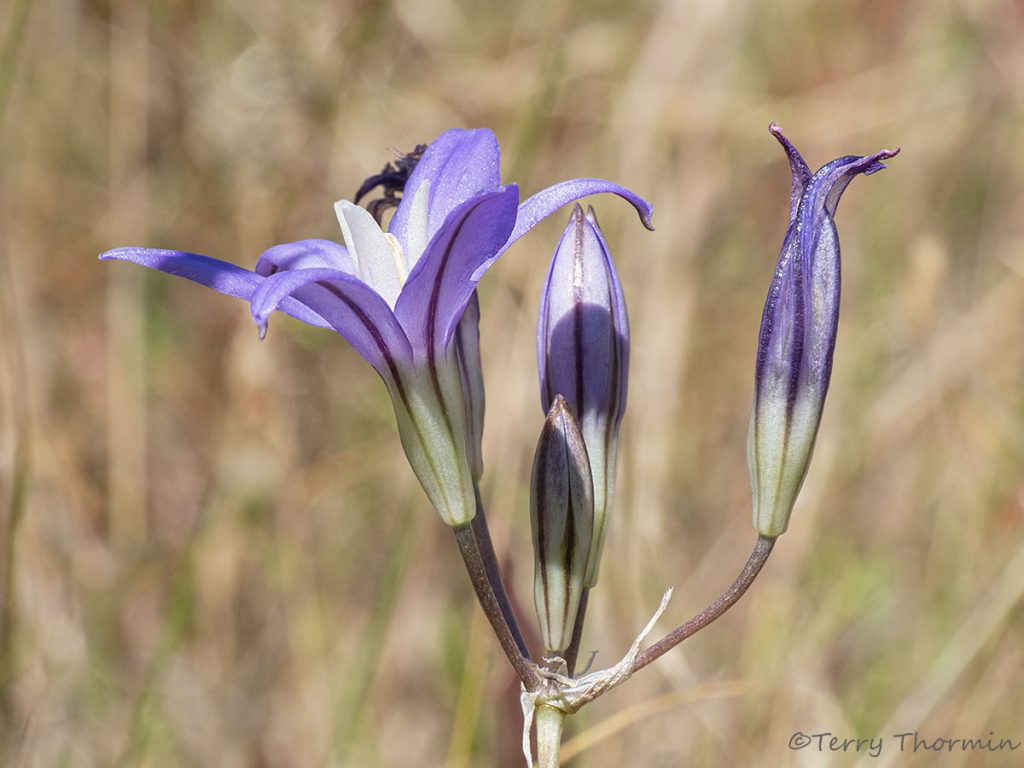
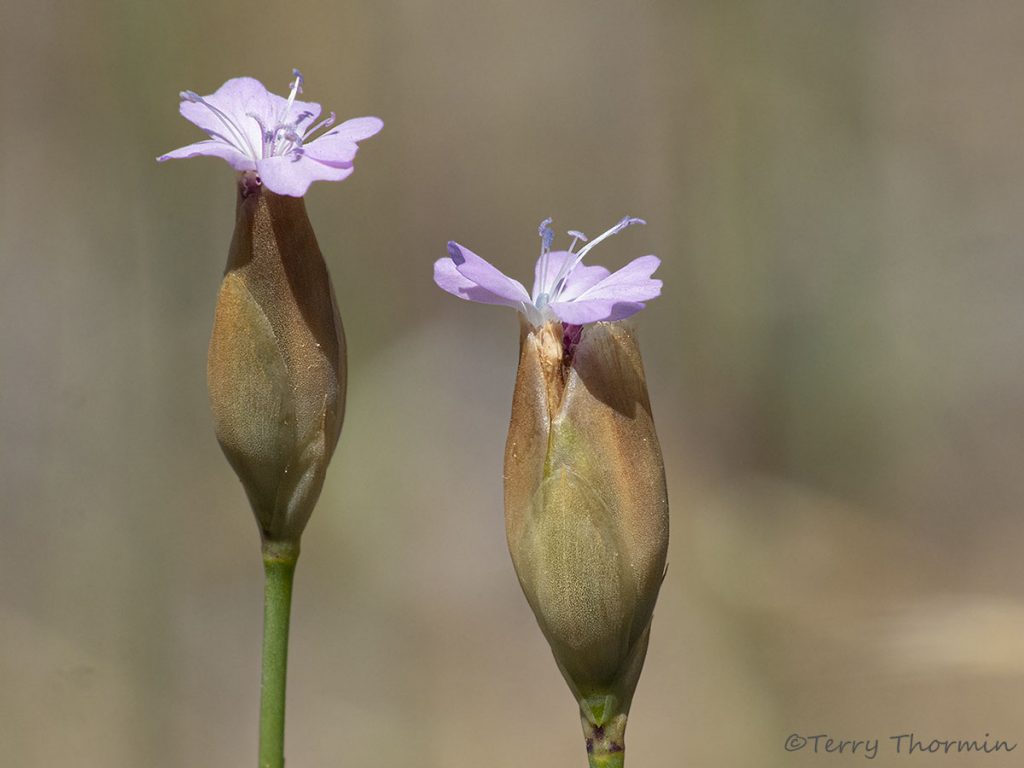
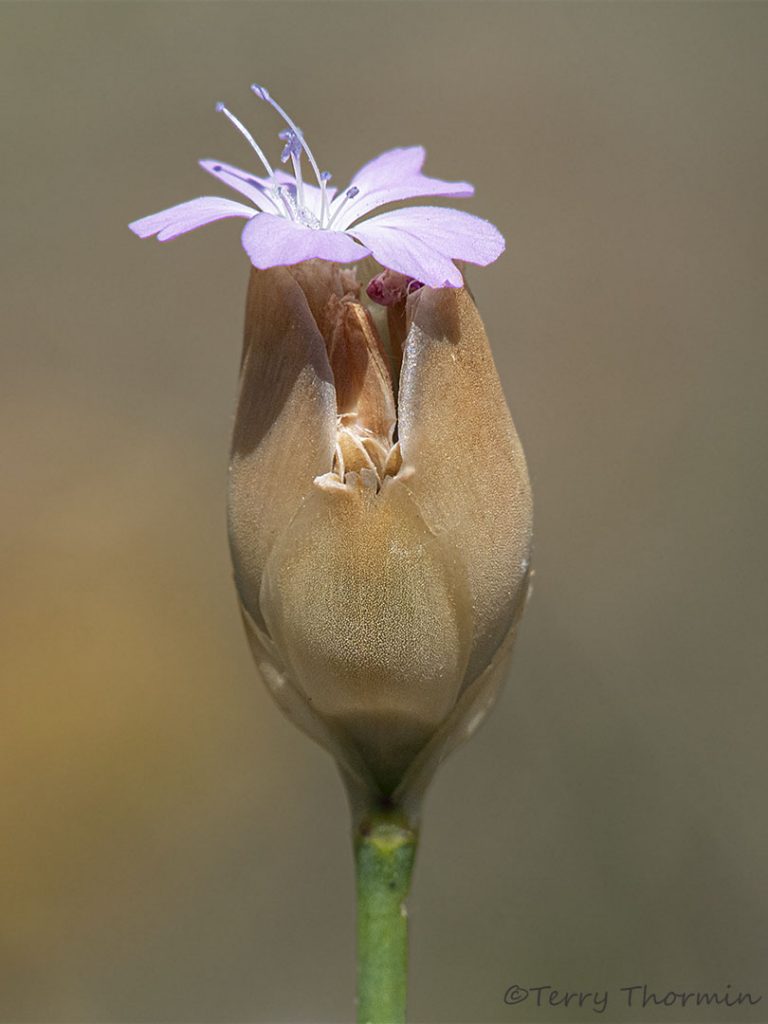
These two plants, photographed by Terry Thormin, are blooming at Kin Beach.
The harvest brodiaea, Brodiaea coronaria, is mostly in the tall grass between the playground and the huge burn pile which is covered with a tarp.
Harvest brodiaea (Brodiaea coronaria)
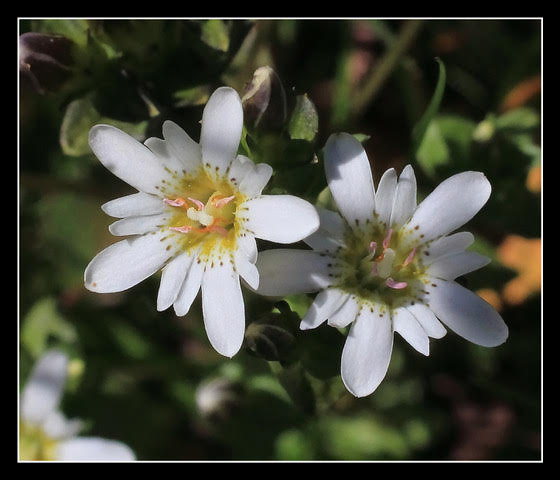
The prolific petrorhagia, Petrorhagia prolifera, was a great surprise, as it used to be in the park many years ago in the 1990s, but has not been seen again until now. It is a member of the pink family, Caprophyllaceae. It’s about 10’’ high, very slim, and is to the left of the sidewalk going down to the beach, and towards the heart sculpture. There are lots of plants.
Prolific petrorhagia (Petrorhagia prolifera)
Posted inPlants and fungi|Comments Off on Interesting plants at Kin Beach
Catching up with communications in the Botany Group during July. This is from an email from Jocie to the group on July 1.
Here are some updates from Alison M. on what is in bloom at Paradise Meadows [on July 1]. The snowmelt is quite rapid this year, so the flowers are in full swing:
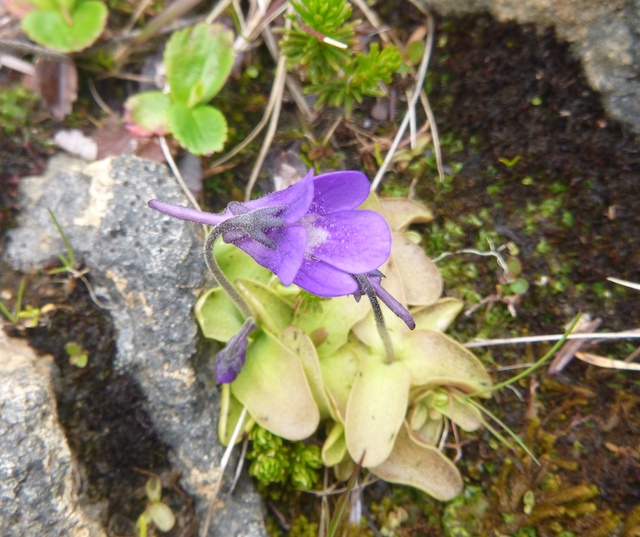
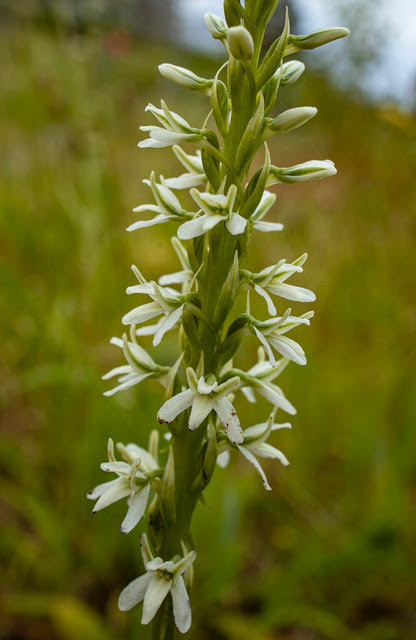
The past two weeks of mostly warm sunny weather have brought on many blooms in Paradise Meadows, some earlier than expected. So the insectivorous butterwort (Pinguicula vulgaris) and the green bog orchid, (Platanthera hyperborea?) are widespread. We saw a couple of specimens of the scented white bog orchid (Platanthera dilatata) just beginning to open.
Common butterwort (Pinguicula vulgaris)
By the way, there is a researcher from VIU (Jasmine Janes) who is conducting a research project on orchid pollination and will be up in the Meadows very soon to set up her little cameras, which will be identified with signs.
We were also fortunate last Sunday to catch the nagoonberry (Rubus arcticus ssp. acaulis) in bloom. So close to the ground it is often completely hidden by thevacciniaand other low-growing plants. It is to be found on the extension of Paradise Meadows Loop, in the wet area just after the wooded section and before you reach the platform with the bench that overlooks the deep trout pond.
Nagoonberry (Rubus arcticus ssp. acaulis)
So the Meadows continue to be awash with colour – don’t miss the treat.
Posted inPlants and fungi|Comments Off on Paradise Meadows update (July 1)
Catching up with communications in the Botany Group during July. This is from an email from Jocie to the group on July 2.
Here’s a message from John B. about some yellow flowers he found on Quadra Island: “Three yellow beauties from a bog on Quadra yesterday….All common, but not to be ignored.”
One is nodding beggaritcks, Bidens cernua. There was a huge bank of it.
The second is (I think) Hieracium pilosella???
And the third is lesser spearwort (Ranunculus flammula).
Posted inPlants and fungi|Comments Off on Yellow beauties in bloom!
From an email by Jocie to members of the Botany Group on June 27.
A winding boardwalk, edged with lush salal and huge, shiny skunk cabbage leaves, leads to a small bog, known as the “Puntledge Bog” on the east side of the upper Puntledge River. A bench offers a place to contemplate this special place. There are stunted pines, and shrubs such as cascara, black twinberry, and sweet gale, as well as many small plants tucked in mats of red and gold sphagnum moss.
Bogs form in wet places that have poor drainage, leading to deep accumulations of sphagnum moss or peat. Due to highly acidic and nutrient-poor conditions, many plants and trees are not able to survive in a bog. However, other plants thrive under these conditions, and bogs are home to many interesting and unusual plants.
Bogs act like a filter to purify water, and they also trap and store significant amounts of carbon. Conservation of bogs is extremely important, and integral to the health of the wetlands that connect to our watershed.
Here are a few botanical highlights from the bog in June:
1. Labrador tea (Ledum groenlandicum) is a common bog shrub with attractive round clusters of white blooms. The leaves have wooly, rusty hairs beneath and were traditionally used to make medicinal tea.
2. Round-leaved Sundew (Drosera rotundifolia) is an insectivorous plant with round leaves that are fringed with dew-tipped hairs.
3. Arctic starflower (Trientalis europaea) has beautiful star-shaped, pure white flowers.
4. Bog cranberry (Vaccinium oxycoccus) has runners that criss-cross over the sphagnum moss. In the spring they have a lovely, inverted pink flower which later develops into plumb cranberry.
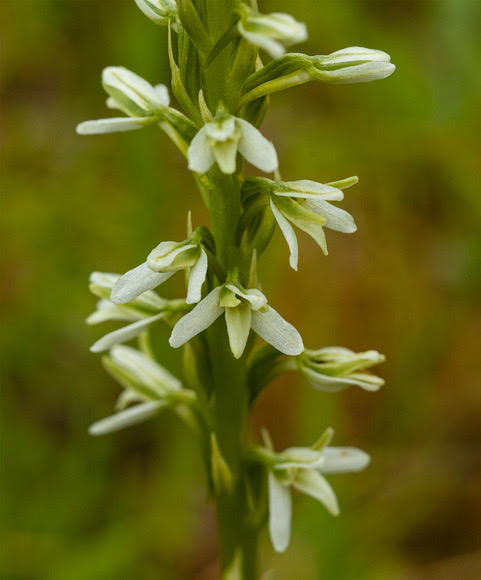
5. Slender rein orchid (Platanthera stricta) grows right along the boardwalk but is easily missed due to the green colour of the flowers. Miniature orchid flowers bloom along the tall, slender stems.
6. Chamisso’s cotton-grass (Eriophorum chamissonis) is a sedge with rusty-blond, fluffy seed heads that were called “eagle down” by some First Nations groups.
The Puntledge Bog isn’t on a map, but it can be easily accessed from Comox Lake Main Rd. The trailhead, on the east side of the river, is just before the bridge that leads to the dam parking and picnic area. It is an easy, flat trail downstream along the river and about a kilometre to the bog.
The upper Puntledge River has an extensive trail system with hiking, biking and multi-use trails. For more information, check out our online nature viewing guide. Information is also available on the BC Hydro website.
Posted inPlants and fungi|Comments Off on A June visit to the Puntledge Bog
The 2020 winner of our $1000 Bursary Award is Anja Leikermoser, who is enrolled at Mark R. Isfeld Secondary School in the French Immersion program and will be graduating this spring. She has been accepted into the Science Program at UBC to study environmental sciences, but has also applied to the Applied Science-Engineering faculty at University of Victoria. She hopes to pursue a career developing green technology to help promote a more environmentally sustainable future, marine biology or aquaculture.
Anja’s environmental volunteer work includes participating in: habitat restoration and salmon re-location projects on the Puntledge and Tsolum Rivers, broombusting in several locations around the Comox Valley, local beach cleanups, and planning for an extensive beach cleanup of debris deposited by storms in Cape Scott (which had been scheduled for this spring).
In addition, Anja is a straight “A” student and was the top student in many of her courses throughout high school, including Sciences Naturelles. She has been a volunteer with her school’s Rotary Interact club since Grade 9, helping to raise funds for local Rotary projects supporting teens at risk; and improving school facilities and other services in Honduras. Outside of school she participates at an elite level in sailing, and coaches sailing and skiing. Her references speak very highly of her and describe her great work ethic, professionalism, dedication and perseverance, team spirit and natural leadership abilities.
Congratulations Anja, and we wish you much success in your studies and future endeavours!
Posted inBursary, News|Comments Off on Anja Leikermoser, CVN Bursary Recipient, 2020
This old news from last year is being added to complete our coverage of the TOTY contest.
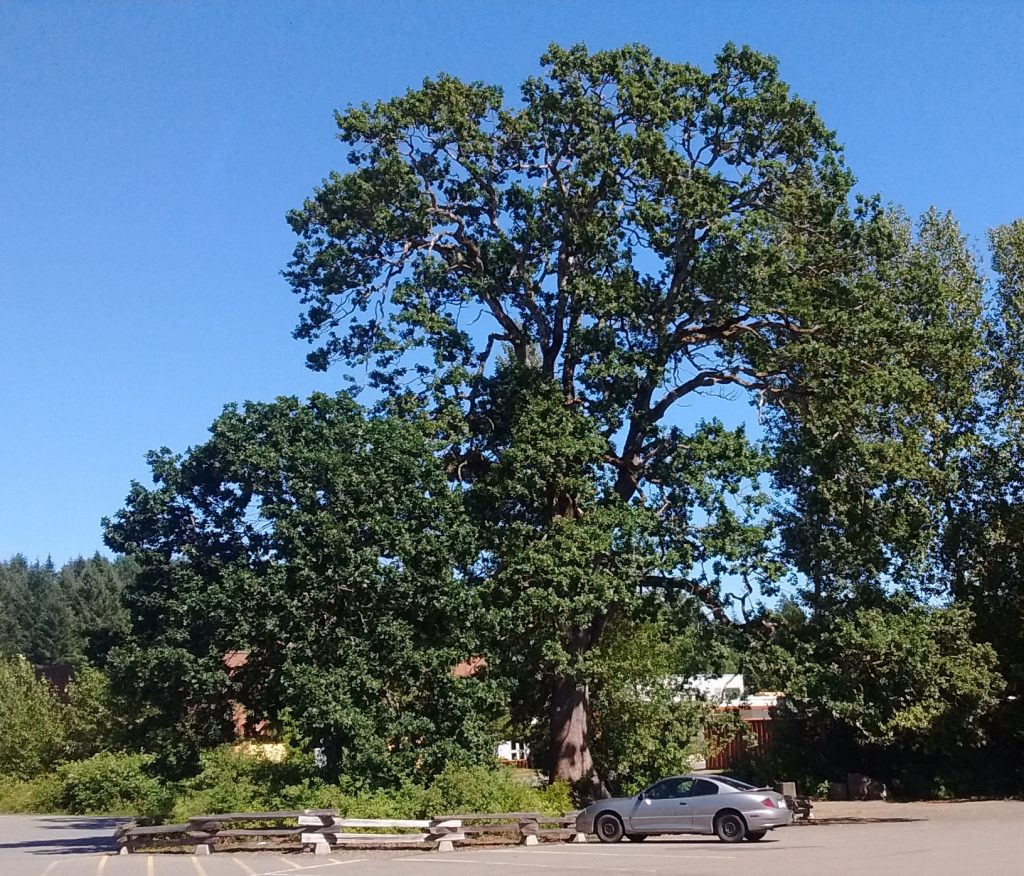
In the second year of Comox Valley Nature’s Tree of the Year contest, the award went to a very large Garry oak (Quercus garryana) in the parking lot of the Comox Valley Sport Centre on Vanier Road. This majestic specimen is one of the few left after the Centre was constructed, and is surrounded by a small fence. This area possibly has the largest number of Garry oaks on public land in the Valley.
This tree was nominated by Annette Boulter, who remembers it from years as a student at nearby Georges P. Vanier Secondary School. CVN presented Annette with a gift basket at the general meeting in February of 2019.
Fred N. and Cathy S. presenting Annette with the contest prize.
From an email by Jocie to members of the Botany Group on June 10.
Here is a bit about honeysuckles, in the genus Lonicera, that are found in our area. Keep a lookout for Utah honeysuckle! Alison found it a few years ago in the McKenzie Lake area of Strathcona Park.
In June, growth and daylight come to a peak, and wild honeysuckle vines spill over the tops of shrubs and fir trees. This high-rigger of plants is quite an acrobat, twining up tree trunks, coiling around limbs, and sending out exploratory green shoots that dangle in the air.
Tucked in a bed of blue-green leaves, clusters of bright orange flowers appear, drawing the eye upward. Trumpet-shaped with a pool of nectar at the base, they attract hummingbirds and swallowtail butterflies.
The honeysuckle family, or Caprifoliaceae has around 890 species and 42 genera worldwide. The genus Lonicera is named after the German botanist Adam Lonitzer (1528-1586) and includes about 180 shrubs and vines found mainly in temperate zones of both hemispheres. Honeysuckles typically have opposite leaves, and a pair of leaves that are fused at the base to form a cup beneath the blooms (the botanical term for this is connate, if you care to know!). Flowers are tubular, and the plants produce inedible berries.
Look for these 4 species of honeysuckle (the most common ones) in the genus Lonicera that are found on Vancouver Island:
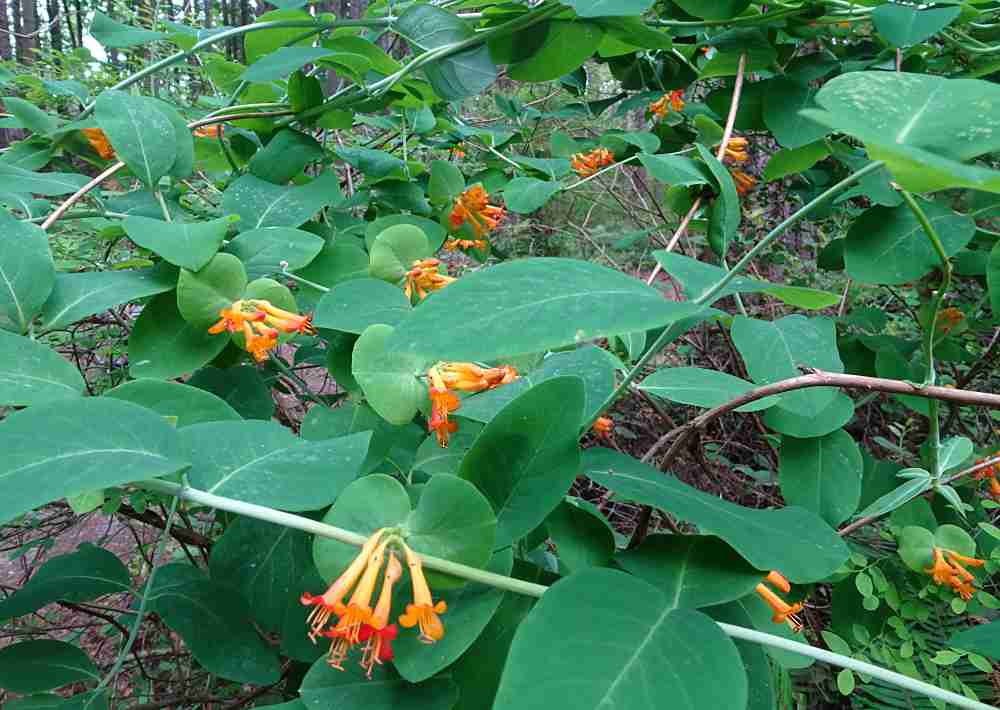
1. Orange honeysuckle, or western trumpet (Lonicera ciliosa) is found across southern BC, but is more common west of the Cascades. The species name ciliosa refers to hairs found along the leaf margins. Unlike the creamy white, scented blooms of the English honeysuckle or woodbine (Lonicera peridymenum) which are pollinated by moths at night, orange honeysuckle is unscented, due to the fact that it is primarily pollinated by hummingbirds which are attracted to bright colours rather than scent. Children of the Saanich first nation used to enjoy sucking the sweet nectar from the base of the flowers. I remember doing this too, while waiting for the school bus!
Orange honeysuckle from Miracle Beach Park
2. Purple honeysuckle, or hairy honeysuckle (Lonicera hispidula) frequents drier habitats such as those found on Denman and Hornby Islands. The species name hispidula refers to the stiff bristles that are sometimes found on the stems. This is more of a crawling vine, and not as eye-catching as orange honeysuckle, though the purple flowers tinged with yellow are attractive in a subtler way.
3. Utah honeysuckle (Lonicera utahensis) is a more unusual species on Vancouver Island. It has been recorded from the Buttle Lake corridor and some of the mountains in Strathcona Park, and other scattered places on Vancouver Island. This one is easy to identify when in bloom, with twinned cream-coloured flowers that are followed by twin red berries (photo from Manning Park.)
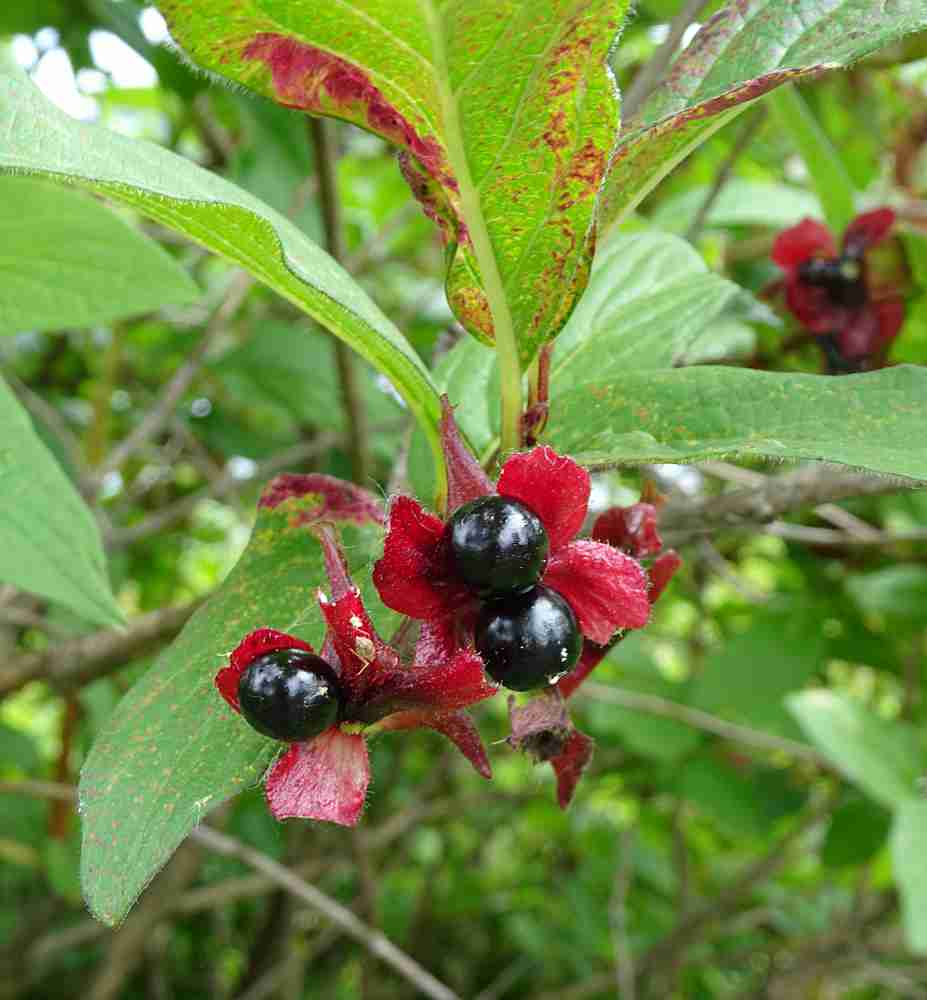
4. Black twinberry (Lonicera involucrata) is a common shrub that likes to grow in moist habitats, often near streams and wetlands. It is the least honeysuckle-looking of this group of plants, as it is not a vine. It has distinctive twinned yellow flowers and shiny black berries that are quite bitter. Northwest coast peoples considered them inedible, and the Kwakwaka’wakw believed that eating the berries could cause loss of speech.
Black twinberry blooms and berries from Courtenay Airpark
Domestic honeysuckles, introduced from Europe, are ubiquitous in local gardens. Some of these, such as Lonicera etrusca are quite aggressive, and have spread to wild areas on parts of Vancouver Island. Care must be taken to keep these species under control! (Photo from my patio: requires frequent heavy-handed pruning!)
Posted inPlants and fungi|Comments Off on Featured plant: Honeysuckles
Join the Comox Valley Conservation Community for a day long celebration of the watersheds and waterways that connect us all in the Comox Valley!Learn about restoration and habitat enhancement projects, salmon cycles, drinking water, forests, creeks, wetlands and estuaries – and so much more. Art projects, kids activities, volunteer engagement opportunities, hands on learning and guided walks – all looking out over the beautiful Puntledge River.Comox Valley Nature will be there with our new outreach tent. Come by and say hello, and try our bird identification game. We can also show you why native plants are best for your garden, and how to spot invasive species.Pack a picnic and stay for the day! Saturday Sept 19th from 9 am – 3 pmin Puntledge Park 1111 1st , Courtenay ...
In her memoir, Pacific Northwest author Caroll Simpson recounts the highs and lows of running a remote fishing lodge on her own following the untimely death of her husband, and of falling in love with the natural world. Simpson tells stories of living in the remote wilderness and managing the lodge, becoming an accidental environmental activist, fending off wild animals, working as an angling guide and finally, fighting off a proposed mining operation and participating in the development of a government land management plan as a spokesperson for the wilderness tourism industry.While Simpson welcomed paying guests at Ookpik Lodge, unwanted house guests included a woodchuck, a pack rat, and martens. Simpson constantly had to watch out for grizzlies, moose, and cougars. Storms and extreme weather also provided fodder for hair-raising tales. All this makes for wonderful storytelling.Caroll’s story is essentially a love story. In an essay for Sierra Club, Simpson wrote: “I developed an immense passion for flora and fauna. Just walking back and forth on the 300’ dock several times a day, I was exposed to the unbelievable beauty of the northern spectrum of water life: the golden eagle soaring above, the osprey and kingfisher diving and coming up with fish for their hatchlings, the muskrats and otters looking for an easy meal, the tireless beaver working into the late evening sunsets. All of these creatures and more expressed their generational ownership of this small piece of the world. In return each was given my utmost respect and admiration…As I listened to the loons at the end of each day and the owl and the wolf in the night, I felt blessed to be witnessing such beauty. “On September 20th, join Comox Valley Nature and Save Our Forests Team for an afternoon of storytelling about this remarkable time spent living on a remote British Columbia lake.The event is being held at the Comox United Church Hall. (250 Beach Drive, Comox) Admission is by donation. Doors open at 2:30; the event begins at 3:00 p.m. There will be time for Q&A after the presentation, as well as books available for purchase. Tea/coffee and cookies - including forest-themed cupcakes - will be available for a donation.Join us, and prepare to fall in love. ...
🎟️ Get your tickets to the Project Watershed 2026 Keeping It Living Dinner today! projectwatershed.ca/2026-keeping-it-living-dinner/Every ticket holder makes a difference. 💙 🎟️ Get your tickets to our 2026 Keeping It Living Dinner today! projectwatershed.ca/2026-keeping-it-living-dinner/When community and local businesses invest in conservation, our entire ecosystem benefits. Ticket sales directly support habitat restoration, scientific research, and environmental education, while the generosity of our sponsors helps offset event costs, ensuring that more of the funds raised can go directly toward this important work. Thank you to our incredible sponsors and dinner attendees for believing in the power of community-led conservation. Odlum Brown Community and Northwest Hydraulic Consultants, 40 Knots Winery, CNB Together, we're keeping our watersheds living. 🌿 Hope to see you September 12, 5 - 8 pm at 40 KNOTS Winery #KeepingItLiving #ProjectWatershed #CommunitySupport #Conservation #ComoxValley ...
The City of Courtenay is developing a long-term vision for Bill Moore Park and Dogwood Park to guide future improvements. To help guide these decisions, three initial concepts have been developed, and there is an opportunity for you to offer your input.The latest survey on the City website engagecomoxvalley.ca/bill-moore-and-dogwood-park asks for feedback on three concept plans and specifically which concept you prefer. The three concepts present a range of recreation possibilities and there is room on the survey for your comments.Dogwood Park is a 2.32‑hectare nature park featuring mature forested areas, natural habitat and a small wetland. Only Concept A will maintain the intact forest areas in Dogwood Park. Concepts B and C propose increased recreation in the park including an off leash dog park, disc golf course, pump track (a purpose built track for children’s cycling) and nature play areas. While the planners may say that no trees or few trees will be taken down to accommodate this, the under-story will not survive this level of trampling and fragmentation. The trees as well as all the wildlife who now call that area home will disappear over time. For those of us who value this forest, Concept A is the only option that makes sense.Dogwood Park is one of the few islands of green for many, many blocks. It provides habitat for wildlife, shade, retains water and acts as a carbon sink. On the architect's base plan of current conditions it is now characterized as an "underutilized space". The City has heard from sports enthusiasts but not nature lovers. Let them know why you value an intact forest and your connection to it. The survey is open until Sept 15. ...
The Canadian Coalition for Invasive Plant Regulation (CCIPR) wants the federal government to establish a regulatory body for the horticultural industry and create a national database identifying invasive plants and their risks in different regions. "Even if we don't prohibit them, we need to let the public know when there is potential harm," said CCIPR co-founder Cathy Kavassalis. "We do this on other products, and we should do it on plants too. It's just common sense."In July, Nanaimo council passed a motion to pursue a bylaw amendment restricting the sale of plants on a list maintained by the Invasive Species Council of B.C. A week later, Surrey moved to ban sales by businesses including nurseries, large retail chains and florists. Kavassalis said a problem that could be addressed at higher levels of government is being pushed down to municipalities."These are all patchwork solutions that, in some ways, just waste a lot of resources," she said. The CCIPR says a national database could give provinces, territories, retailers and gardeners a shared source of information about which plants pose risks in different regions. Kavassalis also wants invasive plants removed from shelves or clearly labelled.For more on this story visit www.cbc.ca/news/science/invasive-plants-sale-federal-regulation-9.7312362 or see our link in bio ...