Comox Valley Nature’s Annual General Meeting will be held as a videoconference on Sunday February 14 at 7:00 pm. For access to this online meeting, you need to register in advance:
From an email by Jocie to the Botany Group on January 1.
Happy New Year!
I don’t like to begin the year with a “bad news” story, but I’m obliged to report the first bloom of the year, which belongs to gorse (Ulex europaeus). I’m sure you are all familiar with this formidably spiny invasive species.
A few days ago, I went for a walk at Woodhus Slough (near the Salmon Point pub, which is in the process of being rebuilt). It was a gloomy grey afternoon with fading daylight, and the gorse stood out defiantly in a blaze of yellow blooms.
Strangely, the next day I opened Edith Holden’s classic The CountryDiary of an Edwardian Lady. Every now and then I open this book to see what Edith was up to on a particular day. I flipped to an entry with a fine illustration of gorse, and a hand-copied poem “Lessons from the Gorse” by Elizabeth Barrett Browning. Browning, it seems, admired this spiny, tenacious winter-bloomer.
Gorse is native to western Europe, and flourishes in open areas with poor soils that are often sandy or rocky. It was introduced as an ornamental to coastal Oregon in the late 19th century, and has since spread along the coast from California to BC. In BC, it is most prevalent on the southern half of Vancouver Island, the southern Gulf Islands and the Vancouver area. Populations have also been found around Skidegate on Haida Gwaii.
Gorse is in the pea family, and the yellow blooms resemble scotch broom, but gorse, unlike the latter, is extremely spiny. The flowers smell sweetly of coconut. Hairy black seedpods produce thousands of seeds that remain viable for up to 40 years. When the pods split open the seeds are shot out a metre or more from the plant.
When a patch of gorse is removed the battle isn’t over, since the plant can regenerate from root fragments and cut-off stalks. A mature stand can have an accumulation of 100 million seeds in the soil beneath it. Efforts to fully eradicate gorse take continual effort over a period of time.
Gorse is also known as “furze” from the Anglo-Saxon word for fire. Gorse contains volatile oils which makes it a fire hazard. In Europe, it was sometimes used as firewood. In 1936 the town of Bandon, Oregon burned to the ground causing the death of 14 people. The fire was fueled by large areas of surrounding gorse.
Gorse is not very widespread in the Comox Valley. There is some along the Comox waterfront, and at Little River Nature Park. I’m hoping that in 2021 we can have some work parties to remove patches of gorse and other invasive plants that threaten native plants and habitat. Let’s do it!
Posted inPlants and fungi|Comments Off on First bloom of the year
From an email by Jocie to the Botany Group on December 21.
Happy solstice! Here is the last quiz before Christmas, featuring local conifers. All of these are found at low elevation except for #9 which is mid to high elevation in this area.
#10 is just for fun…see if you can guess the species of this Christmas tree (a particularly nice one I had a few years ago). It is one of the previous 9.
Comox Valley Nature is pleased to host a free online lecture by Jason Toft. The lecture entitled “Restoration Effectiveness of Living Shorelines in the Salish Sea.” is on Sunday January 17, 2021, 7:00 pm PST and is open to the public.
Shoreline armoring has altered many intertidal beaches. Living Shoreline techniques aim to improve shoreline conditions by re-creating some of the functions of natural shorelines. Recent design implementations include complete removal of armoring, as well as eco-engineering approaches. Learn about how ecological monitoring of these sites can inform shoreline planning now and into the future.
Jason Toft is a senior research scientist at the University of Washington School of Aquatic and Fishery Sciences. Since 2000 he has focused on nearshore restoration and the effects of shoreline armoring in Puget Sound. He also studies the ecological interactions of juvenile fishes and invertebrates within estuarine systems.
Given the current situation with the Covid-19 virus, Comox Valley Nature has made arrangements to have a live, online webinar for the presentation. You will need to register in advance. Check the system requirements for attendees here.
Although Comox Valley Nature is not organizing the Christmas Bird Count this year given the recommendations of Public Health authorities, and given that our insurance does not cover any liability due to the pandemic, some birders in the Valley are independently carrying on the tradition while taking appropriate precautions (household groups, distancing, masks). The data they collect will be forwarded to Bird Studies Canada, as always.
For those birders doing the counting and for anybody else who is interested, CVN has organized two virtual follow-up meetings (to take the place of the usual pot-luck dinner) to share results and socialize. Each meeting will be in the form of a GoToMeeting webinar held using the facilities of the Canadian Society of Environmental Biologists.
To attend you need to register in advance using the links below. After registering, you will receive a confirmation email containing information about joining the webinar.
For the Deep Bay count, the wrap-up meeting will be held on December 15 at 7:00 pm.
From an email from Jocie to the Botany Group on December 7.
Here is Alison’s 2nd instalment of the toothed fungi. [See this post for the first instalment.]
Alison’s notes
[Click a photo to enlarge it.]
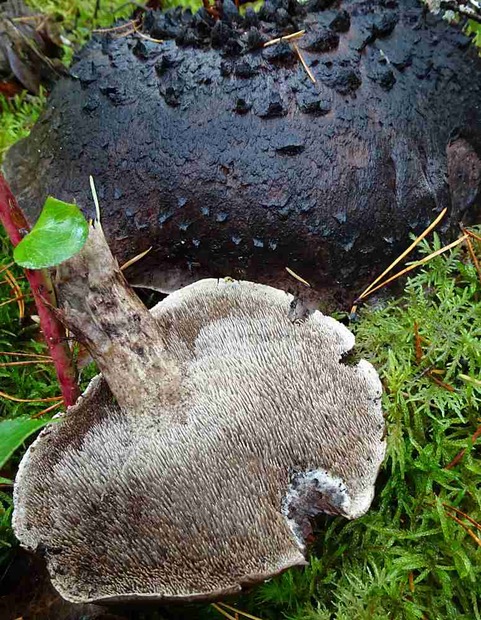
Next on the list is in the Sarcodon genus, the dark brown cap with scales of Sarcodon imbricatus, looking not unlike an aging Hydnellum aurantiacum. The photos #1 & 2, showing cap and underside, were taken by Jocie in the Merville Woods at Williams Beach Road. It can also be found up in the Park (e.g. Divers Lake area). There is another similar species found locally – S. scabrosusdistinguished by darker underside and dark bluish coloration at the base of the stipe. A third species – Sarcodon fuscoindicus – is a stunning purple/dark blue, which could have been included in the “Blues and Greens” note. I found it in 2016 in the forest at Nymph Falls, but at the moment my photo is MIA, so here is a link to an image by Michael Beug in E-Flora.
(1) Sarcodon imbricatus
(2) Sarcodon imbricatus
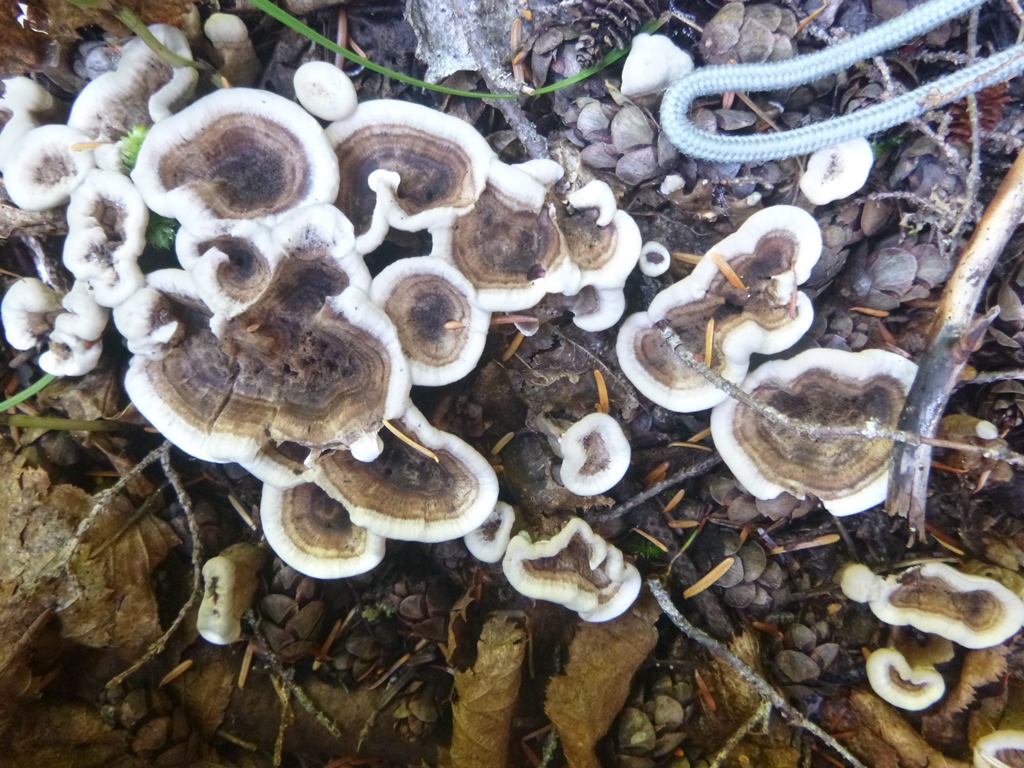
Another toothed fungus that has sometimes been confused with the hydnella is the Phellodon genus which is common in the valley and up to the subalpine. Photo #3 from the Comox Lake Bluffs Ecological Reserve is Phellodon tomentosus, which has a beige to brown centre and off-white margin on the cap, and beige on the underside. Phellodon atratusis also found here – with a dark centre and lighter margins on the cap and greyish/purplish teeth on the underside.
Phellodon tomentosus
A quite different fungus in the tooth category is Hericium abietis(commonly known as bear’s head). It is usually found on dead conifer trunks, sometimes still standing, more often horizontal (photo #4). Its species name suggests that it is specific to true firs (Abies genus) but it can also be found on Douglas Fir – as in the photo. The cross-section on my kitchen table (photo #5) shows the spiny “teeth” more clearly – it is a choice edible (sautéed to a crisp and mixed into a garlicy hummus is my favourite.).
(4) Hericium abietis
(5) Hericium abietis
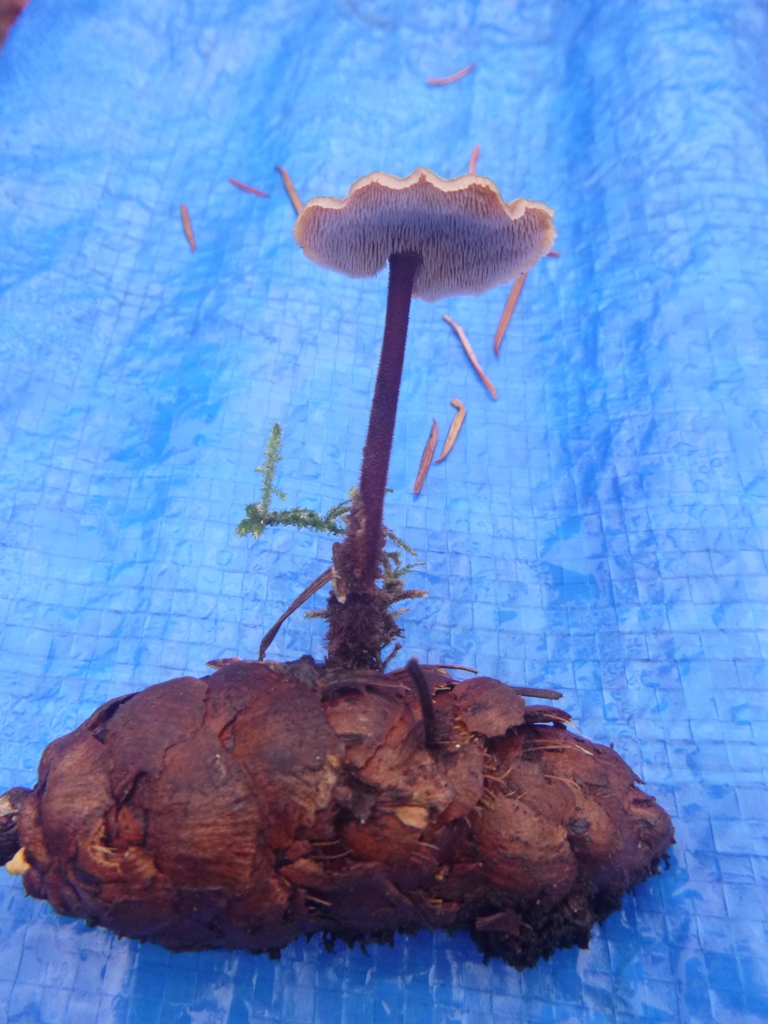
One of the most intriguing fungi in the forest falls into this category, namely Auriscalpium vulgare or earpick fungus (photos #6 & 7). Far from “common” (= vulgare) in its appearance, this tiny (5 cm high / 2 cm across the cap) fungus is often hard to find in the late fall, growing on its fir-cone on the forest floor – it blends in perfectly with the browns of dead leaves and fallen cones.
(6) Auriscalpium vulgare
(7) Auriscalpium vulgare
Finally a PS on the weather. It has been so mild this fall, apart from one short spell of sub-zero temps, that many shrooms are continuing to appear. There has been a second flush of large Lobsters on our property and on December 2nd I picked some rather large, perfect chanterelles – 15 cm in length and 12 across the cap. This is the latest I have ever picked chanterelles in good condition, not softened by frost. This Fall has produced bumper crops of chanterelles, hedgehogs and many other species edible and otherwise. After three seasons where conditions were far from ideal (long hot summers lasting into October), this year has been optimal in terms of temperature and moisture at the right times. Fungi are highly sensitive to their environment!!! It is a pity that this year we have not been able to conduct fungus ID sessions in the field and forest – photos are a poor second best. Next year we hope….
This years 2020 Restoration Report for the Courtenay River Airpark has been posted on the Comox Valley Nature Website. It is under publications on the top bar of the page. Click on this and go to Wetland Restoration. I wish to thank all the volunteers who helped keep the project going for its 26th year.
A limited number of hard copies are also available.
Thanks once again.
Frank Hovenden
Restoration Project 2020 Courtenay River Airpark
Posted inWetland Restoration|Comments Off on Courtenay River Airpark 2020 Report
From emails by Jocie to the Botany Group on December 1 and 5.
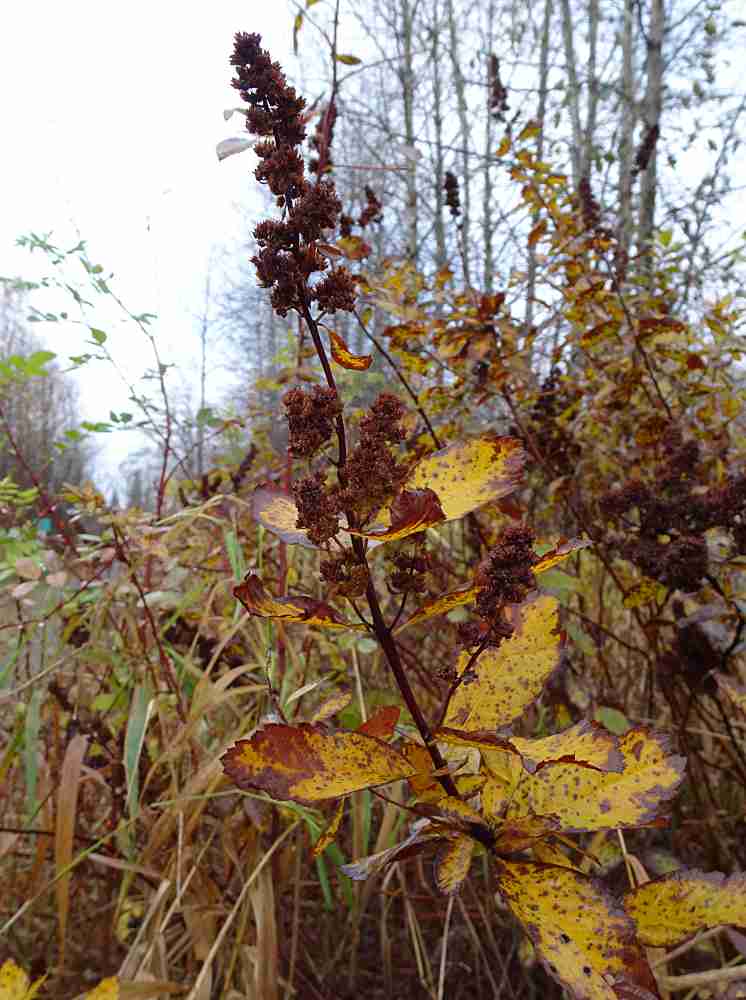
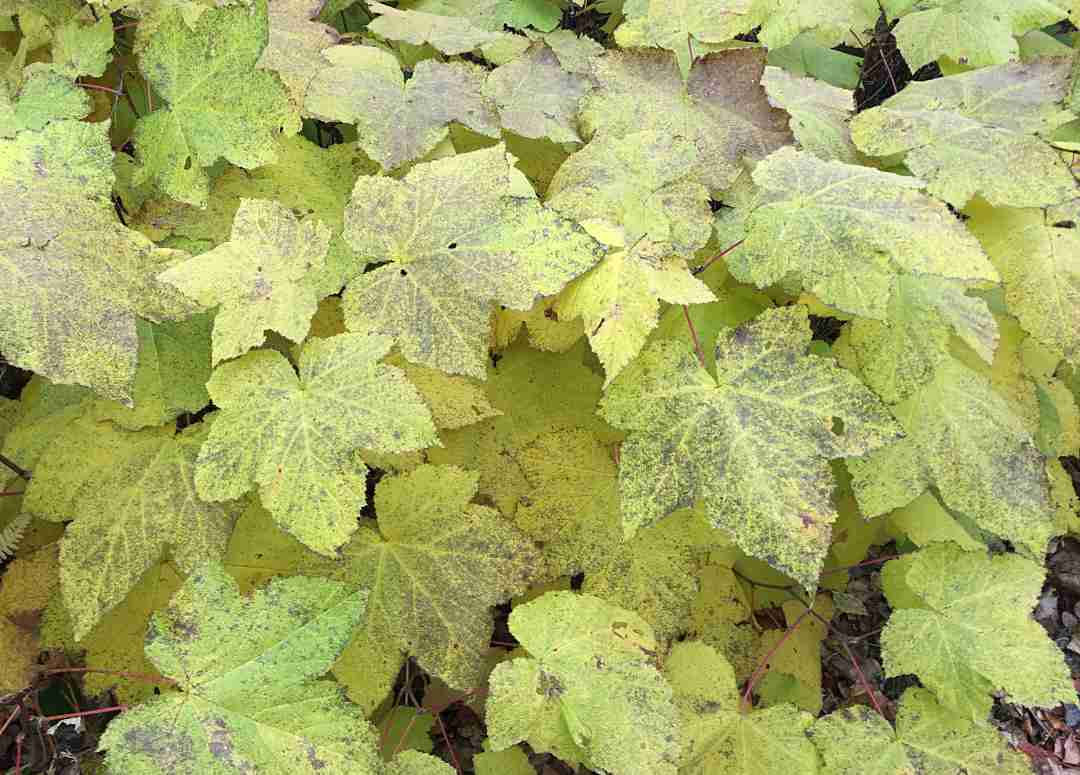
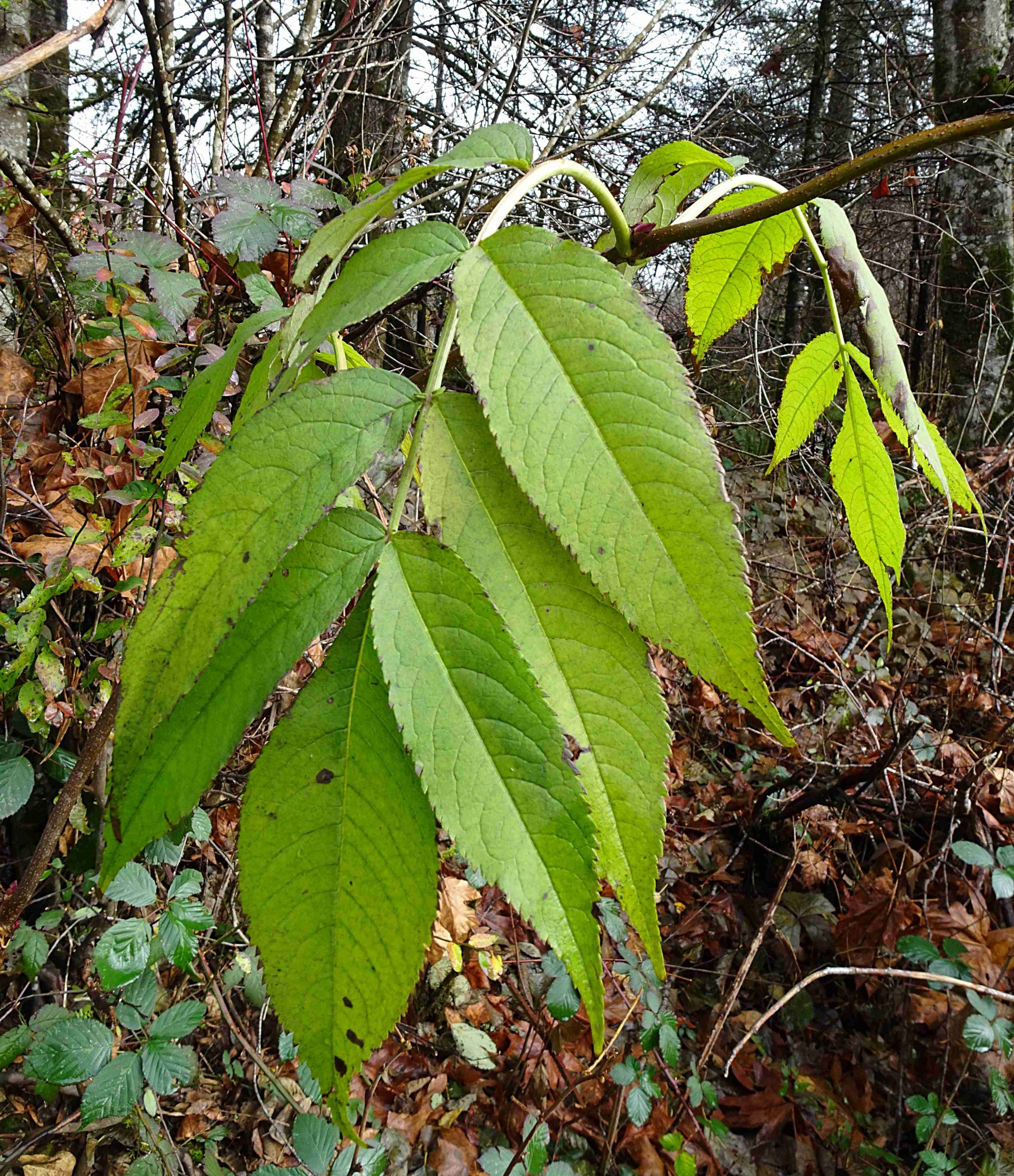
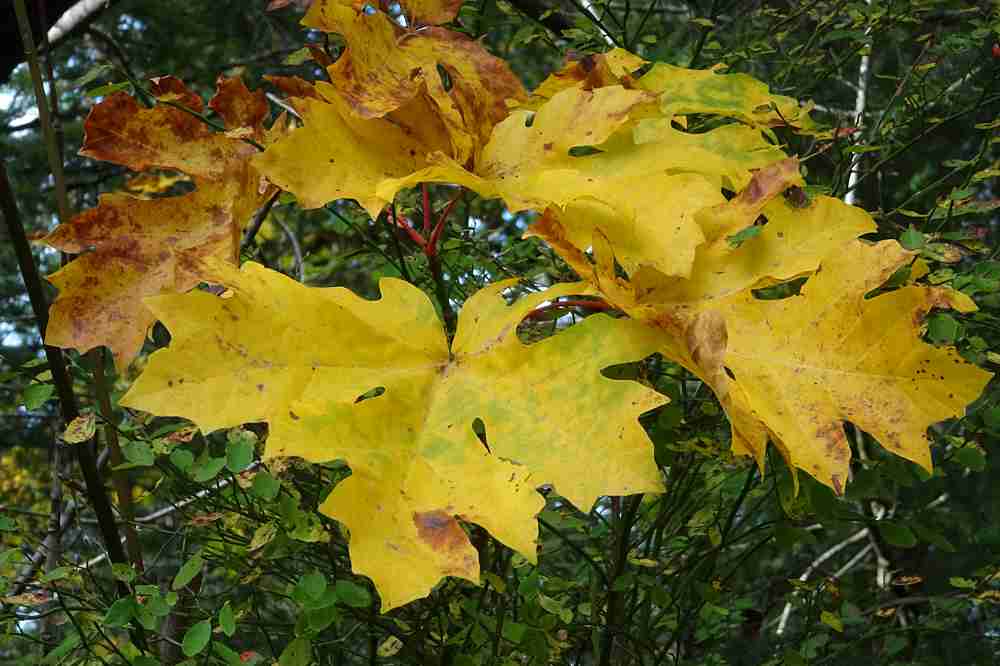
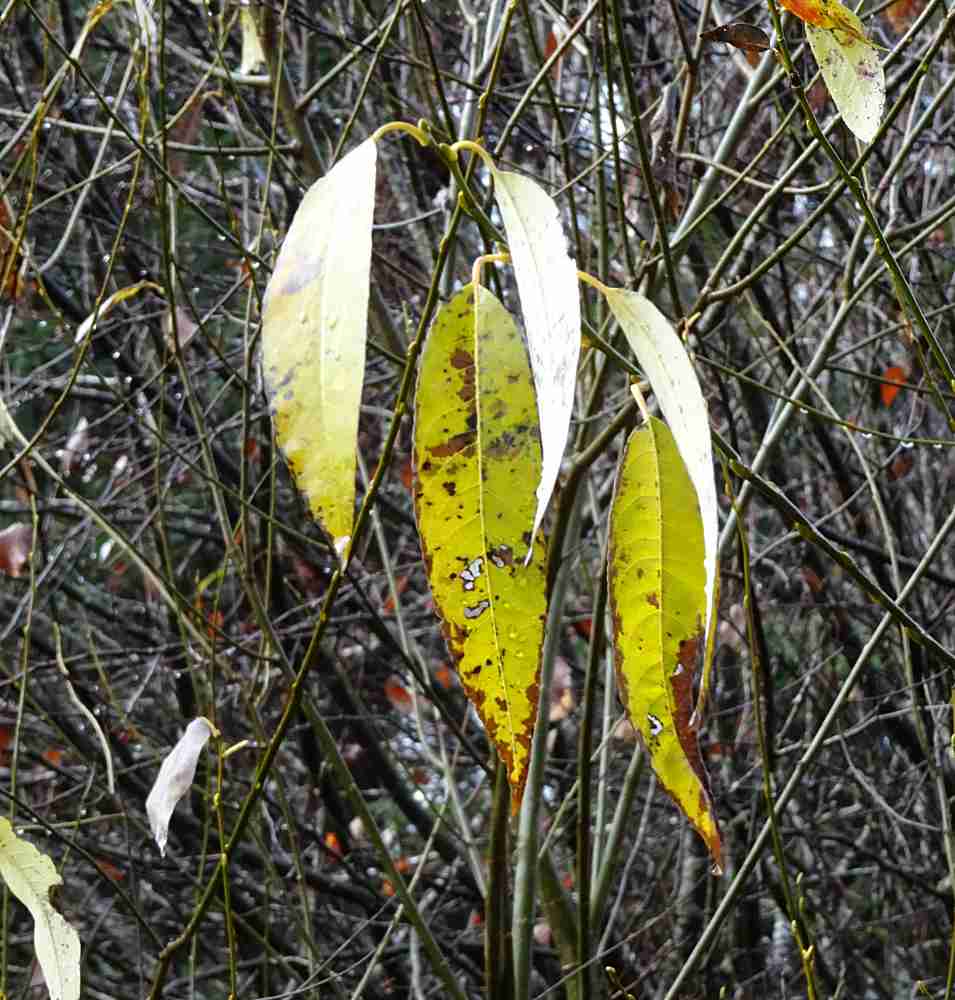
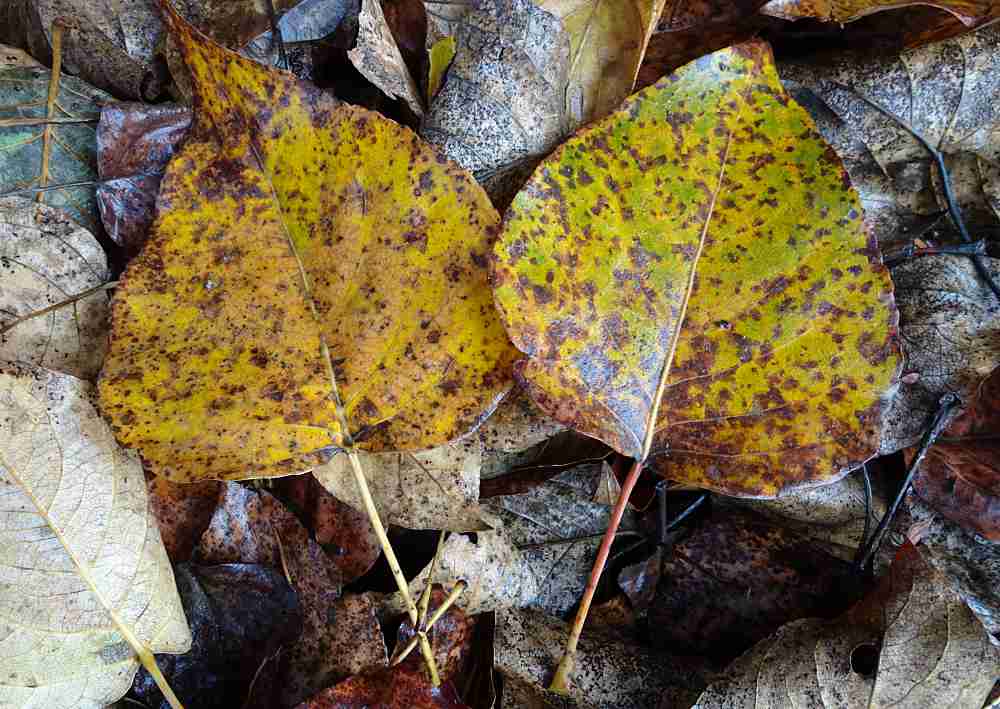
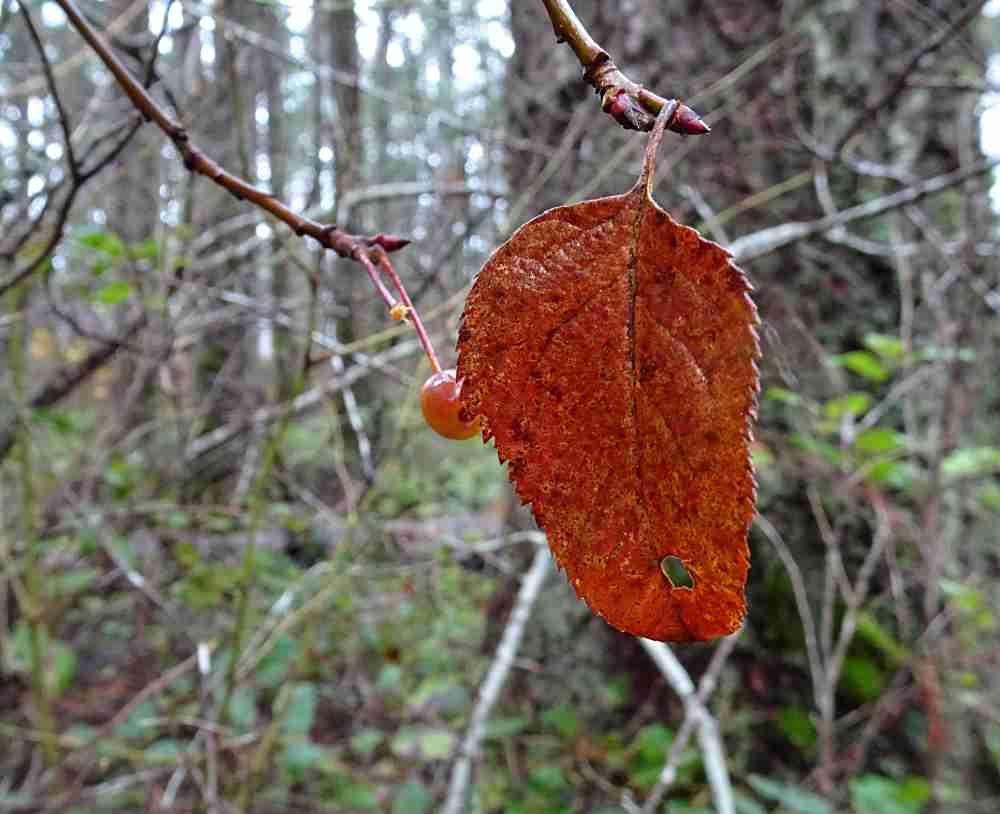
To keep you on your toes, here is a short quiz featuring deciduous trees in autumn (large and small, and a few that may be classified as shrubs) that are common in our area (all of these are native). I’m realizing that I didn’t include anything that would give a sense of scale…so this might not be as easy as intended! Next up will a more challenging quiz with shrubs and smaller plants in various states of decay.
The quiz is “open book” so look things up if you need to. Have fun! [Click a photo to enlarge it.]
From an email by Jocie to the Botany Group on November 29.
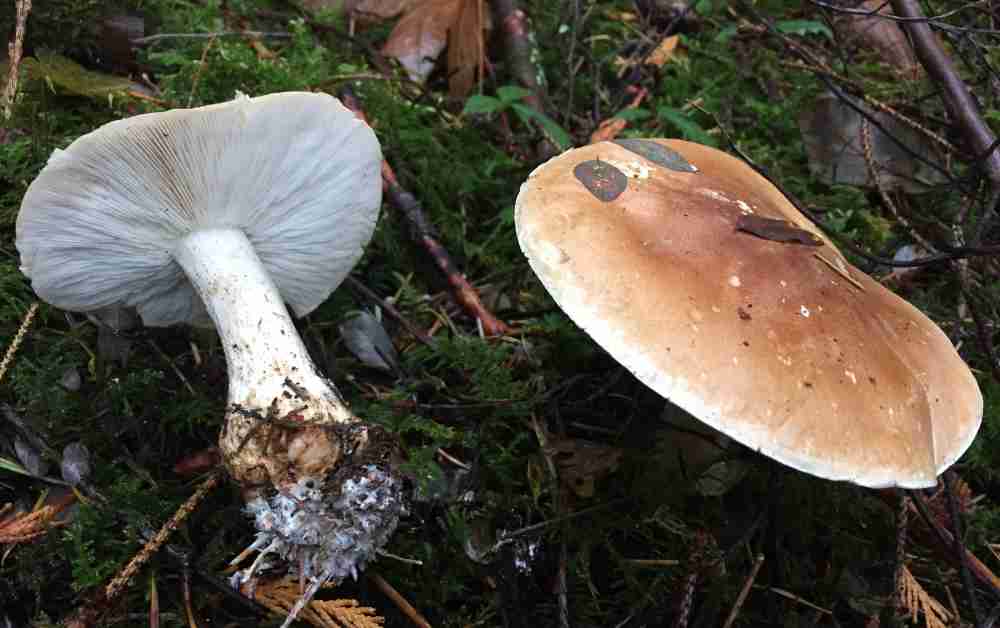
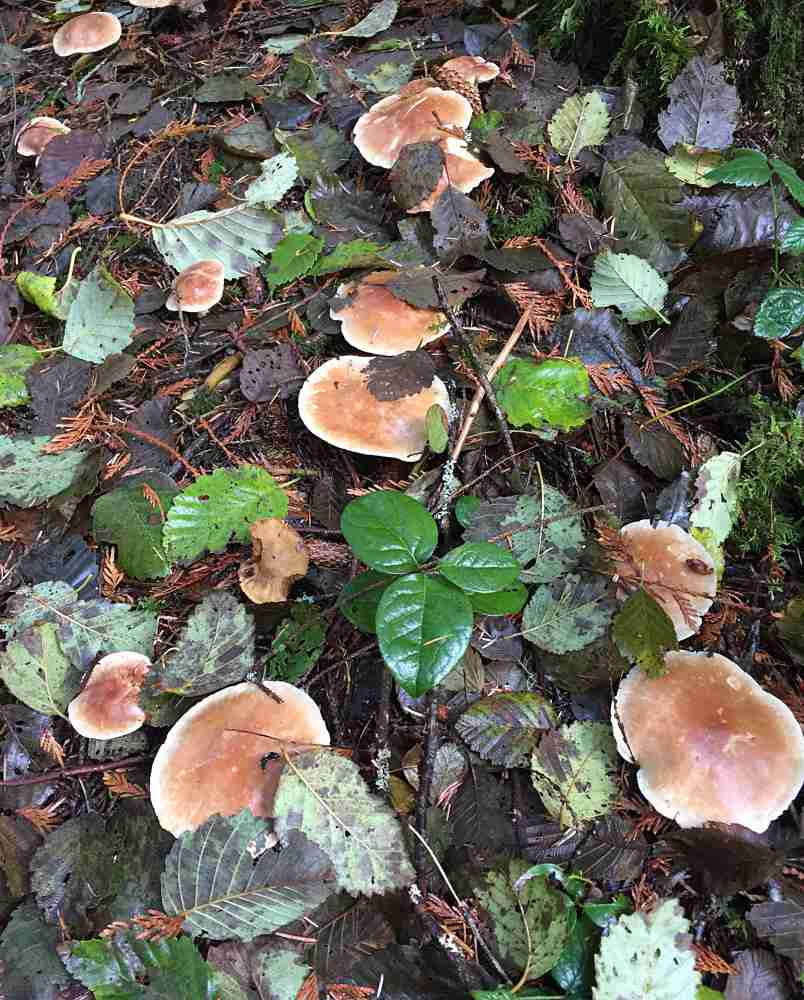
My family enjoys pancakes on a Sunday morning, but I didn’t expect to find pancakes in the woods. Wandering about in the Miracle Beach Park campground, I came across a cluster of large, rather plain looking brown shrooms and wondered what they could be. Flipping through my books didn’t help much, until I read this description: “the mature caps look remarkably like pancakes” which clinched it for me.
Reading on… “white gills, and a stout white stipe attached to a mat of pale mycelium” fit the bill also. Though I will now always recognize this as the “pancake” its official name is the brown leucopax (Leucopaxillus gentianeus). They look like they might taste good with butter and maple syrup…but this is not the case. They are in fact “inedible and extremely bitter.”
[Click a photo to enlarge it.]
Close-up of the brown leucopax (pancake)
A bunch of pancakes!
Leucopaxillus gentianeus
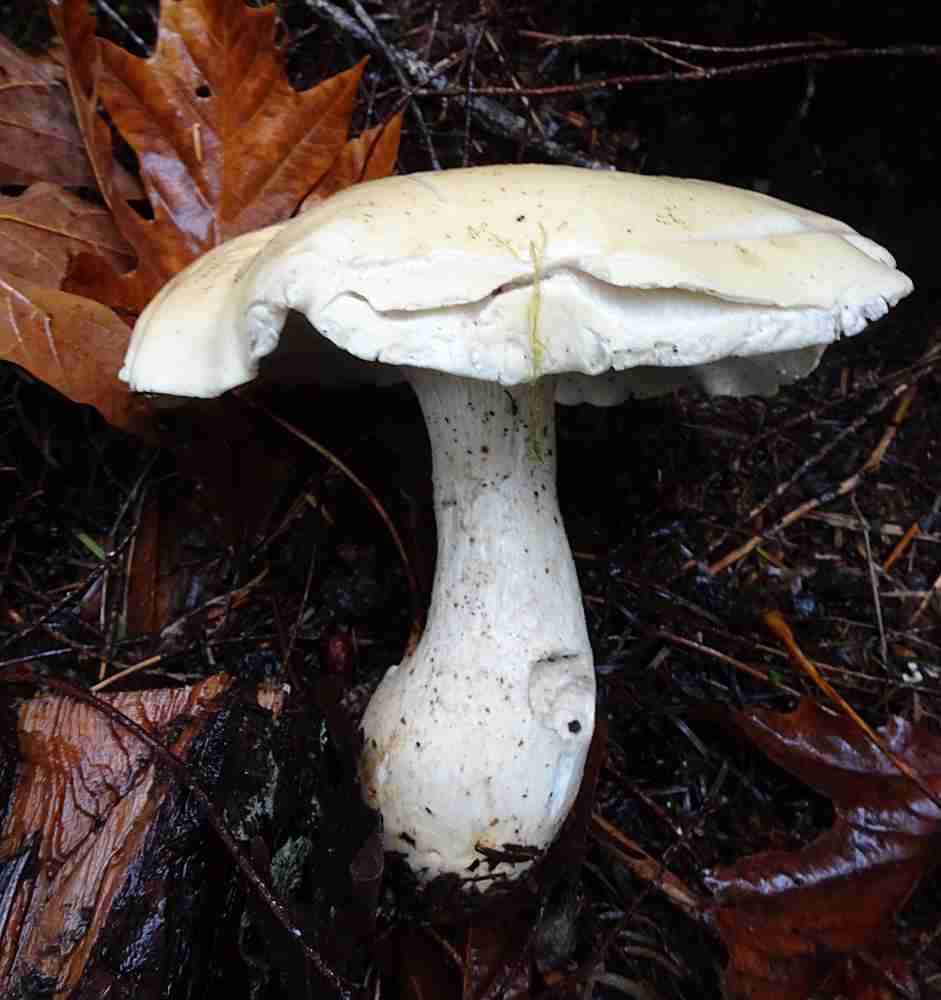
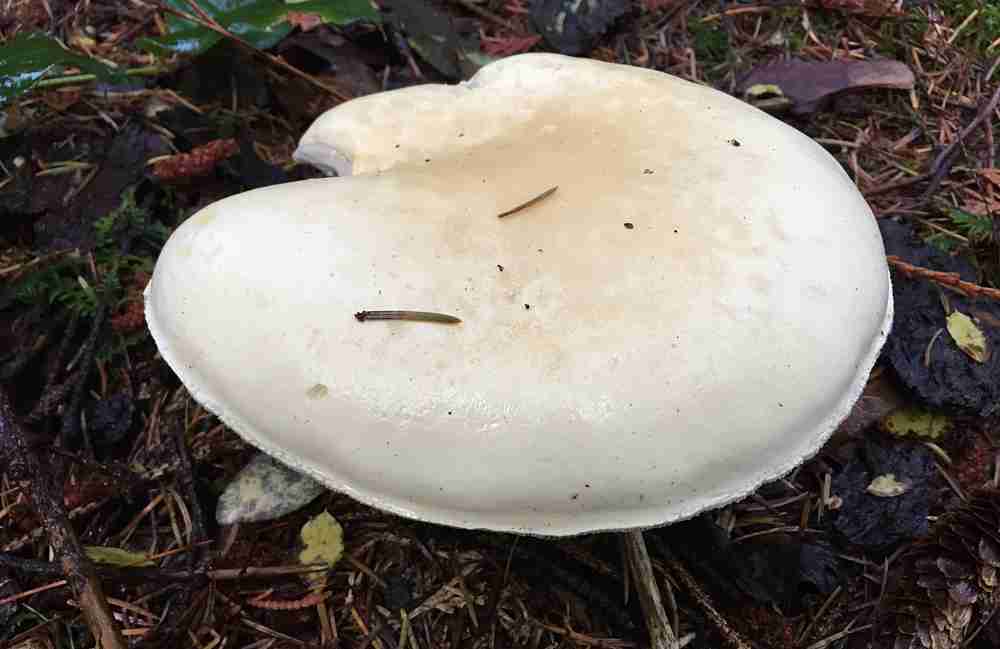
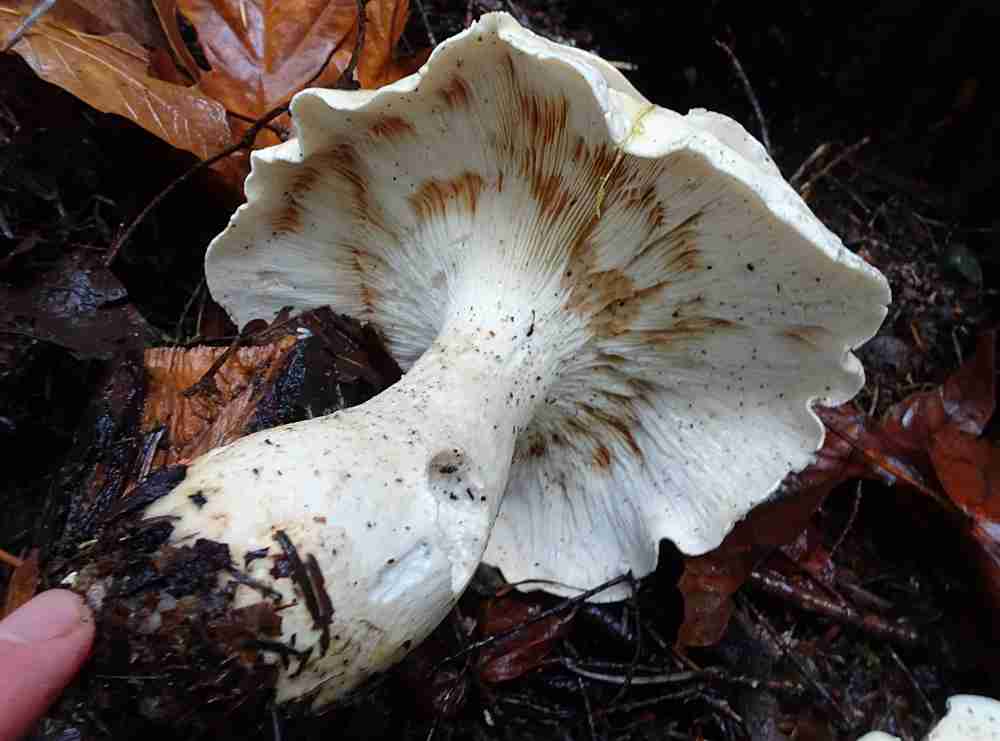
Nearby, there were some dinner-plate sized white shrooms with decurrent gills (gills extending down the stipe) and broad white caps. These are another member of this genus: the large white leucopax (Leucopaxillus albissimus). Though I’ve spent considerable time in Miracle Beach Park over the years, this is the first year I have seen either of these in the park. This little park is always yielding new and unexpected things!
Join the Comox Valley Conservation Community for a day long celebration of the watersheds and waterways that connect us all in the Comox Valley!Learn about restoration and habitat enhancement projects, salmon cycles, drinking water, forests, creeks, wetlands and estuaries – and so much more. Art projects, kids activities, volunteer engagement opportunities, hands on learning and guided walks – all looking out over the beautiful Puntledge River.Comox Valley Nature will be there with our new outreach tent. Come by and say hello, and try our bird identification game. We can also show you why native plants are best for your garden, and how to spot invasive species.Pack a picnic and stay for the day! Saturday Sept 19th from 9 am – 3 pmin Puntledge Park 1111 1st , Courtenay ...
In her memoir, Pacific Northwest author Caroll Simpson recounts the highs and lows of running a remote fishing lodge on her own following the untimely death of her husband, and of falling in love with the natural world. Simpson tells stories of living in the remote wilderness and managing the lodge, becoming an accidental environmental activist, fending off wild animals, working as an angling guide and finally, fighting off a proposed mining operation and participating in the development of a government land management plan as a spokesperson for the wilderness tourism industry.While Simpson welcomed paying guests at Ookpik Lodge, unwanted house guests included a woodchuck, a pack rat, and martens. Simpson constantly had to watch out for grizzlies, moose, and cougars. Storms and extreme weather also provided fodder for hair-raising tales. All this makes for wonderful storytelling.Caroll’s story is essentially a love story. In an essay for Sierra Club, Simpson wrote: “I developed an immense passion for flora and fauna. Just walking back and forth on the 300’ dock several times a day, I was exposed to the unbelievable beauty of the northern spectrum of water life: the golden eagle soaring above, the osprey and kingfisher diving and coming up with fish for their hatchlings, the muskrats and otters looking for an easy meal, the tireless beaver working into the late evening sunsets. All of these creatures and more expressed their generational ownership of this small piece of the world. In return each was given my utmost respect and admiration…As I listened to the loons at the end of each day and the owl and the wolf in the night, I felt blessed to be witnessing such beauty. “On September 20th, join Comox Valley Nature and Save Our Forests Team for an afternoon of storytelling about this remarkable time spent living on a remote British Columbia lake.The event is being held at the Comox United Church Hall. (250 Beach Drive, Comox) Admission is by donation. Doors open at 2:30; the event begins at 3:00 p.m. There will be time for Q&A after the presentation, as well as books available for purchase. Tea/coffee and cookies - including forest-themed cupcakes - will be available for a donation.Join us, and prepare to fall in love. ...
🎟️ Get your tickets to the Project Watershed 2026 Keeping It Living Dinner today! projectwatershed.ca/2026-keeping-it-living-dinner/Every ticket holder makes a difference. 💙 🎟️ Get your tickets to our 2026 Keeping It Living Dinner today! projectwatershed.ca/2026-keeping-it-living-dinner/When community and local businesses invest in conservation, our entire ecosystem benefits. Ticket sales directly support habitat restoration, scientific research, and environmental education, while the generosity of our sponsors helps offset event costs, ensuring that more of the funds raised can go directly toward this important work. Thank you to our incredible sponsors and dinner attendees for believing in the power of community-led conservation. Odlum Brown Community and Northwest Hydraulic Consultants, 40 Knots Winery, CNB Together, we're keeping our watersheds living. 🌿 Hope to see you September 12, 5 - 8 pm at 40 KNOTS Winery #KeepingItLiving #ProjectWatershed #CommunitySupport #Conservation #ComoxValley ...
The City of Courtenay is developing a long-term vision for Bill Moore Park and Dogwood Park to guide future improvements. To help guide these decisions, three initial concepts have been developed, and there is an opportunity for you to offer your input.The latest survey on the City website engagecomoxvalley.ca/bill-moore-and-dogwood-park asks for feedback on three concept plans and specifically which concept you prefer. The three concepts present a range of recreation possibilities and there is room on the survey for your comments.Dogwood Park is a 2.32‑hectare nature park featuring mature forested areas, natural habitat and a small wetland. Only Concept A will maintain the intact forest areas in Dogwood Park. Concepts B and C propose increased recreation in the park including an off leash dog park, disc golf course, pump track (a purpose built track for children’s cycling) and nature play areas. While the planners may say that no trees or few trees will be taken down to accommodate this, the under-story will not survive this level of trampling and fragmentation. The trees as well as all the wildlife who now call that area home will disappear over time. For those of us who value this forest, Concept A is the only option that makes sense.Dogwood Park is one of the few islands of green for many, many blocks. It provides habitat for wildlife, shade, retains water and acts as a carbon sink. On the architect's base plan of current conditions it is now characterized as an "underutilized space". The City has heard from sports enthusiasts but not nature lovers. Let them know why you value an intact forest and your connection to it. The survey is open until Sept 15. ...
The Canadian Coalition for Invasive Plant Regulation (CCIPR) wants the federal government to establish a regulatory body for the horticultural industry and create a national database identifying invasive plants and their risks in different regions. "Even if we don't prohibit them, we need to let the public know when there is potential harm," said CCIPR co-founder Cathy Kavassalis. "We do this on other products, and we should do it on plants too. It's just common sense."In July, Nanaimo council passed a motion to pursue a bylaw amendment restricting the sale of plants on a list maintained by the Invasive Species Council of B.C. A week later, Surrey moved to ban sales by businesses including nurseries, large retail chains and florists. Kavassalis said a problem that could be addressed at higher levels of government is being pushed down to municipalities."These are all patchwork solutions that, in some ways, just waste a lot of resources," she said. The CCIPR says a national database could give provinces, territories, retailers and gardeners a shared source of information about which plants pose risks in different regions. Kavassalis also wants invasive plants removed from shelves or clearly labelled.For more on this story visit www.cbc.ca/news/science/invasive-plants-sale-federal-regulation-9.7312362 or see our link in bio ...