From an email by Jocie to the Botany Group on Aug 27.
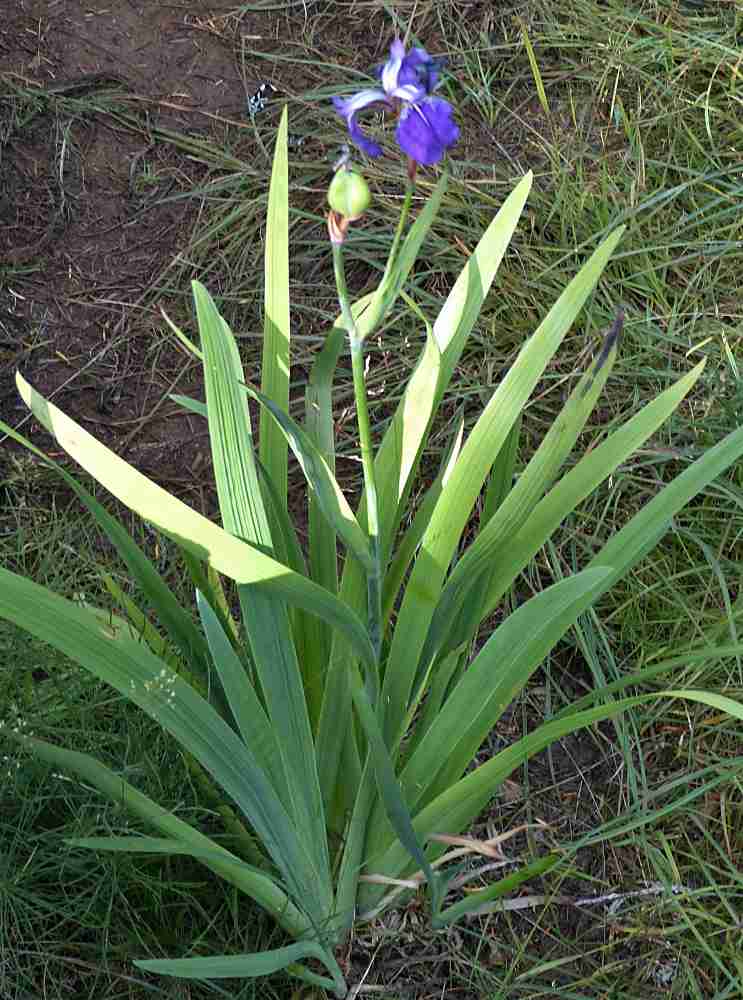
Mandy and Krista recently found this out-of-place looking iris blooming along the trail that runs alongside Croteau Lake.
Loys reports that the iris was there last year also, and on iNaturalist a Russian expert has identified it as a native species, the beach head iris, Iris setosa. On iNaturalist it looks like there are some records from Yukon.
Look out for it if you are hiking up that way.
[Click the image to enlarge it.]
Posted inPlants and fungi|Comments Off on Iris on the Croteau Lake trail
Comox Valley Nature members and the general public are invited to attend the following free online lecture presented by the Strathcona Wilderness Institute:
Title: Investigating White Pine Blister Rust in Strathcona Park Speaker: Kaitlyn Kuzma-Wells Date: Sunday, September 5, 2021 Time: 7:00 p.m. PDT
This webinar is facilitated by the Canadian Society of Environmental Biologists (see the registration link below).
Cronatium ribicola or white pine blister rust, is an invasive, and often deadly fungus present throughout British Columbia. Here, Kaitlyn Kuzma-Wells will delve into its history, life cycle and impact on the western white pines of Strathcona Provincial Park.
Kaitlyn Kuzma-Wells is one of the summer students engaged as research assistants by Strathcona Wilderness Institute through the Canada Summer Jobs program this year. They have now completed their work out on the trails in the Park documenting flora and fauna for the SWI Data Collection project on iNaturalist. Their last assignment is to deliver a webinar to the public on a project of their choice.
“Seating capacity” for the talk is limited, and you will need to register in advance. You can check the computer requirements for attendees here.
From an email by Jocie to the Botany Group on August 26.
There are many beautiful, intriguing aquatic plants that often escape our notice, especially since some are totally submerged (maybe botanical snorkeling would be fun?). Here are a few aquatic plants [click a photo to enlarge it]. If any of you have seen/photographed any more aquatics lately send them on to me to share with the group.
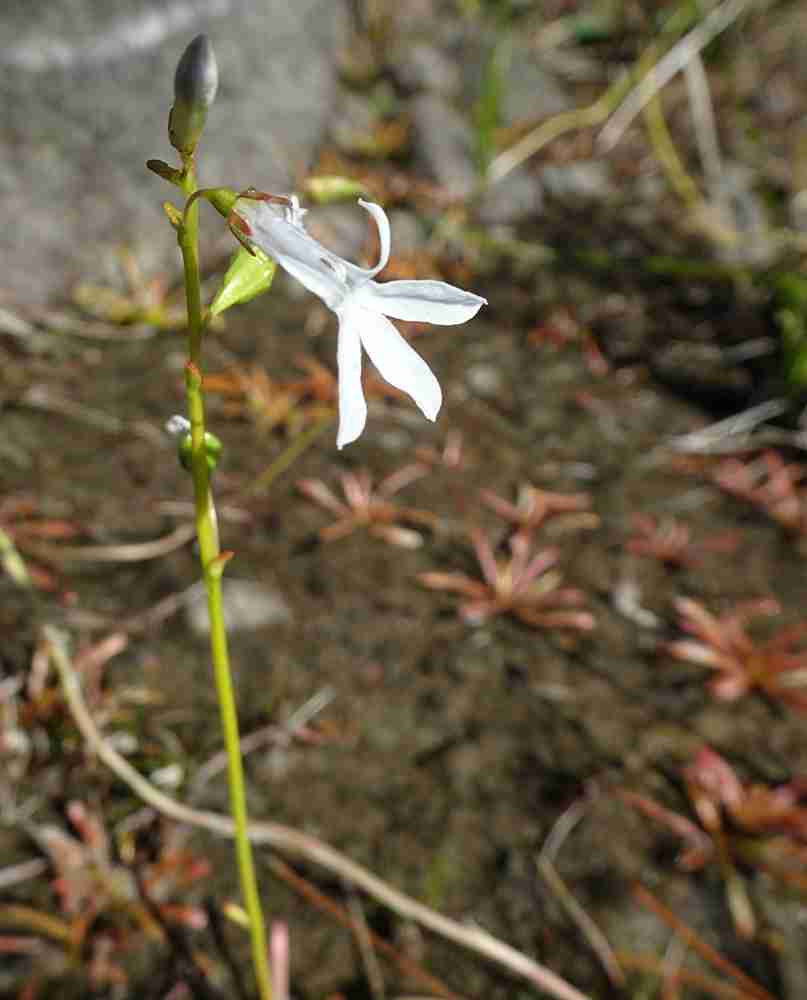
Water lobelia (Lobelia dortmanna). This grows in shallow water along lake and pond edges. The leaves form a submerged basal rosette, and the white or pale blue flowers bloom above the water surface. From iNaturalist, most records are from lakes in the Campbell River and Quadra Island area and on the west side of the island. It is on the CV plant list, though I’m not sure where in the CV it grows. Photographed here from Amor Lake (northwest of Campbell River).
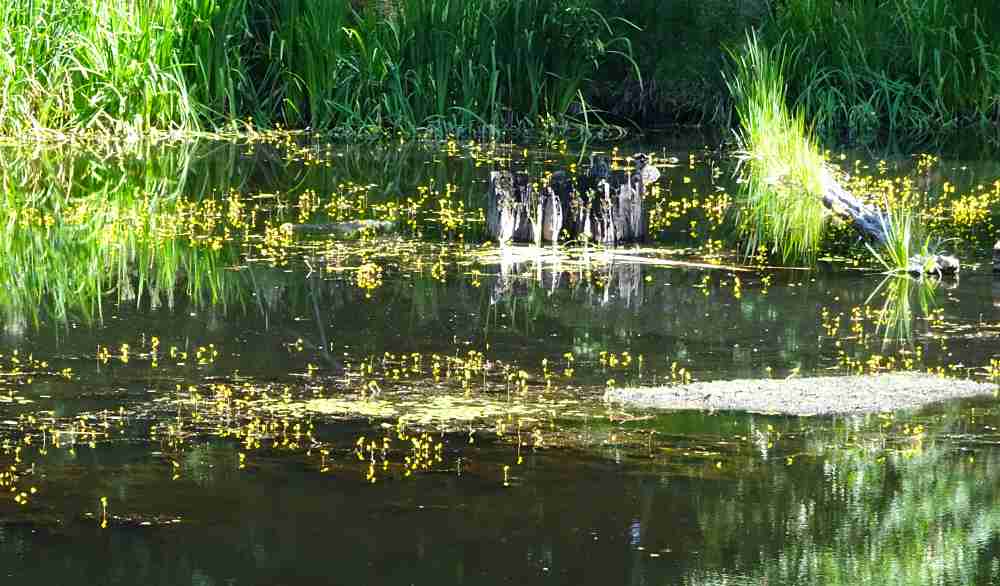
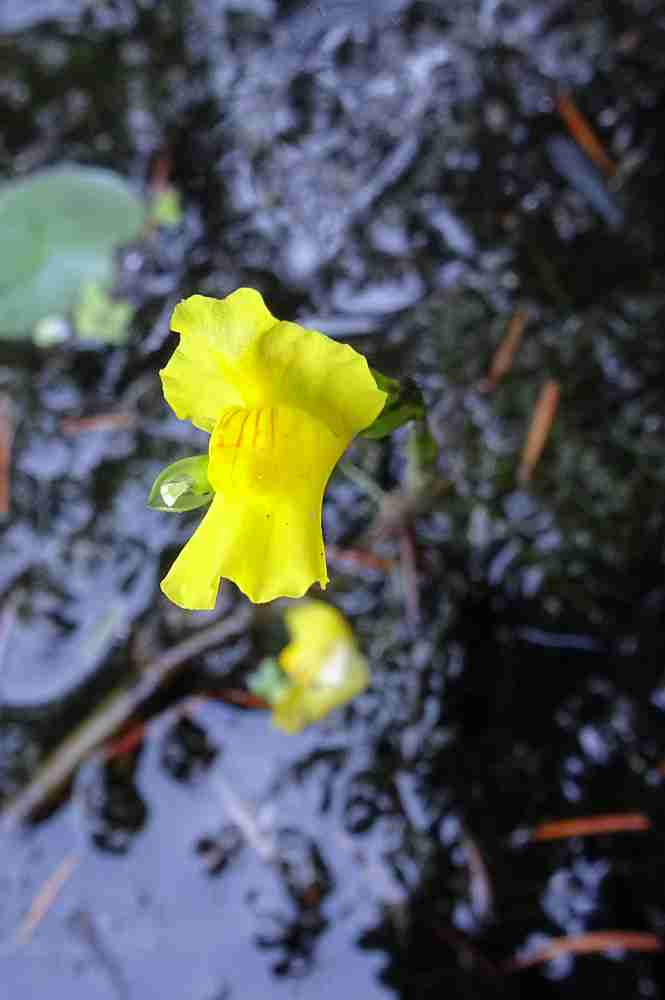
Bladderwort (Utricularia). Bladderwort has bright yellow flowers that bloom above the water surface in the summer, and thread-like leaves with floating, valve-lidded bladders that trap insects. Photographed here from Mallard Lake on Newcastle Island (near Nanaimo) in July. This one might be common bladderwort (Utricularia macrorhiza).
White water-buttercup (Ranunculus aquatilis). Mandy sent in this photo from the Diver’s lake area this summer. This floating white buttercup grows in ponds and streams (low to mid elevations). I’ve also seen it in the stream that flows out of Helen MacKenzie Lake.
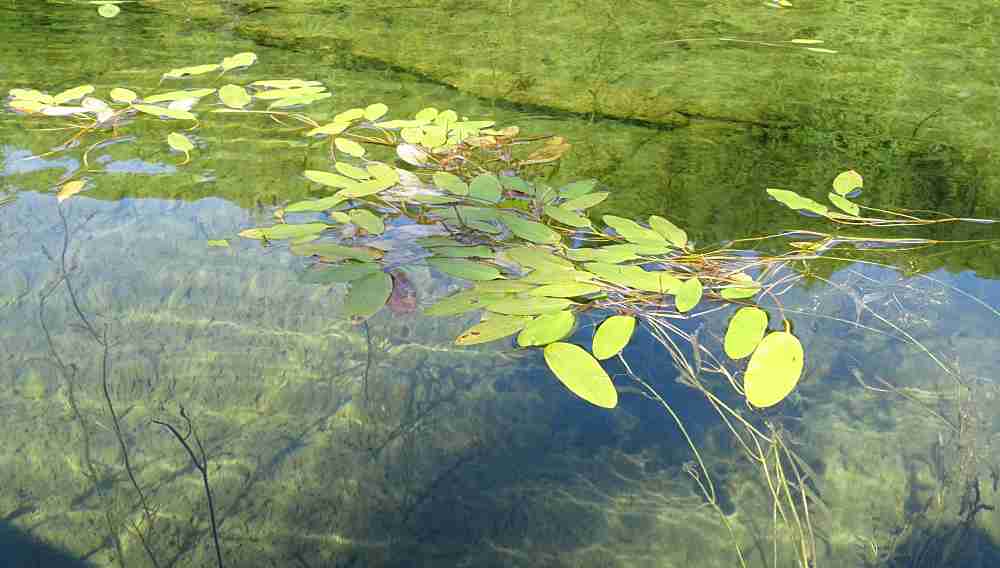
Pondweeds (Potamogeton). There are many species of Potamogeton on Vancouver Island. Some are completely submerged, while others have leaves that float on the surface like lily pads, but more narrow and elongate. They can form extensive colonies, connected by rhizomes with fleshy, overwintering tubers. This one, photographed at Gosling Lake (northwest of Campbell River) might be the floating-leaved pondweed (Potamgeton natans).
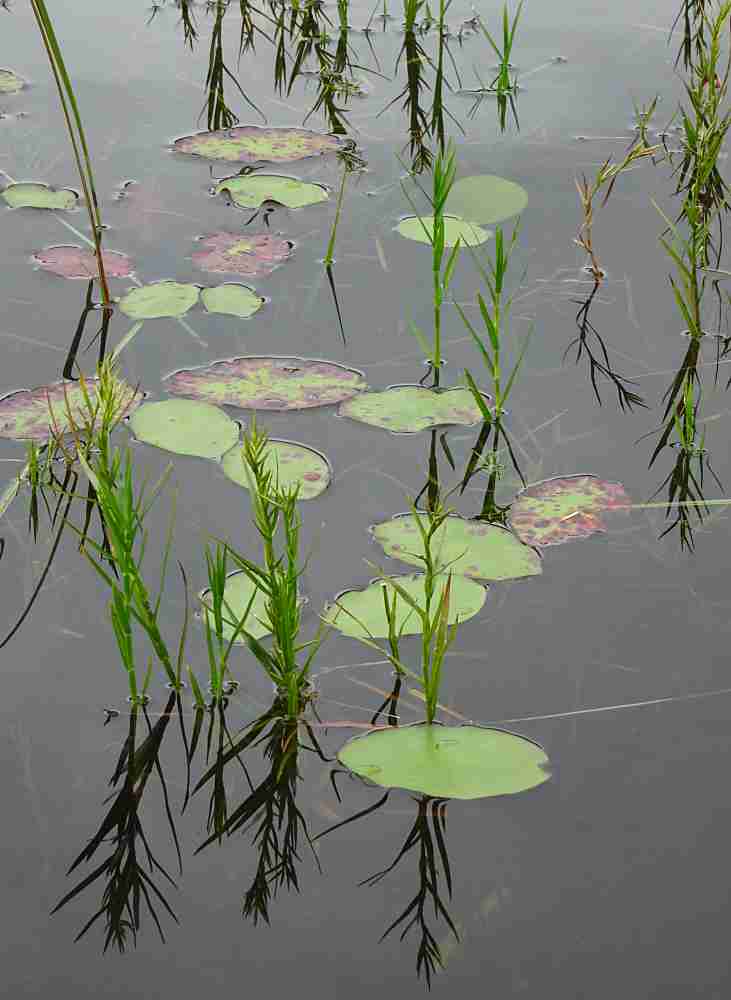
Water shield (Brasenia schreberi) and dulichium (Dulichium arundinaceum). Water shield looks like a small lily pad, but note that there is a central point of attachment of the stem on the leaf underside, unlike the pond lily. Dulichium is a common lake/pond sedge, with distinctive 3-ranked leaves.
Dulichium close-up.
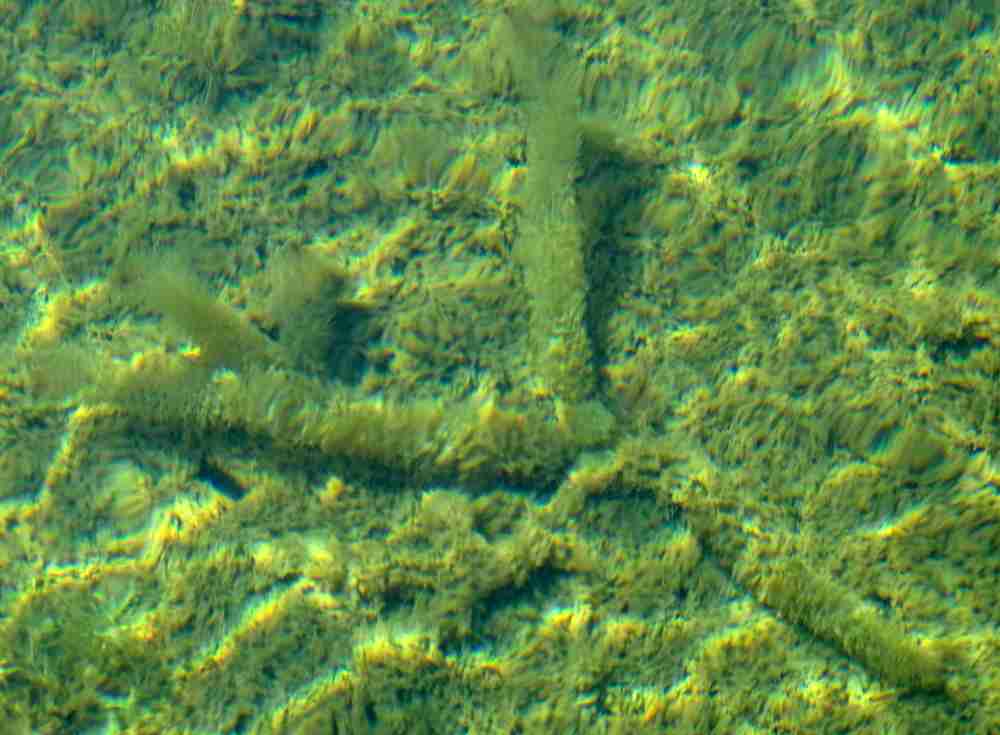
Weird things at the bottom of the lake…I saw a strange worm-like thing at the bottom of Gosling Lake, with fine, whorled leaves. It was a metre or so underwater and I didn’t want to lean too far over in the canoe to photograph it (hence the bad photo). More investigation needed, but this looks like a milfoil. You have all heard of the highly invasive nightmare, Eurasian water-milfoil, that clogs many BC lakes, but there are several lesser known native milfoils. I’m wondering if this one might be Farwell’s milfoil (Myriophyllum farwellii)?? Any thoughts?
Aquatic plants are part of unique freshwater ecosystems, and I have the feeling that botanically speaking, there is a lot more to explore and document in the ponds and lakes in our area.
Photos and notes by Alison M., distributed to the Botany Group on August 22. Click a photo to enlarge it.
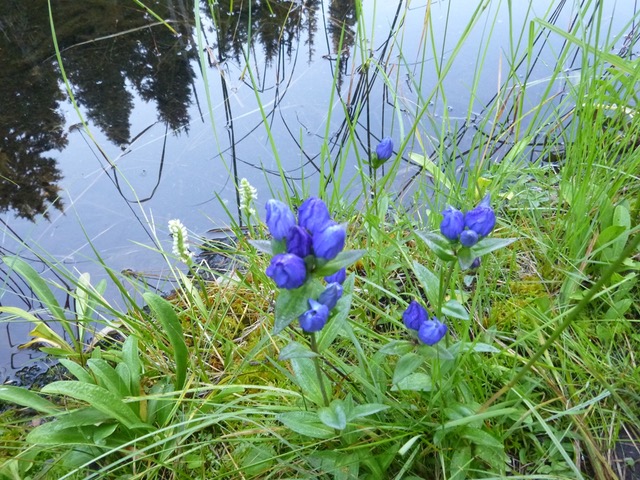
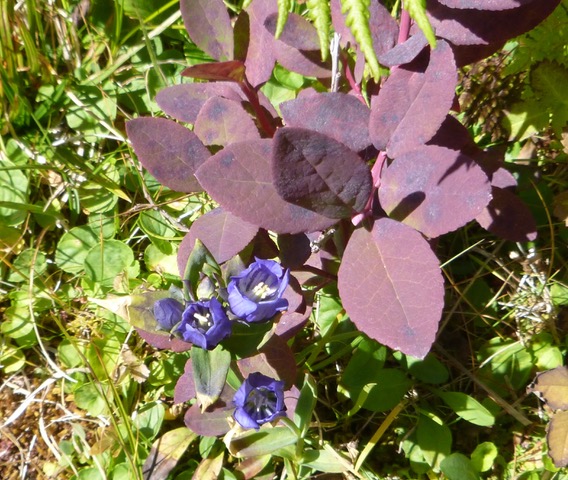
King gentians (Gentiana sceptrum) are now in full bloom in the Meadows (photos 1 and 2) – though remember that they will only be open fully in the later afternoon.
(1) and (2) King gentian
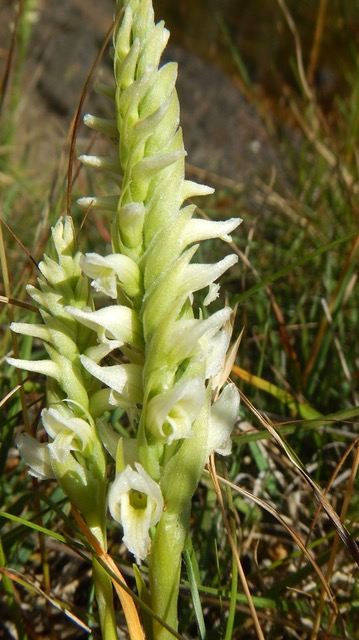
Ladies tresses (Spiranthes romanzoffiana), distinctive with the flowers in a spiral around the stem (photo 3). Found in boggy areas especially on the south side of the Centennial loop, a bit east of the Lake Helen MacKenzie junction.
(3) Ladies tresses
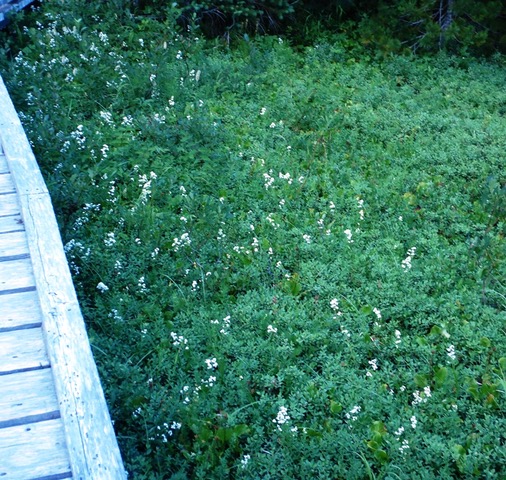
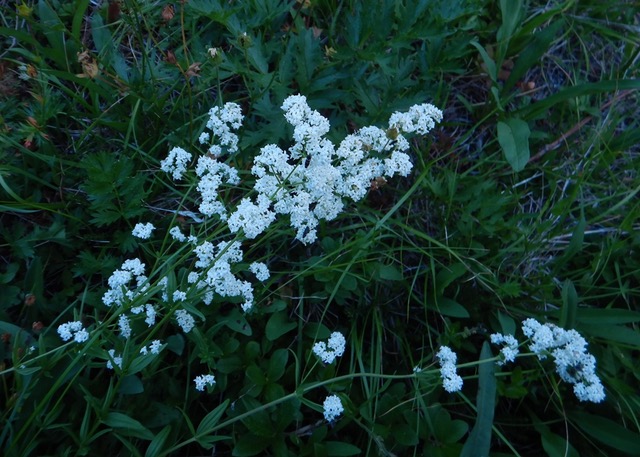
Most spectacular earlier in August was the Northern bedstraw (Galium boreale) both for the profusion of blooms and the perfume, particularly in the evening (photos 4 and 5). Worth braving the voracious mosquitoes! There is an ever-expanding large patch on the north side of the Centennial loop, about 150 or so metres after you turn left at the junction coming from the trailhead. The plants are spreading down from a draw to the left of the boardwalk, but are extending to the other side. Unfortunately by now their blooms will have come to an end
(4) and (5) Northern bedstraw
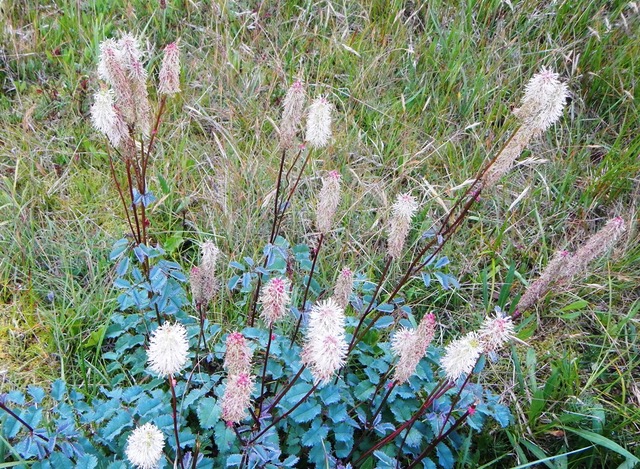
Other flowers in bloom include the three burnets:
Sitka burnet (Sanguisorba stipulata) (formerly canadensis) is yellowish-white and shaggy looking with filaments at least 3 times as long as the calyx-lobes which are 2.5–3 mm long (photo 6).
(6) Sitka burnet
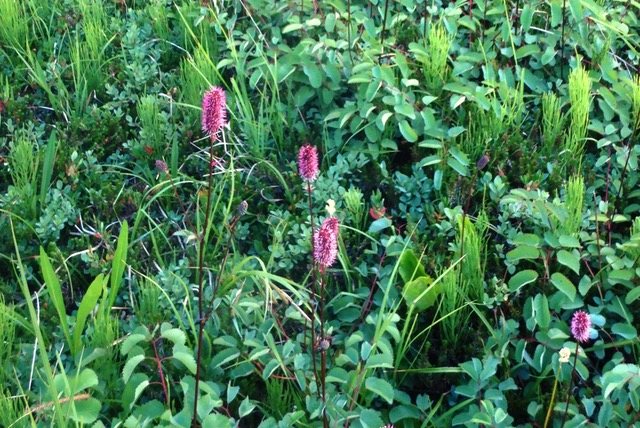
Menzies’ burnet (Sanguisorba menziesii) is reddish-purple to bright pink, shaggy looking with filaments 2–2.5 times as long as the calyx-lobes which are 2-3 mm long (photo 7).
(7) Menzies’ burnet
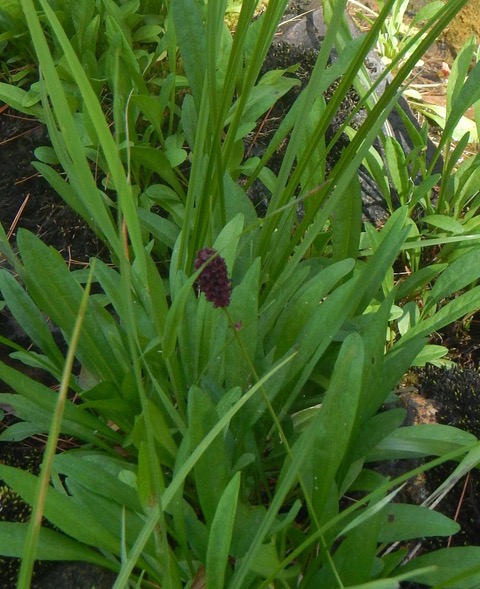
Great burnet (Sanguisorba officinalis) is reddish-purple to maroon, differing from the other two by its lack of shagginess, the filaments being about the same length as the calyx-lobes which are 2-3 mm long (photo 8).
(8) Great burnet
Posted inPlants and fungi|Comments Off on August blooms at Paradise Meadows
The CVN Bursary Committee is pleased to announce that the winner of the 2021 CVN Bursary is Charlotte Kimmins of G.P. Vanier Secondary. Charlotte is planning to pursue a double undergraduate Bachelor’s degree in Environmental Sciences and Engineering at Queen’s University. She has a particular interest in reducing plastic pollution and founded a youth non-profit organization dedicated to reducing plastic pollution in our environment. Ultimately she hopes to conduct research to create biodegradable, water soluble alternatives to plastics using marine bio-polymers.
Charlotte’s environmental background also includes:
Member of the Official City Plan Advisory Council promoting conservation
Member of the school’s Environment Club for Grades 10-12
Explore Outdoor Education participant
Ocean Wise Conservation Summit Youth Ambassador and co-founder of their YouthtoSea program
Young Women in Ocean Literacy and Leadership Academy: speaker and mentor
Youth Ocean Advocacy Summit director, helping to organize conservation workshops and action planning
Winner of the Ruth Masters Environmental Award 2019
An excellent student, Charlotte was Biology Student of the Year in 2020 at G.P. Vanier Secondary and maintained a straight A average throughout high school. Her references describe her as an excellent team member with outstanding motivation, work ethic, and ability to inspire. Outside of school she enjoys hiking, mountaineering, skiing, and competing in equestrian sports.
Congratulations Charlotte, and we wish you much success in your studies and future endeavours!
Posted inBursary|Comments Off on Charlotte Kimmins, CVN Bursary recipient, 2021
From an email by Jocie to the Botany Group on July 14.
In early July I did some exploring around the Whymper Lake area (across the Strathcona dam, west of Campbell River). Here are a few photos (mostly botany…and other things of interest. [Click a photo to enlarge it.]
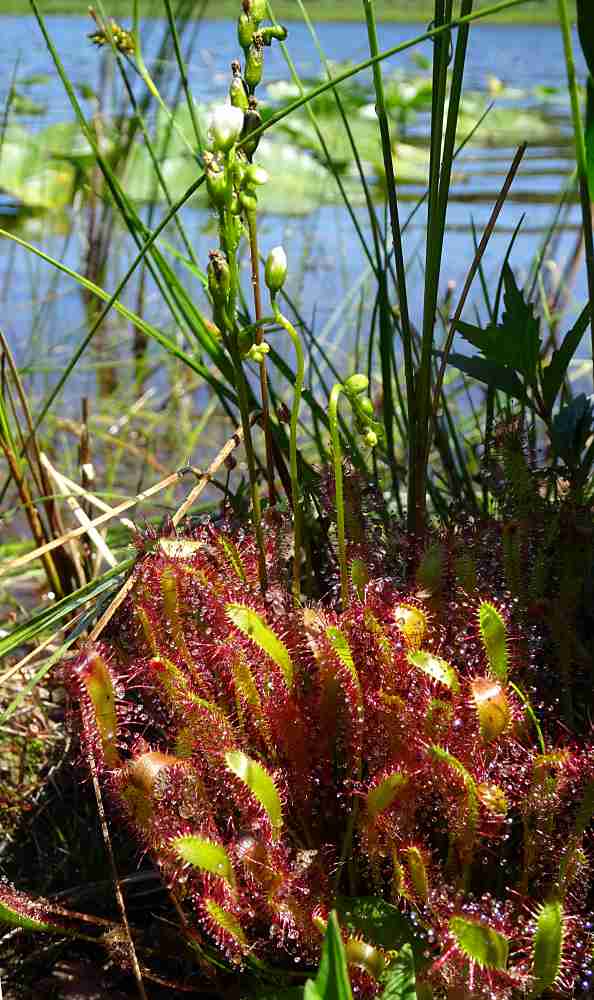
The first 5 photos are from the lakeshore habitat. Some stunning miniature forests of glistening red sundews etc.
Whymper Lake view
Western yellow pond lily (Nuphar polysepala)…
…provides nice landing pads for dragonflies such as…
Chalk-fronted corporal (Ladona julia)
White-beaked sedge (Rhychospora alba): a close-up of the flowers
Great sundew (Drosera anglica)
The next 3 are flowers of the dry gravel roadside habitat. Amazing that anything can grow there!
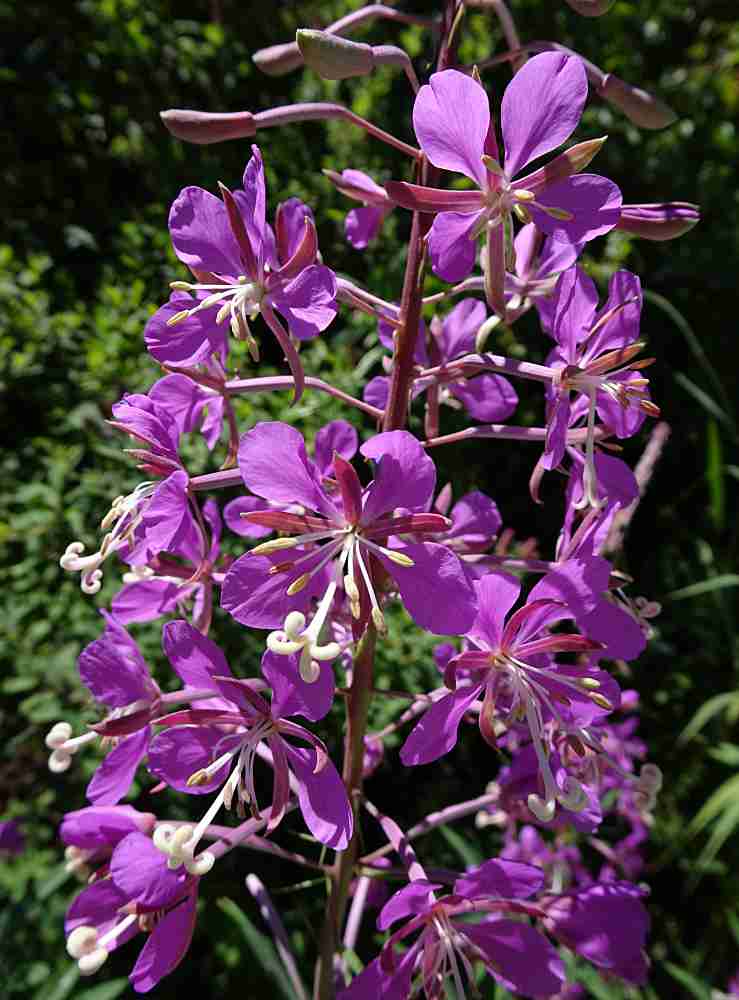
Fireweed (Chamaenerion angustifolium) – what a flower!
Spreading dogbane (Apocynum androsaemifolium)
Philadelphia fleabane (Erigeron philadelphicus)…I think this is right, or one of those fleabanes…
Finally, a bit of relic hunting around some old settlements from logging camp days. Nature reclaiming short-lived boomtowns.
The backyard tin-can & bottle dumping pit. Not much decay on those old tins in nearly a hundred years. Still, way less garbage than today’s households produce.
An intact ketchup bottle…circa 1930s. Yikes, a bit of ketchup still in the bottle!!!
Posted inPlants and fungi|Comments Off on Plants of lakes and roadsides (and old ketchup)
From an email by Jocie to the Botany Group on July 12, with photos from Alison M.
Despite being laid up with a broken wrist and having to type with one hand, Alison has come through with some colourful photos for us of a succession of blooms from Paradise Meadows and area. The hot weather has accelerated the transition from winter to summer, in just a few short weeks!
[Click a photo to enlarge it.]
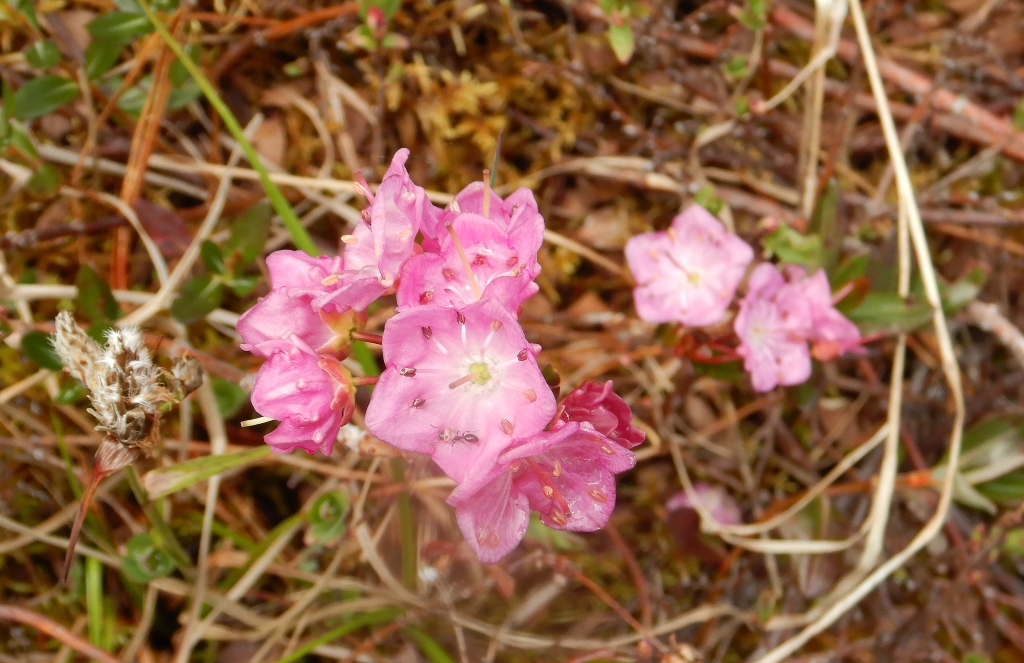
Western bog laurel (Kalmia microphylla)
Fern-leaved goldthread (Coptis asplenifolia)
Globe flower (Trollius laxus)
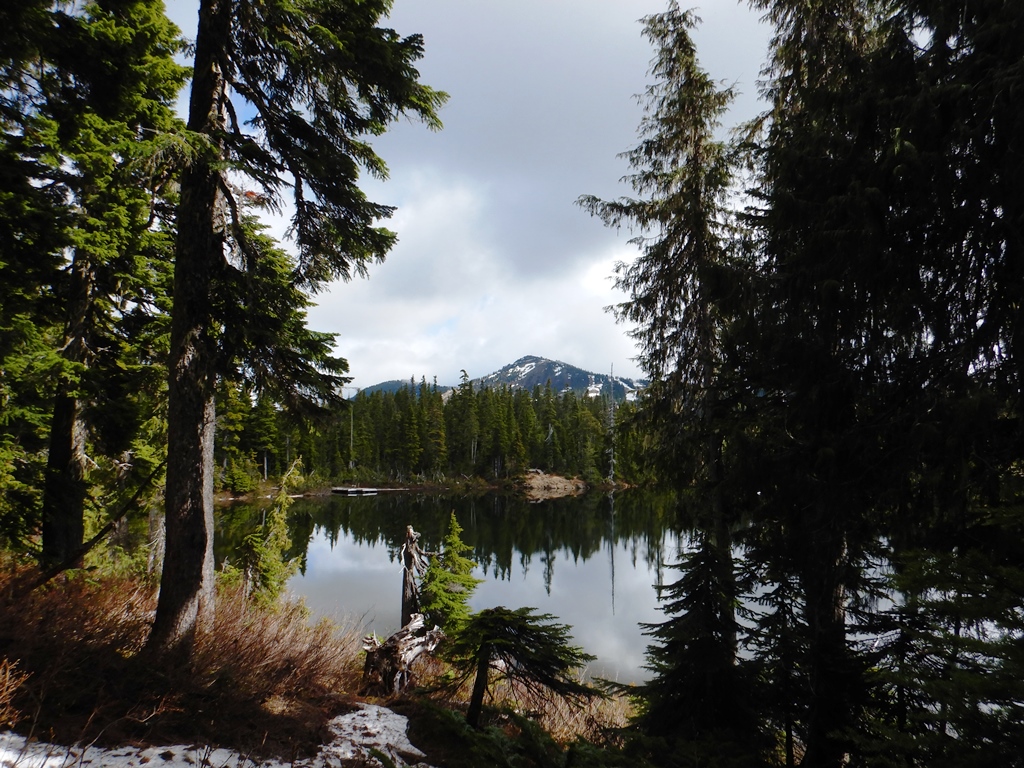
Avalanche lily (Erythronium grandiflorum). These are found on the knoll above Croteau Lake (a bit out of focus due to strong wind).
Jeffrey’s shooting star (Dodecatheon jeffreyi)
Utah honeysuckle (Lonicera utahensis). An uncommon honeysuckle in our area with twinned creamy-white blooms, photographed here along the trail to McKenzie Lake.
Black twinberry (Lonicera involucrata). A more common shrub honeysuckle species, with twinned yellow blooms.
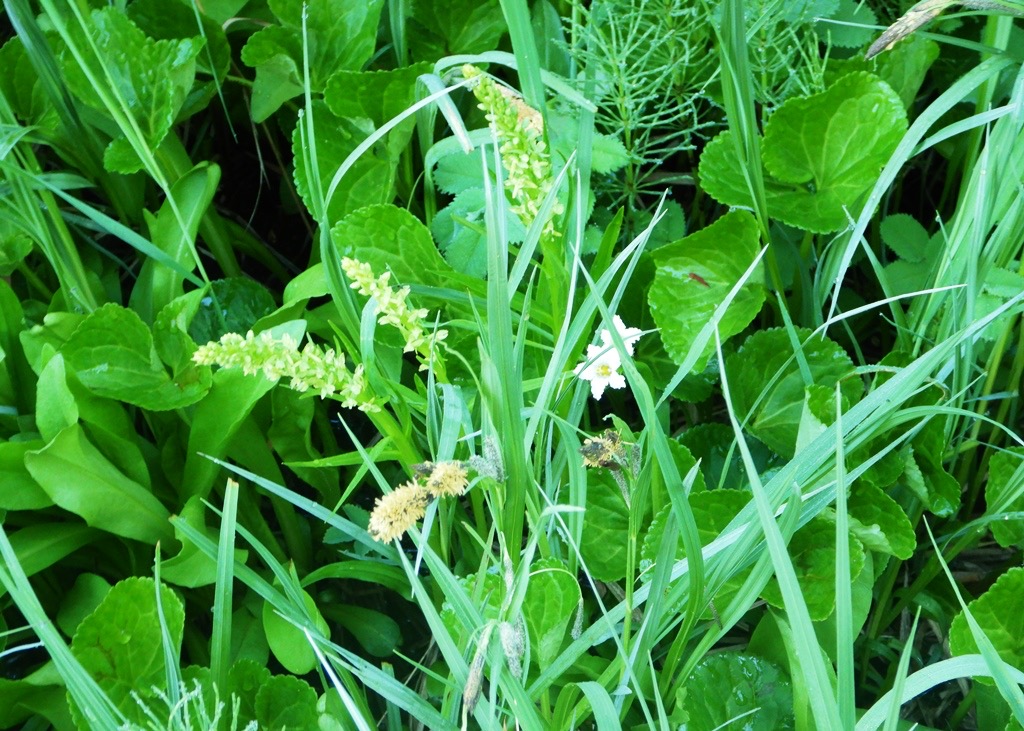
Green bog orchid (Platanthera stricta)
Rosy twistedstalk (Streptopus roseus)
Meadows view June 18…note the snow!
Meadows view June 28
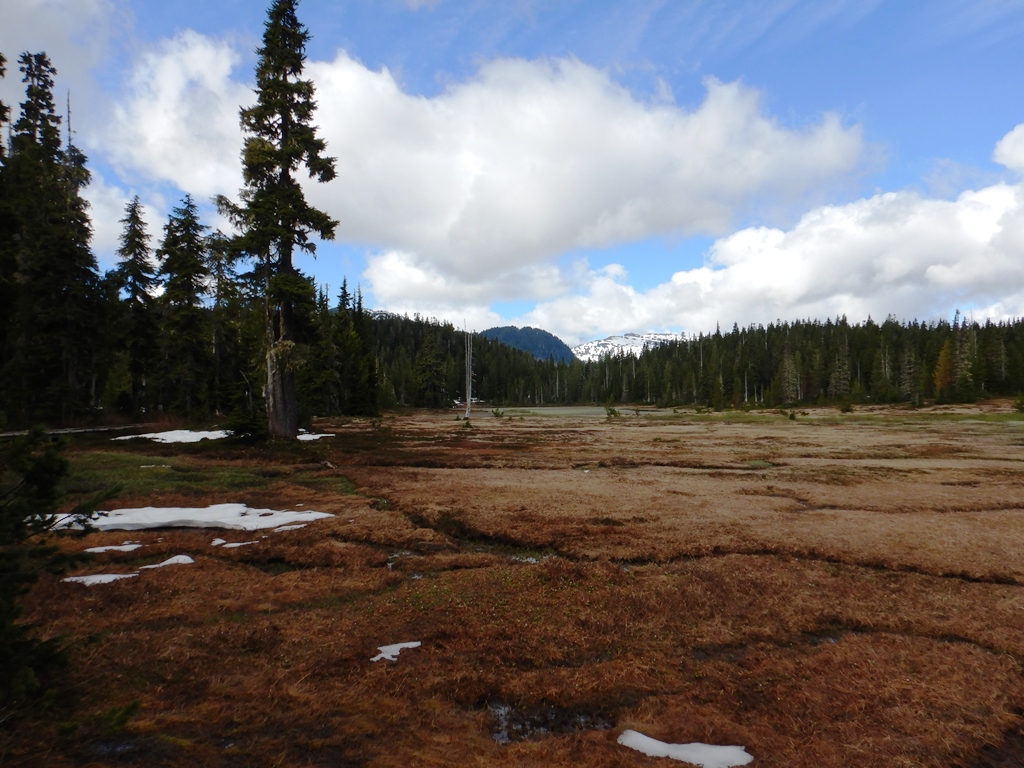
Battleship Lake view June 18
Posted inPlants and fungi|Comments Off on Paradise Meadows: Winter to summer in 3 weeks
In March, our Board of Directors approved a CVN proposal for a restoration and stewardship pilot project to protect and enhance Garry oaks in Vanier Forest. Much research and planning work has already been done by a dedicated team of CVN members. Now the team has been accepted as a delegation to Courtenay City Council to present CVN’s requests for access to the property to undertake the project and for some funding for the project. Bill Henderson and Karen Cummins will present these requests by videoconference to Council at their meeting on July 19.
To learn more about the project, visit our new web page for the project here. You can also find the page any time in the Activities menu.
Posted inConservation and Restoration|Comments Off on Vanier Garry oaks project next step – delegation to Courtenay Council
From an email by Jocie to the Botany Group on June 14.
Last weekend I was up in Strathcona Park for the annual Strathcona Bird Search, which is always very enjoyable even if the weather was cool and showery.
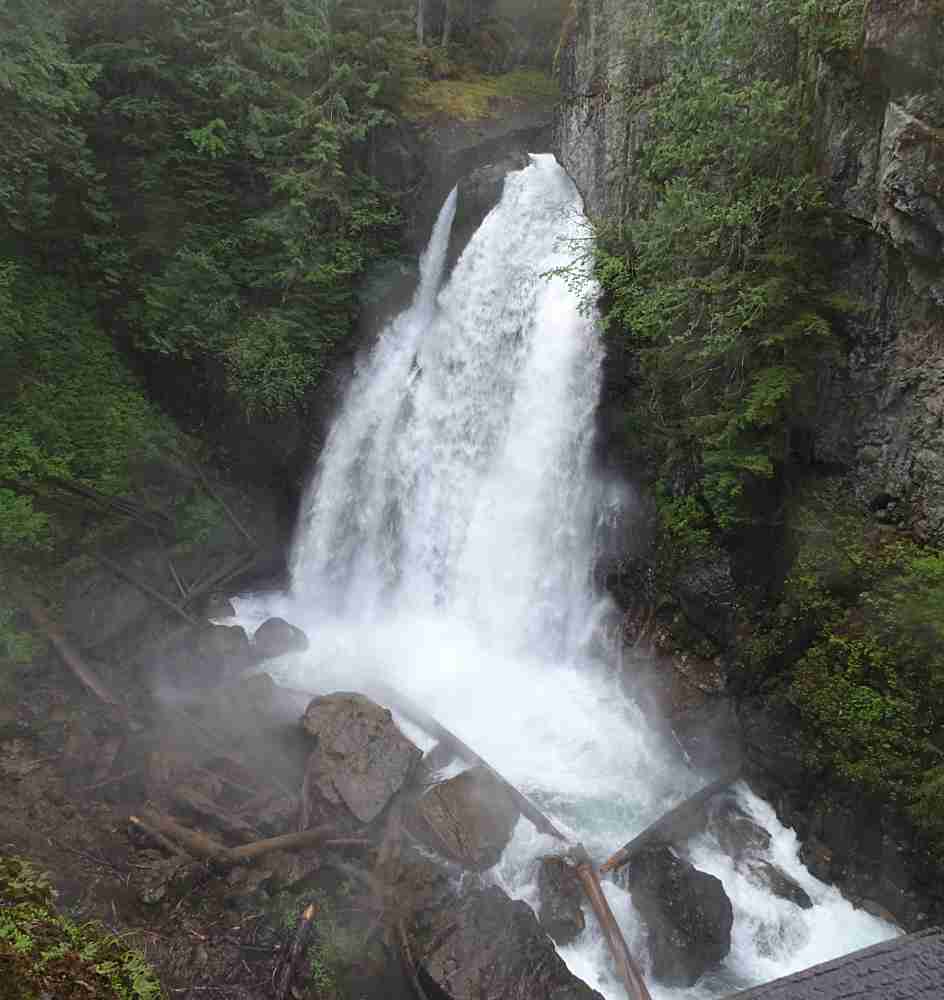
View of Lady Falls
Though I was busy counting birds, there was the usual distraction of so many beautiful plants to look at, and waterfalls to admire! Here are a few highlights [click a photo to enlarge it]:
Dwarf dogwood (Cornus canadensis)
False azalea (Menziesia ferruginea)
Davidson’s penstemon (Penstemon davidsonii)
Ground cone (Boschniakia hookeri)
Posted inPlants and fungi|Comments Off on Botanizing on the Strathcona Bird Search
For the first time, the annual “CVN Tree of the Year” has been chosen by public vote instead of by committee. The contest, inspired by European tradition and now in its fourth year, fosters a strong connection with nature by highlighting local trees that are cherished by the residents of the Comox Valley.
This year’s winning tree, nominated by Ted Grainger, is a western yew, located in the Cumberland Community Forest. Coming in a close second is a bigleaf maple found in Morrison Creek Park. Praised for its size and the swing in its branches, the maple was put forward for nomination by Marion Dulude’s Grade 6 class at École Puntledge Park. “Both are iconic trees for this area and have great but different stories attached to them,” says Karen Cummins, one of the organizers of the event.
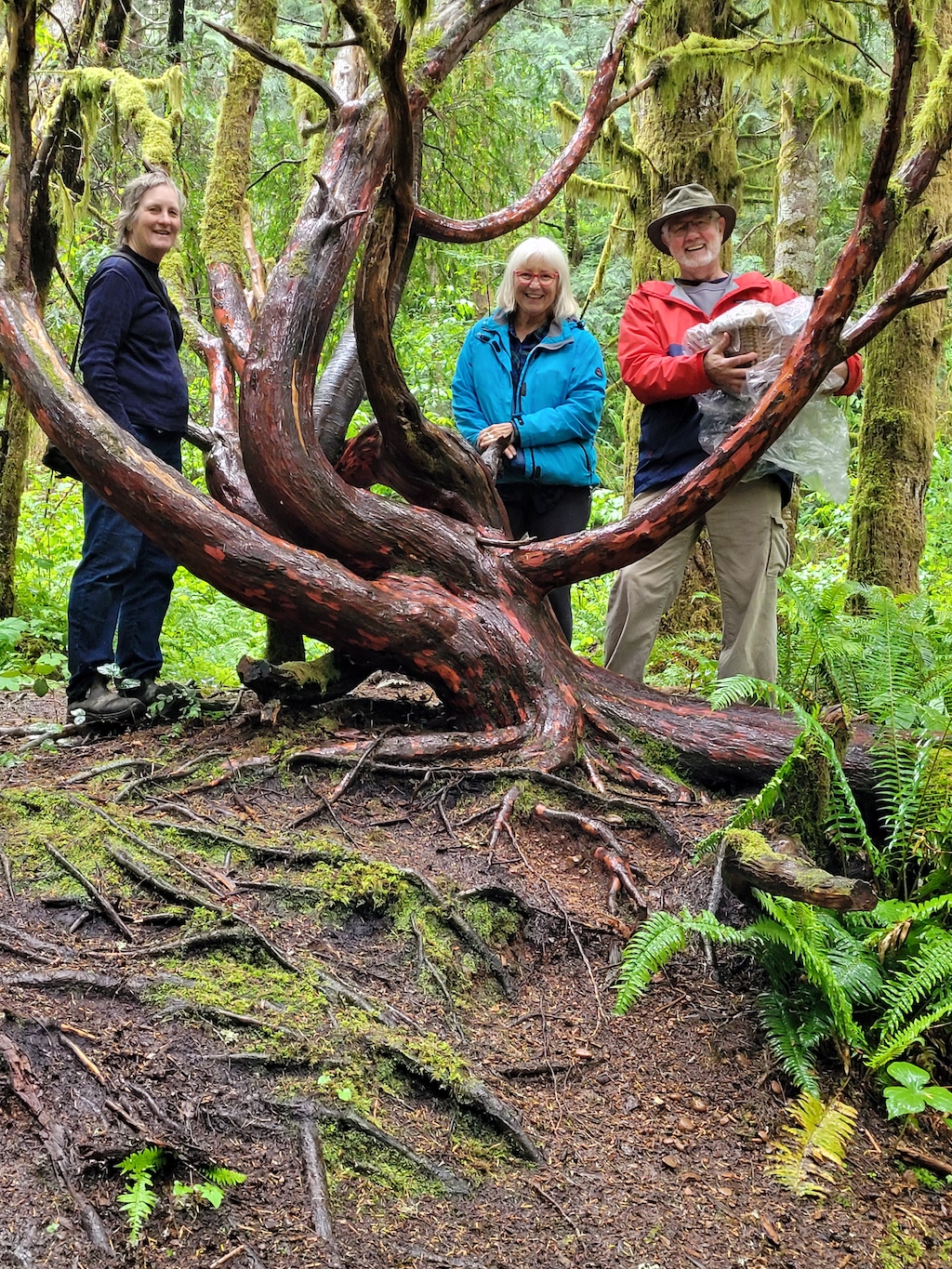
CVN Tree of the Year 2021, a western yew, with (from left) committee members Karen Cummins and Susan Gravelle, and nominator Ted Grainger with his prize basket. (Photo: Dianne Grainger)
The western yew (scientific name, Taxus brevifolia, or Nuxalk name, kuts’ulhkwis) is a species of tree in the yew family, Taxaceae, and is native to the Pacific Northwest. “Taxus” is the Latin word for “bow”. Because yew wood is strong and stiff, it has been an important resource for coastal First Nations for millennia.
Nominated for its poetic beauty, this western yew symbolizes how community efforts, like fundraising and raising awareness, can protect and preserve threatened forests. Growing on a northwest-facing slope, just past the information kiosk, it is surrounded by artifacts from the former inhabitants of the historic Cumberland Chinatown.
“When you first see this tree, the smooth bark looks like a gnarly, twisted arbutus, but the outer foliage reveals it to be a yew tree. Its shape suggests a life of struggle and tenacity, but it is beautiful nonetheless,” says Ted Grainger, winner of this year’s gift basket and a painting by Sharon Niscak.
As conifers that produce berries, yew trees are unusual. This year’s winning yew is even more unique because of its expanse of exposed roots and wide branches. Approximately 9 metres wide and almost as tall, the squat and multiple-leader form indicates that the yew has grown in the shady understory and been shaped by the succession of the 80–100-year-old forest. This spectacular tree has grown with and around a cherry tree and is extremely slow growing. The papery, red bark—peeling and shredding on the tree’s many stems—while typical of this medicinal tree when it is not covered in moss, nonetheless sets it apart from the neighbouring trees.
Thanks to the passion and perseverance of Cumberland Community Forest Society, this western yew is one of the thousands of trees in over 500 acres of mature forests that have been protected.
CVN encourages everybody to go out and experience the beautiful and important nominated trees firsthand. According to Suzanne Gravelle “The list and location map will remain on the CVN website so the community can still tour and honour all the trees.”
The 2021 contest is dedicated to Cathy Storey. Her legacy is a testament to the CVN motto “to know nature and keep it worth knowing.”
Join the Comox Valley Conservation Community for a day long celebration of the watersheds and waterways that connect us all in the Comox Valley!Learn about restoration and habitat enhancement projects, salmon cycles, drinking water, forests, creeks, wetlands and estuaries – and so much more. Art projects, kids activities, volunteer engagement opportunities, hands on learning and guided walks – all looking out over the beautiful Puntledge River.Comox Valley Nature will be there with our new outreach tent. Come by and say hello, and try our bird identification game. We can also show you why native plants are best for your garden, and how to spot invasive species.Pack a picnic and stay for the day! Saturday Sept 19th from 9 am – 3 pmin Puntledge Park 1111 1st , Courtenay ...
In her memoir, Pacific Northwest author Caroll Simpson recounts the highs and lows of running a remote fishing lodge on her own following the untimely death of her husband, and of falling in love with the natural world. Simpson tells stories of living in the remote wilderness and managing the lodge, becoming an accidental environmental activist, fending off wild animals, working as an angling guide and finally, fighting off a proposed mining operation and participating in the development of a government land management plan as a spokesperson for the wilderness tourism industry.While Simpson welcomed paying guests at Ookpik Lodge, unwanted house guests included a woodchuck, a pack rat, and martens. Simpson constantly had to watch out for grizzlies, moose, and cougars. Storms and extreme weather also provided fodder for hair-raising tales. All this makes for wonderful storytelling.Caroll’s story is essentially a love story. In an essay for Sierra Club, Simpson wrote: “I developed an immense passion for flora and fauna. Just walking back and forth on the 300’ dock several times a day, I was exposed to the unbelievable beauty of the northern spectrum of water life: the golden eagle soaring above, the osprey and kingfisher diving and coming up with fish for their hatchlings, the muskrats and otters looking for an easy meal, the tireless beaver working into the late evening sunsets. All of these creatures and more expressed their generational ownership of this small piece of the world. In return each was given my utmost respect and admiration…As I listened to the loons at the end of each day and the owl and the wolf in the night, I felt blessed to be witnessing such beauty. “On September 20th, join Comox Valley Nature and Save Our Forests Team for an afternoon of storytelling about this remarkable time spent living on a remote British Columbia lake.The event is being held at the Comox United Church Hall. (250 Beach Drive, Comox) Admission is by donation. Doors open at 2:30; the event begins at 3:00 p.m. There will be time for Q&A after the presentation, as well as books available for purchase. Tea/coffee and cookies - including forest-themed cupcakes - will be available for a donation.Join us, and prepare to fall in love. ...
🎟️ Get your tickets to the Project Watershed 2026 Keeping It Living Dinner today! projectwatershed.ca/2026-keeping-it-living-dinner/Every ticket holder makes a difference. 💙 🎟️ Get your tickets to our 2026 Keeping It Living Dinner today! projectwatershed.ca/2026-keeping-it-living-dinner/When community and local businesses invest in conservation, our entire ecosystem benefits. Ticket sales directly support habitat restoration, scientific research, and environmental education, while the generosity of our sponsors helps offset event costs, ensuring that more of the funds raised can go directly toward this important work. Thank you to our incredible sponsors and dinner attendees for believing in the power of community-led conservation. Odlum Brown Community and Northwest Hydraulic Consultants, 40 Knots Winery, CNB Together, we're keeping our watersheds living. 🌿 Hope to see you September 12, 5 - 8 pm at 40 KNOTS Winery #KeepingItLiving #ProjectWatershed #CommunitySupport #Conservation #ComoxValley ...
The City of Courtenay is developing a long-term vision for Bill Moore Park and Dogwood Park to guide future improvements. To help guide these decisions, three initial concepts have been developed, and there is an opportunity for you to offer your input.The latest survey on the City website engagecomoxvalley.ca/bill-moore-and-dogwood-park asks for feedback on three concept plans and specifically which concept you prefer. The three concepts present a range of recreation possibilities and there is room on the survey for your comments.Dogwood Park is a 2.32‑hectare nature park featuring mature forested areas, natural habitat and a small wetland. Only Concept A will maintain the intact forest areas in Dogwood Park. Concepts B and C propose increased recreation in the park including an off leash dog park, disc golf course, pump track (a purpose built track for children’s cycling) and nature play areas. While the planners may say that no trees or few trees will be taken down to accommodate this, the under-story will not survive this level of trampling and fragmentation. The trees as well as all the wildlife who now call that area home will disappear over time. For those of us who value this forest, Concept A is the only option that makes sense.Dogwood Park is one of the few islands of green for many, many blocks. It provides habitat for wildlife, shade, retains water and acts as a carbon sink. On the architect's base plan of current conditions it is now characterized as an "underutilized space". The City has heard from sports enthusiasts but not nature lovers. Let them know why you value an intact forest and your connection to it. The survey is open until Sept 15. ...
The Canadian Coalition for Invasive Plant Regulation (CCIPR) wants the federal government to establish a regulatory body for the horticultural industry and create a national database identifying invasive plants and their risks in different regions. "Even if we don't prohibit them, we need to let the public know when there is potential harm," said CCIPR co-founder Cathy Kavassalis. "We do this on other products, and we should do it on plants too. It's just common sense."In July, Nanaimo council passed a motion to pursue a bylaw amendment restricting the sale of plants on a list maintained by the Invasive Species Council of B.C. A week later, Surrey moved to ban sales by businesses including nurseries, large retail chains and florists. Kavassalis said a problem that could be addressed at higher levels of government is being pushed down to municipalities."These are all patchwork solutions that, in some ways, just waste a lot of resources," she said. The CCIPR says a national database could give provinces, territories, retailers and gardeners a shared source of information about which plants pose risks in different regions. Kavassalis also wants invasive plants removed from shelves or clearly labelled.For more on this story visit www.cbc.ca/news/science/invasive-plants-sale-federal-regulation-9.7312362 or see our link in bio ...