Kitty Coleman botany highlights

From an email by Jocie to the Botany Group on March 18. Click a photo to enlarge it.

We had a brilliant sunny day for our March 13 walk at Kitty Coleman Beach Provincial Park, and thanks to Robbie we enjoyed a fireside picnic lunch!  The herring spawn was in full swing with gulls and sea lions active on the water. We saw a good mix of things: lichens, fungi, new green leaves appearing, and of course the “big fir.” (Not to mention an ant colony.)

Here are a few highlights. Thanks to Veronique for many of the photos:.

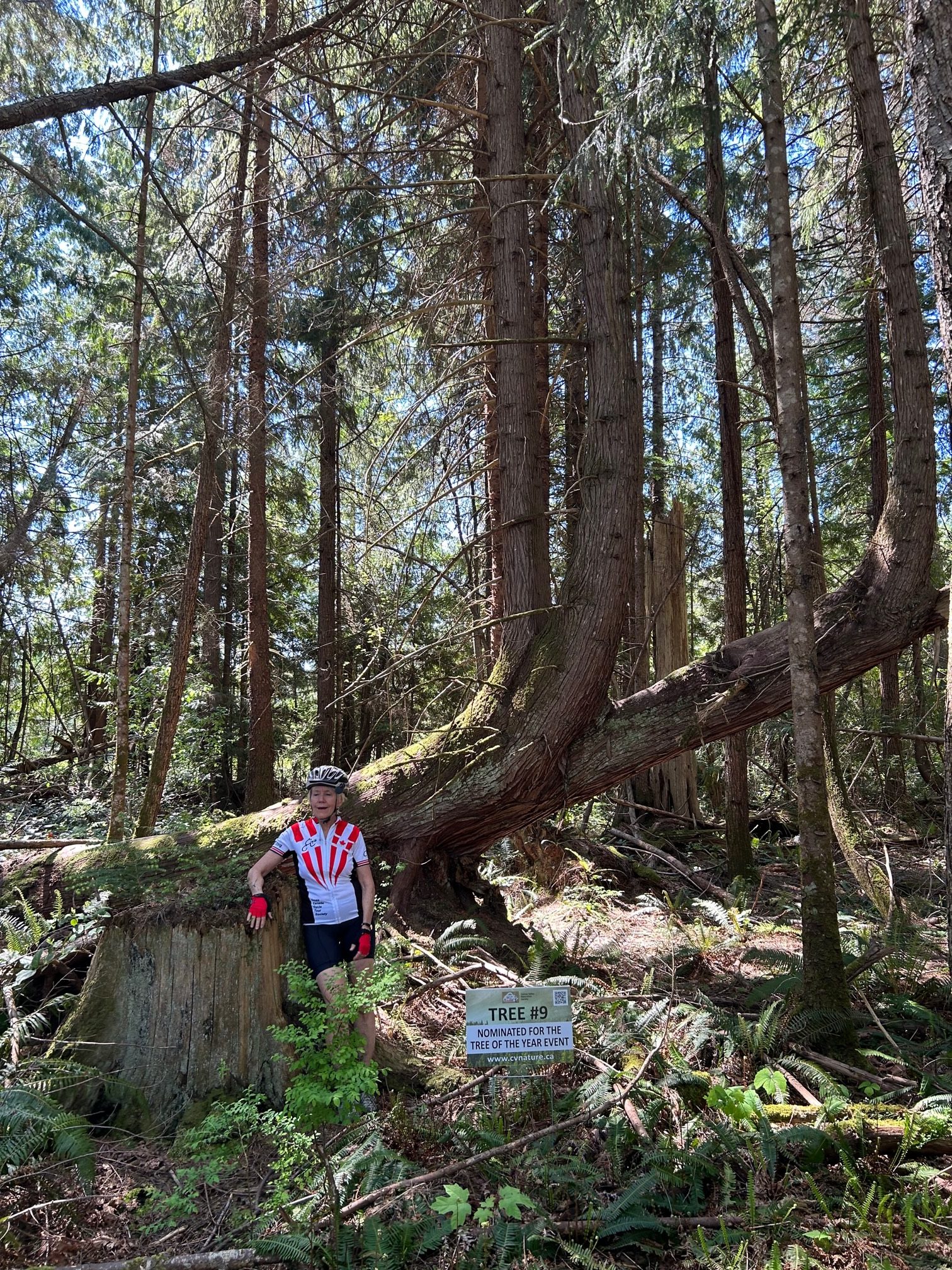
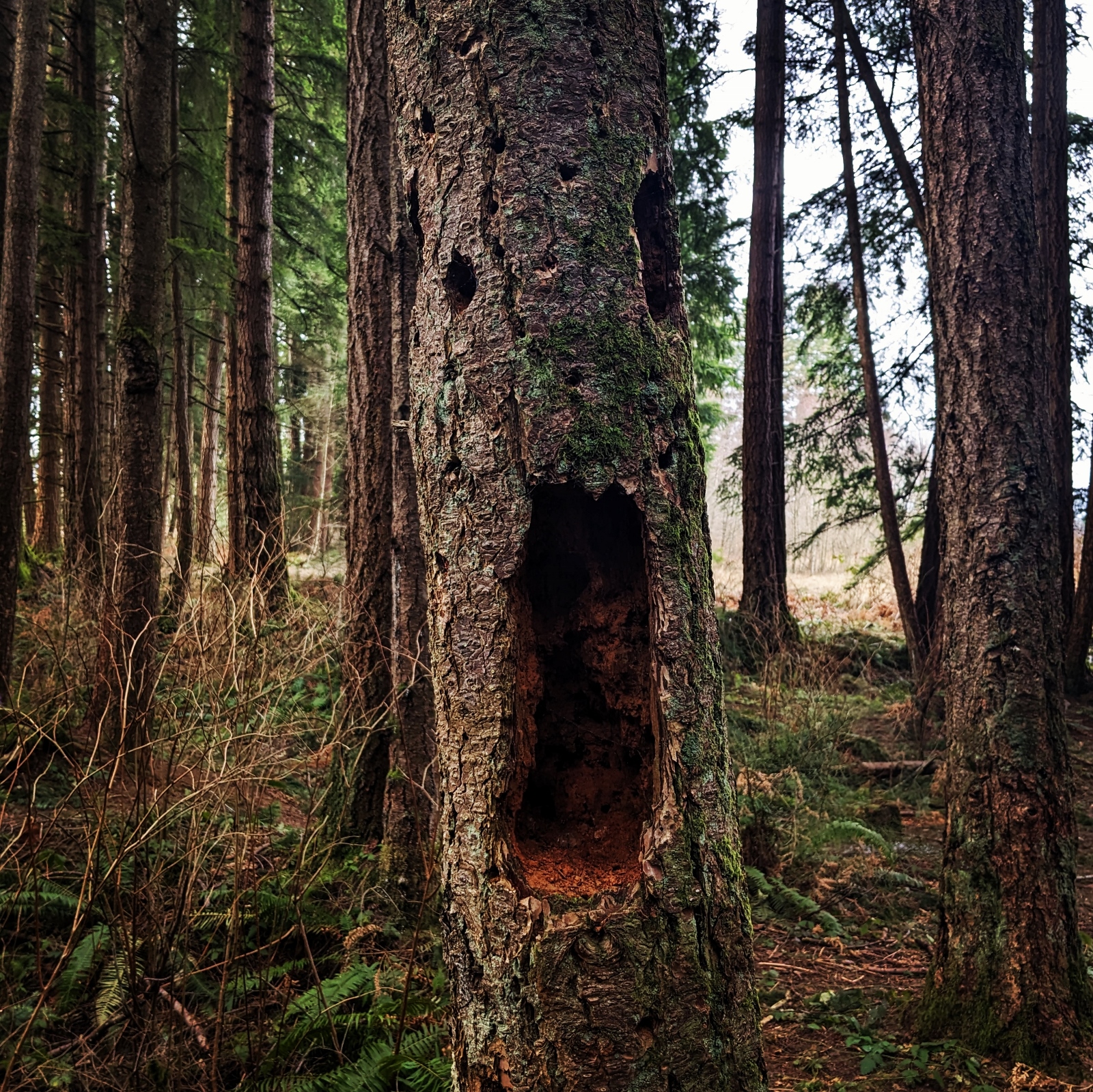
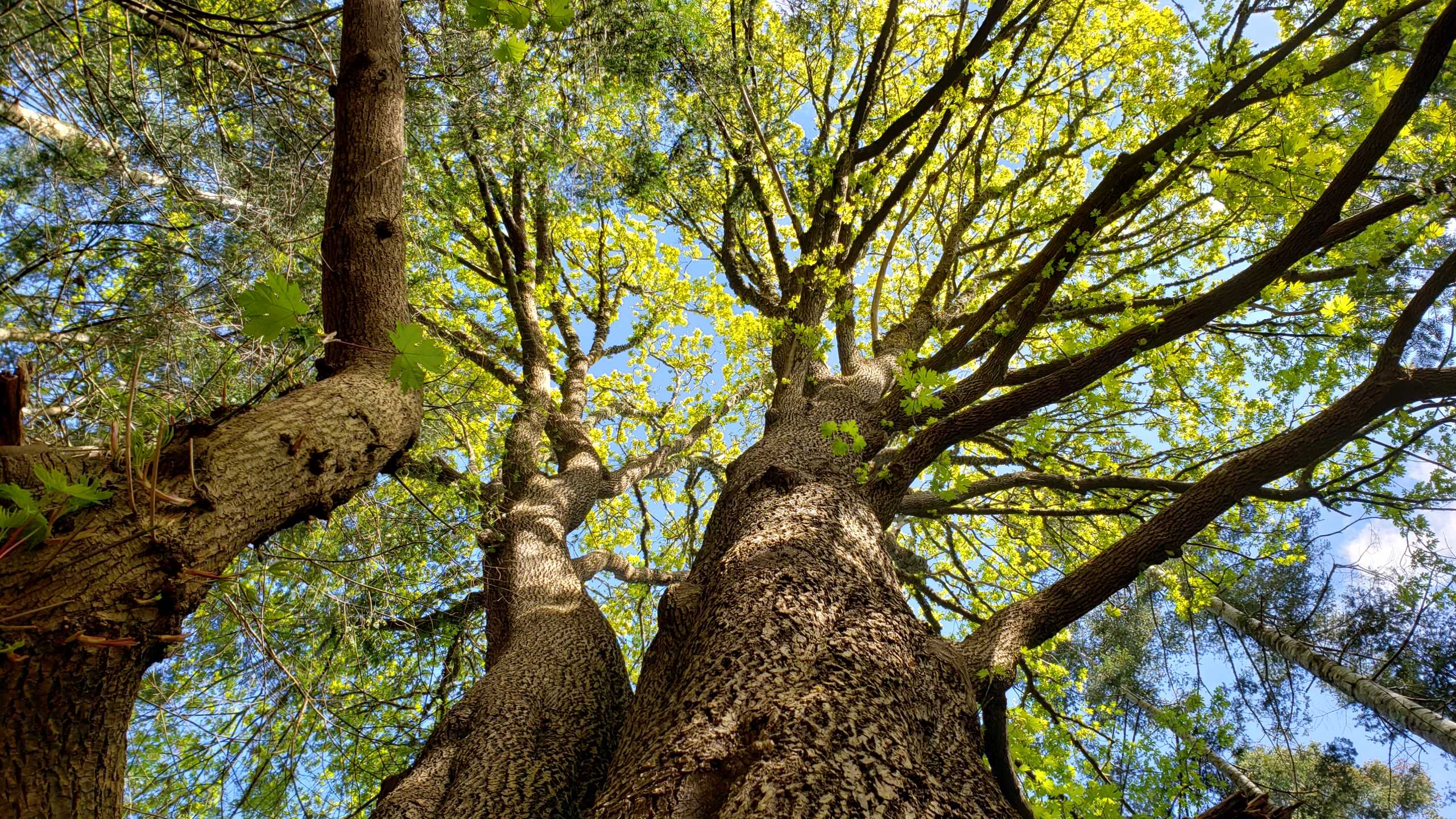
  1. The big Douglas fir is worth a visit!
  1. Dwarf mistletoe on western hemlock. In the genus Arceuthobium (not sure which species).
  1. Siberian miner’s lettuce (Claytonia sibirica) is often found in the woods and at the base of trees.
  1. Farinose cartilage lichen (Ramalina farinacea).
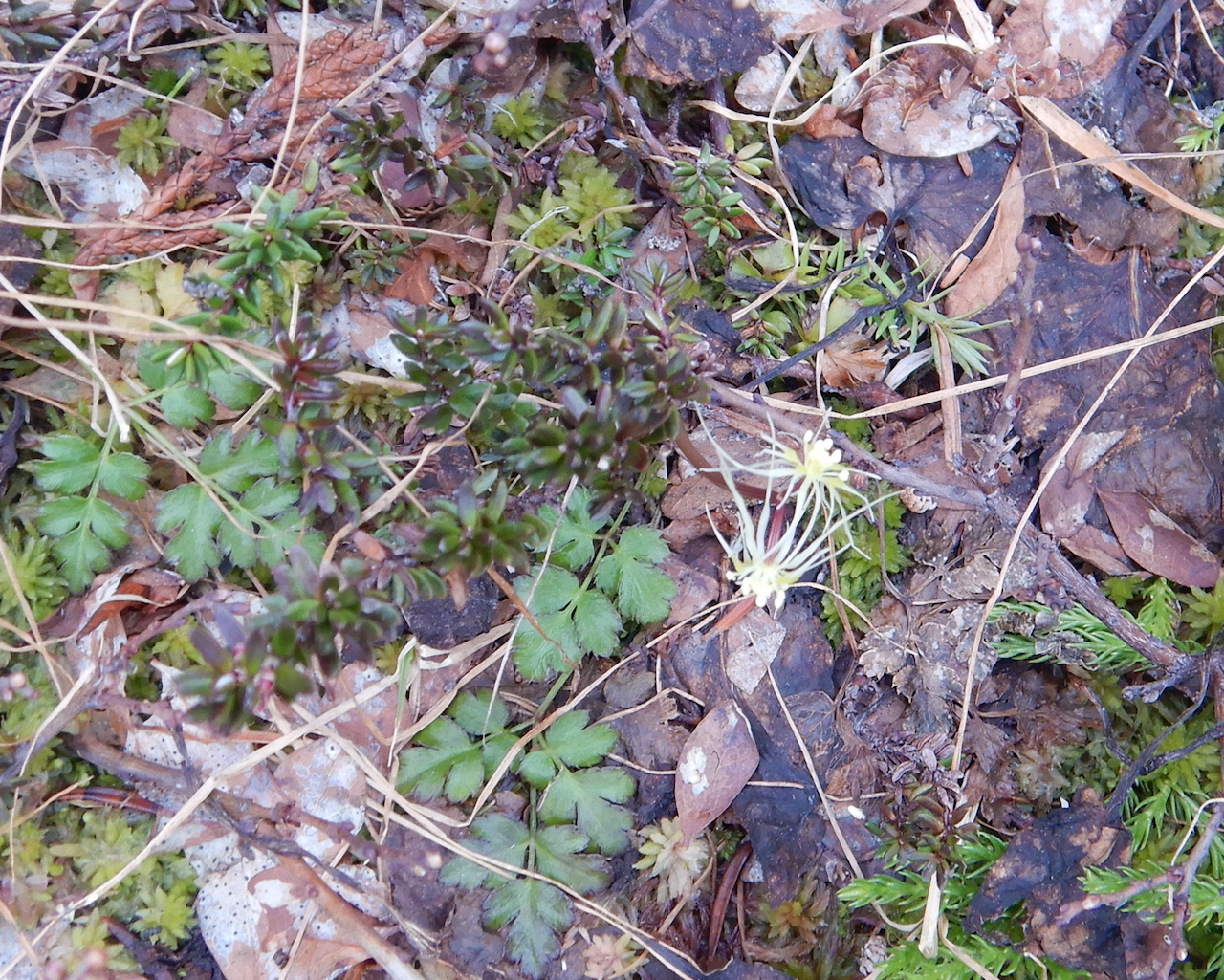
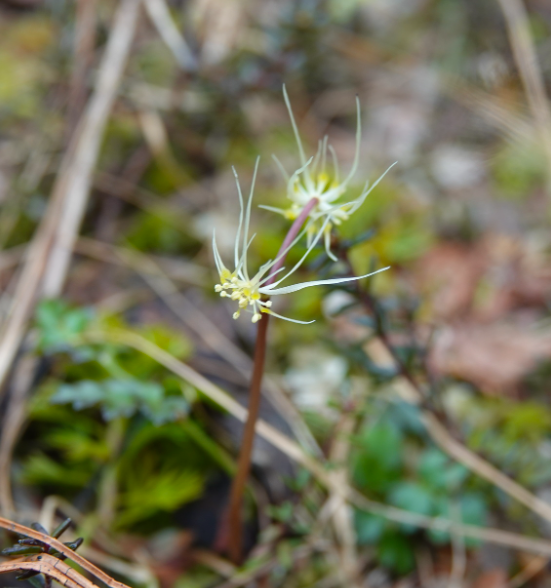
  1. White green-algae coral (Multiclavula mucida) this was one of our more unusual finds of the day!
  1. Nuttall’s toothwort leaves (Cardamine nuttallii).
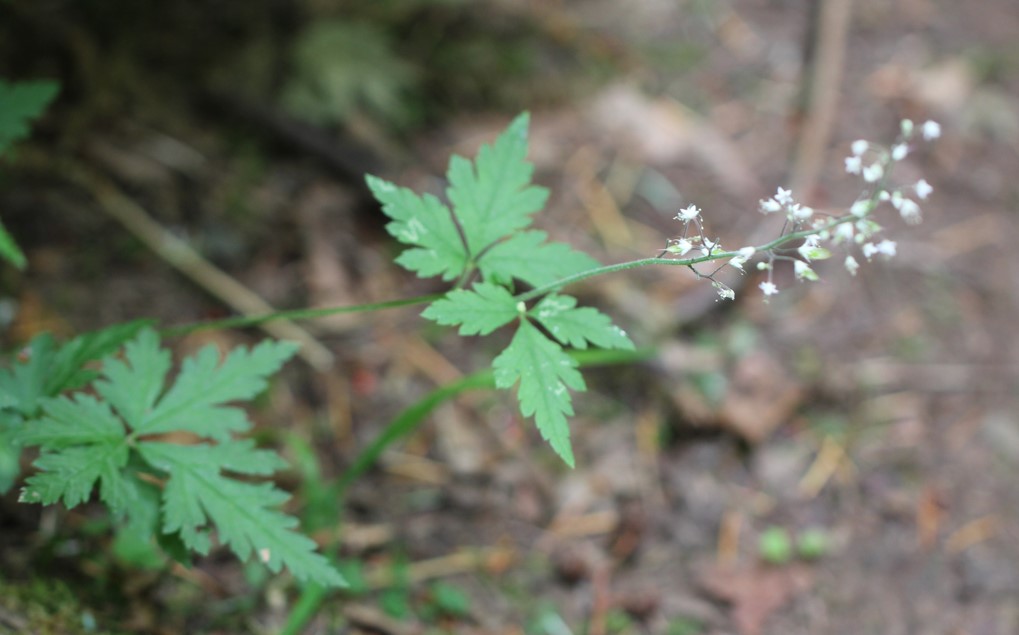
  1. Pacific sanicle leaves (Sanicula crassicaulis).
  1. Western thatching ant (Formica obscuripes).
  1. Botany group: A good turnout!
  1. Botany group: On the hunt.
  1. Botany group: Post-walk picnic.
Posted in Field Trips, Insects and spiders, Plants and fungi | Comments Off on Kitty Coleman botany highlights

Recording for talk on wrecked and abandoned vessels strategy

Comox Valley Nature, facilitated by the Canadian Society of Environmental Biologists, recently presented the following webinar:

Title: Update on the National Strategy to address Canada’s wrecked and abandoned vessels
Speaker: Donavan Jacobsen (Transport Canada)
Date: Sunday, March 19, 2023

If you missed this event or would like to see it again, CSEB has made the recording available here. To access it you will need to provide your name and email address.

For more information about this talk, see the announcement in our earlier post.

Posted in Guest Speakers, Shoreline and Marine | Comments Off on Recording for talk on wrecked and abandoned vessels strategy

Learn about amphibian populations in old-growth microclimates

Comox Valley Nature is pleased to host the following free online lecture:

Title: Amphibian Populations in the Old-growth Microclimates of British Columbia
Speaker: Mark Thompson
Date: Sunday, April 16, 2023
Time: 7:00 p.m. PT

This webinar is facilitated by the Canadian Society of Environmental Biologists and is open to the public (see the registration link below).

Globally, amphibians are declining at an alarming rate, yet few are listed. North America has lost over 85% of its wetlands, and agriculture and secondary growth conversion is extensive. The International Union for Conservation of Nature (IUCN) lists 35 extinct species, 146 possibly extinct species, two extinct in the wild species (known only by living members kept in captivity). Are microclimates saving amphibians? Are remnant patches of old-growth sufficient for their continued survival? The presentation will address these questions.

About the speaker

Mark Thompson is an adjunct professor at the University of Northern British Columbia, a professional biologist, and an ecologist at EcoLogic Consultants Ltd. His expertise lies in herpetology and landscape ecology, with a focus on population concepts. Mark has managed numerous research projects involving amphibians, wetlands, and wildlife generally (e.g., caribou, polar bears, and marmots). He works in both field and office on issues concerning wildlife management in terrestrial and aquatic environments. He is committed to aligning his work with First Nations in conservation science.

Registration

“Seating capacity” for the talk is limited, and you need to register in advance. You can check the computer requirements for attendees here.

Register here

After registering, you will receive a confirmation email with instructions for joining the webinar.

If you are new to Comox Valley Nature, find out more about us here.

Although CVN lectures are free, donations of any size from non-members who attend are always appreciated ($4.00 is suggested).

Posted in Amphibians and reptiles, Conservation and Restoration, Guest Speakers | Comments Off on Learn about amphibian populations in old-growth microclimates

Tour the nominees for Tree of the Year 2023

The public voting period for Tree of the Year 2023 began April 1. Read the 27 trees’ stories and look at the photos on our nominees page, then plan to visit the trees themselves. We have prepared maps of suggested touring routes which you can access using the links below.

Browse through the nine cycle routes which vary from 5 km to 41 km and which can be easily adjusted to suit your interest or challenge level.

Whatever your mode of travel, do get out and safely tour the trees. The photos do not come close to capturing the feel and grandeur of these trees in their home places. Perhaps one of these routes will lead you to appreciate a natural area you haven’t previously explored. And as suggested by Sky N., the nominator of the Courtenay western white pine, be sure to breathe in those phytoncides emitted by trees which affect and improve human well-being.

Please respect private property boundaries and owner privacy by viewing the trees from public land unless otherwise invited in.

The maps

We have three ways for you to access the route maps using the links in the table below:

  • The route maps were implemented on the PlotARoute website (plotaroute.com) which has multiple viewing options. See some tips below the table.
  • If you would like to have printable information, you can download a PDF version of the plotaroute map.
  • If you like Google maps, some of the routes are shown on one here.

Note that the Gran Tour Circuit route encompasses most of the nominated trees, all of which are also in one or another of the shorter routes.

Tour
Route
Tree Nos.plotaroute.com
(online)
plotaroute.com
(PDF)
On
Google
Map
?
Comox
Circle
4, 10, 11, 13, 14, 15, 18web pagePDFyes
Headquarters
Rd. Circle
1, 17, 20, 21web pagePDFyes
Lerwick
Circle
7, 23, 27web pagePDFyes
Courtenay2, 5 16,
22, 24, 25
web pagePDF
Merville6, 8, 9web pagePDF
Gran Tour
Circuit
[21 of 27
nominees]
web pagePDFyes
Cumberland12, 26web pagePDF
Fanny Bay19web pagePDF
Denman Island3web pagePDF

Tips for viewing the plotaroute maps:

  • Four of the routes (Comox, Headquarters, Lerwick, and Gran Tour) constitute a plotaroute collection and appear on one map. Select the one you want to see in the table below the map.
  • Expand the map to full screen using the crossed arrows at the top right of the map.
  • Play an animation using the play icon at the bottom left of the map.
  • Zoom in or out using the + and – icons at the top left of the map.
  • The length of the route is given in the bottom margin of the map.

We are grateful to TOTY team members Roger Chayer (once again) and I.E. for all their work preparing these maps.

Voting

To vote for your favourite tree, visit our voting page any time between April 1 and May 31.

TOTY team planning a tour route arrive at a nominated tree.
(Photo: Jim Whyte)
Posted in Tree(s) of the Year | Comments Off on Tour the nominees for Tree of the Year 2023

Read about TOTY 2023 nominees, then visit them and vote

Read about them

The nomination period for Tree of the Year 2023 ended on March 15, and the voting period begins April 1. See photos and descriptions of the nominated trees here.

(Photo is of Cathy Storey, originator of the contest, visiting our first Tree of the Year in 2018.)

Visit them

All the 27 nominated trees have interest and value. We invite everybody to go out and enjoy these trees as part of their nature activities this season.

The descriptions on our nominees page give location details. Even better will be the maps and suggested touring routes that are in the last stages of preparation. Watch for the blog post coming soon that will provide links to the tour maps.

Please respect private property boundaries and owner privacy by viewing the trees from public land unless otherwise invited in.

Vote for one

You can help decide the winner of the Tree of the Year contest by voting for your favourite. You may already know the one you favour, or you may want to visit at least some of them first.

Go to our voting page here.

Posted in Tree(s) of the Year | Comments Off on Read about TOTY 2023 nominees, then visit them and vote

Guide to lichens of Strathcona Park published

Loys Maingon’s lichen field guide for Strathcona Park is now available! Loys is a Registered Professional Biologist (retired) and the research director of Strathcona Wilderness Institute (SWI). He is also a former president of Comox Valley Nature.


Field Guide to Basic Lichens of Strathcona Provincial Park
by Loys Maingon

Year: 2023
Format: paperback, 132 pages, full colour on 100 lb gloss paper
Dimensions: 8.25 x 4.5 inches
Price: $30

To order a copy, contact SWI by email:


This is the second in SWI’s series of Naturalist Field Guides to Strathcona Provincial Park. It is intended to help all levels of user to identify over a third of the lichens currently catalogued in Strathcona Provincial Park. 101 lichens are illustrated through high quality photographs together with indication of size, shape, environment and other distinctive features for easy identification. Similar looking species are also noted. The text also includes a list of the 274 taxa of lichens confirmed to date for Strathcona Provincial Park.

Here are two sample pages and the back cover:

Posted in News, Plants and fungi | Comments Off on Guide to lichens of Strathcona Park published

Learn about Marine Protected Area targets

CVN members and the general public are invited to attend the following free online lecture hosted by the Canadian Society of Environmental Biologists:

Title: Canada’s Approach to Achieving Marine Protected Area Targets
Speaker: Isabelle Jubinville (Oceana Canada)
Date: Tuesday, April 11, 2023
Time: 11:00 a.m. PT

See the registration link below.

The past year has seen Canada reaffirm commitments to protect 25% of our oceans by 2025 (and 30% by 2030) and showcase national marine conservation efforts on the world stage. With new perspectives and standards for marine protected areas and ‘what counts’ towards these targets, it raises the question—are we meeting our commitments? Recent developments in Canada’s push to meeting our 25% target will be discussed alongside how Canada’s national approach fits in with internationally championed best practices.

About the speaker

Isabelle Jubinville is a Marine Scientist with Oceana Canada. She has a BSc. in Marine Biology and an MSc. in Biology from Dalhousie University and has conducted research in seabird physiology, marine plastic pollution, fisheries bycatch mitigation and habitat protection. She is based in Halifax, Nova Scotia and works to advance marine habitat conservation in Canada’s oceans.

Isabelle is a return guest to CSEB and CVN, having presented in March 2022 on “The State of Canada’s Fisheries: Oceana Canada’s 2021 Fishery Audit.”

Registration

“Seating capacity” for the talk is limited, and you need to register in advance. You can check the computer requirements for attendees here.

Register here

After registering, you will receive a confirmation email with instructions for joining the webinar.

Posted in Conservation and Restoration, Guest Speakers, Shoreline and Marine | Comments Off on Learn about Marine Protected Area targets

Learn about Oceana’s 2022 fisheries audit

CVN members and the general public are invited to attend the following free online lecture hosted by the Canadian Society of Environmental Biologists:

Title: The State of Canada’s Fisheries: Fishery Audit 2022
Speaker: Rebecca Schijns (Oceana Canada)
Date: Tuesday, March 21, 2023
Time: 11:00 a.m. PT

See the registration link below.

Oceana Canada’s annual Fishery Audit reports on the state of fish stocks and tracks progress on how well the government is meeting its policy and management commitments. This year’s audit reveals that Canada’s fisheries are continuing to decline despite significant commitments, investments, new policies and updated laws from the federal government in efforts to rebuild them.

About the speaker

Rebecca Schijns is a Canadian marine fisheries scientist with a B.Sc. in Biology from Queens University and M.Sc. degree in Oceans and Fisheries from the University of British Columbia, where she worked with and the Sea Around Us initiative to reconstruct historical catches and analyze global marine fishing impacts. She has produced research articles on northern cod and shifting fisheries baselines and is fluent in data-limited stock assessment methodology.

Based in Vancouver, she provides research on fisheries and marine conservation issues to inform and support the goals of Oceana Canada’s campaigns.

Rebecca is a return guest to CSEB and CVN, having presented in March 2022 on the “Status of Data-Poor Stocks.”

Registration

“Seating capacity” for the talk is limited, and you need to register in advance. You can check the computer requirements for attendees here.

Register here

After registering, you will receive a confirmation email with instructions for joining the webinar.

Posted in Conservation and Restoration, Guest Speakers, Shoreline and Marine | Comments Off on Learn about Oceana’s 2022 fisheries audit

Upper Puntledge botany and fungi notes

This report by Alison M. was distributed to the Botany Group by Jocie on March 4. Click a photo to enlarge it.

On February 11 we walked down the south side of the Puntledge River from the dam. Too early yet for the sweet gale (Myrica gale), though it is in bud. The evergreen Rhododendron groenlandicum (photo 1) and Kalmia microphylla both had buds, but the rhododendron leaves were still firmly pointing downwards in the cold – perhaps expecting the snow we have just received!

(1) Rhododendron groenlandicum

Of fungi there were quite a few of those you [the Botany Group] have already found in other locations (the little pink Scytinotus longinquus on dead alder seems to be everywhere!). Photo 2 shows the cut end of a dead conifer trunk with a little garden of fresh Dacrymyces chrysospermus (witch’s butter), plus old Trichaptum abietinum, its usual pink cap well covered in green algae and a couple of Fomitopsis mounceae.

(2) Dacrymyces chrysospermus, Trichaptum abietinum, and Fomitopsis mounceae

More unusual was the splendid example of Mucronella pendula (photos 3 & 4), sometimes called white icicle. The dead red cedar leaflet gives a sense of how small it is.

(3) Mucronella pendula
(4) Mucronella pendula

Along the side of another dead conifer we found a large specimen of not quite fully developed Pycnoporellus alboluteus, which is a spongy polypore and can look like a clump of stalactites when older (photos 5 and not well-focussed 6). This specimen had a fair amount of red – it is often more of a dingy orange and beige. It tends to be found underneath logs, in spring as the snow recedes.

(5) Pycnoporellus alboluteus
(6) Pycnoporellus alboluteus
Posted in Field Trips, Plants and fungi | Comments Off on Upper Puntledge botany and fungi notes

Botany walk at Roy Morrison Nature Park

From an email by Jocie to the Botany Group on February 19. Click a photo to enlarge it.

We had a good walk around Roy Morrison Nature Park on February 13, seeing many wonderful things. We focused mainly on winter fungi, but we took a look at a few mosses and other things. We even saw a wooly bear caterpillar!

We saw most of the fungi from my last posts “Winter fungi review, part 1” and “Winter fungi (and a slime mould), part 2” so I won’t repeat those here.

Here are a few highlights. Thanks to Véronique and Shirley for submitting photos.

  1. Botanists on a bridge!
  1. Western wild ginger (Asarum caudatum). The evergreen heart-shaped leaves are distinctive.
  1. Siberian miner’s lettuce (Claytonia sibirica). Lots of leaves showing in crevices at the base of trees.
  1. A lovely vase-shaped Clitocybe of some sort, growing on a decaying fallen tree (a cottonwood, we think).
  1. Orange jelly (Dacrymyces chrysospermus). Common on conifers.
  1. Artist conk (Ganoderma applanatum).
  1. Small staghorn (Calocera cornea).
  1. Plume moss (Dendroalsia abietina).
  1. Hanging moss (Antitrichia curtipendula).
  1. Magnificent moss (Plagiomnium venustum). On bigleaf maple trunks; multiple sporophytes.
  1. Banded wooly bear – larval form of Isabella tiger moth (Pyrrharctia isabella).
Posted in Field Trips, Insects and spiders, Plants and fungi | Comments Off on Botany walk at Roy Morrison Nature Park