Notes and photos provided to the Botany Group by Alison M. Click a photo to enlarge it.
Part 1: Fungi with veins and folds
As you will have noticed with the cooler wetter weather, fungi are starting to appear. Jocie has already presented the much sought-after golden chanterelle along with a delicious looking soup. In the list below are a few good edibles, but most of the fungi to be found in the woods, whether in the valley or up in the subalpine, are best admired in their environment. And always remember “when in doubt…leave it out .”
One of the distinctive features of Craterellus formosus (golden chanterelle) is the blunt vein-like folds (not gills) on the underside of the cap where the spores reside (see this previous post). This is one of the 14 major morphological groups of fungi (in the list used by the Pacific Northwest Key Council ). Below are other fungi that have similar fertile surfaces.
One of these is the Gomphus clavatus , commonly known as pig’s ears, also a good edible, if you get to it before the fly larvae tunnel through the flesh. The blunt veins are a purplish colour contrasting the dingy beige of the cap. In terms of flavour it is not unlike the chanterelle, although it has been known to cause gastrointestinal upset in some people.
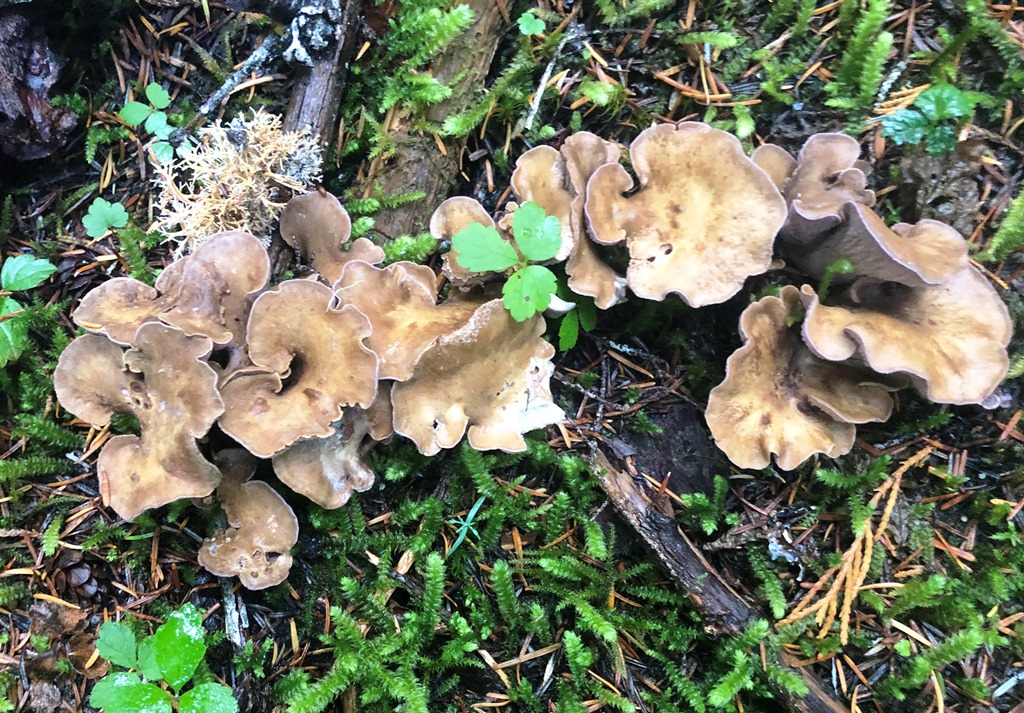
Gomphus clavatus – cap 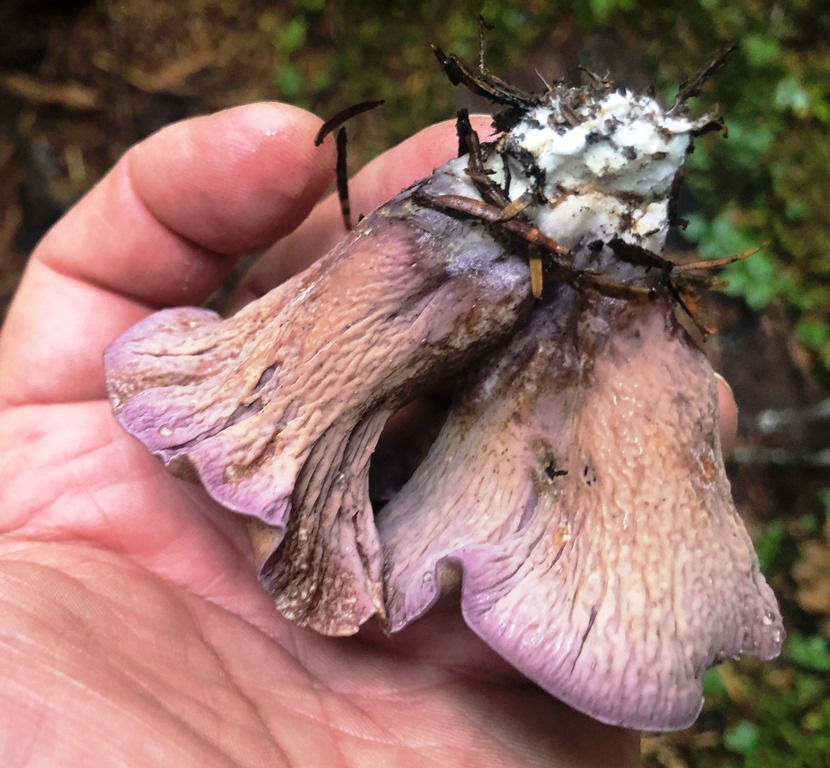
Gomphus clavatus – underside
The so-called woolly chanterelle Turbinellus floccosus (formerly Gomphus floccosus) also has blunt veins and a vase shape. It starts out as a series of cylindrical tubes as in seen in the lower centre of the second photo and is a brilliant red colour on the cap when mature. In texture it is extremely tough, and so inedible.
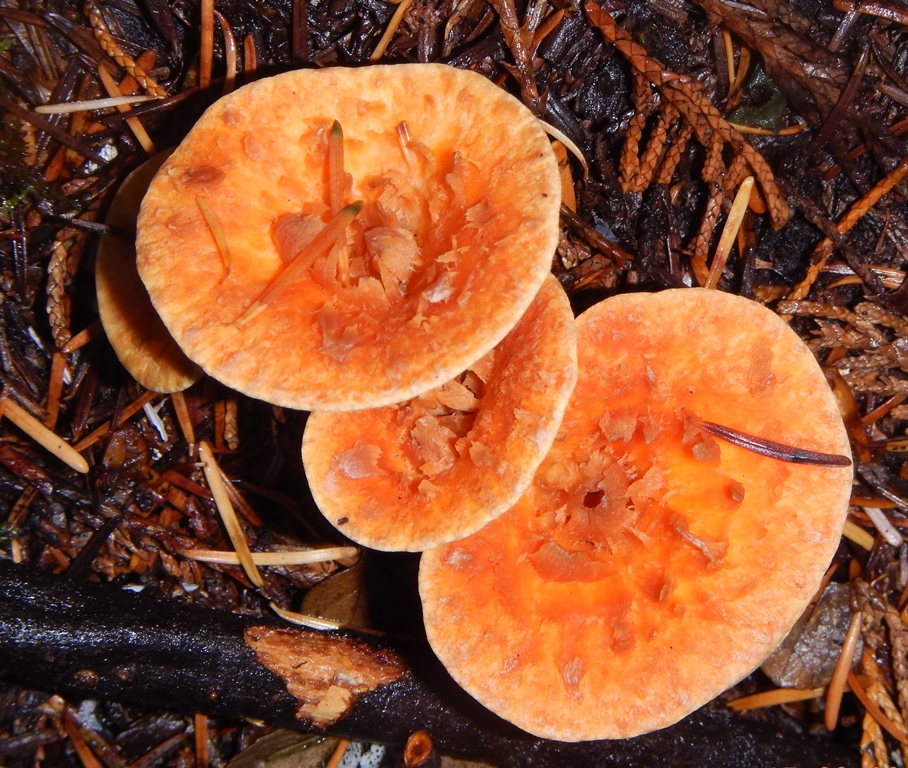
Turbinellus floccosus – cap 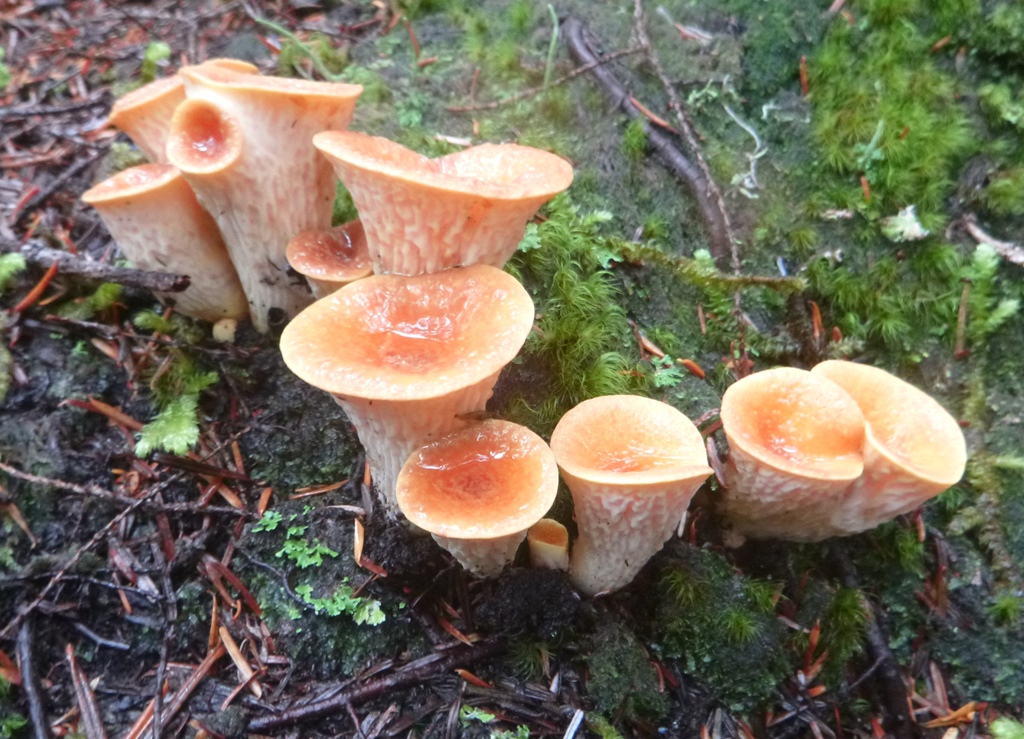
Turbinellus floccosus – underside
The underside of the so-called lobster mushroom – Hypomyces lactifluorum – also has the appearance of blunt ridges. It is the product of a parasitic take-over of a Russula brevipes by the hypomyces. The blunt ridges are the only trace left of the original gills of the russula. The lobster is a good edible, even though its original form, like most russulas, is bitter and unpalatable.

Hypomyces lactifluorum 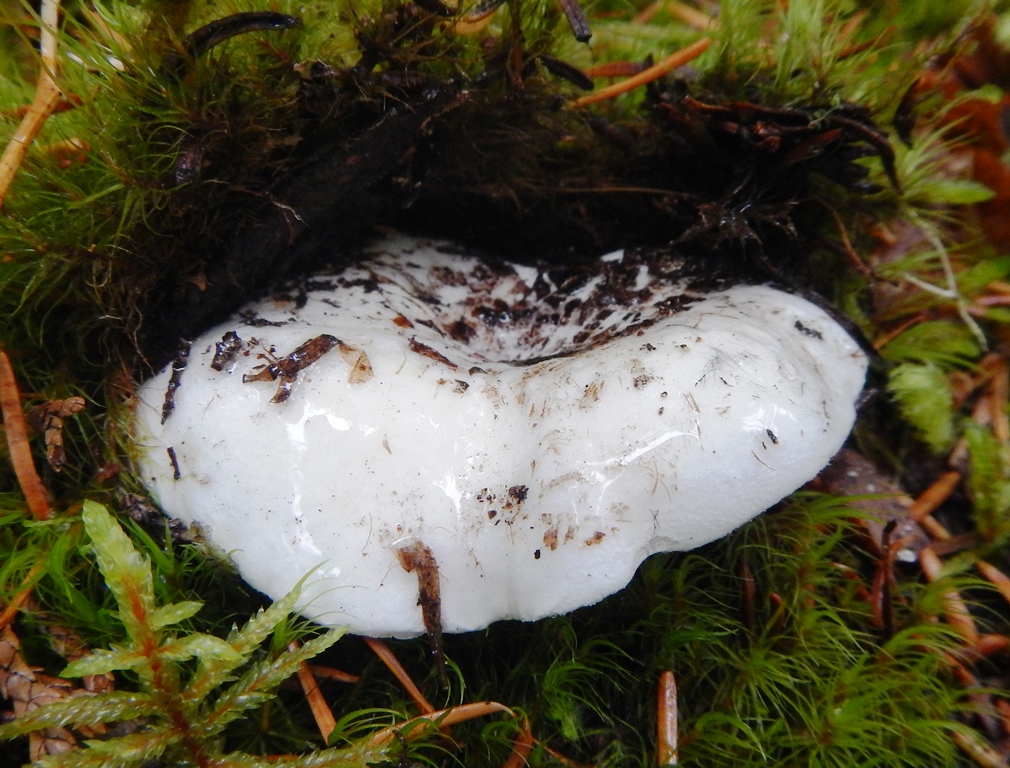
Russula brevipes – cap
Finally a word on look-alikes in the first photo below. Seen from afar, Chroogomphus tomentosus (on the left) can fool you into thinking “chanterelle”, but its cap is rounded (middle photo). not flat or depressed, and as soon as you turn it over (last photo) you will see sharpish deep gills, ending just below the cap, not the blunt veins of the chanterelle, and a hint of the dark spore (chanterelles have a white spore). The fungus on the right in the first photo is Hygrophoropsis aurantiaca, which has sharp gills (sorry, not the best specimen here). It is a lurid orange in colour with thin flesh and thin stipe. So always look closely under the cap of your putative chanterelle.
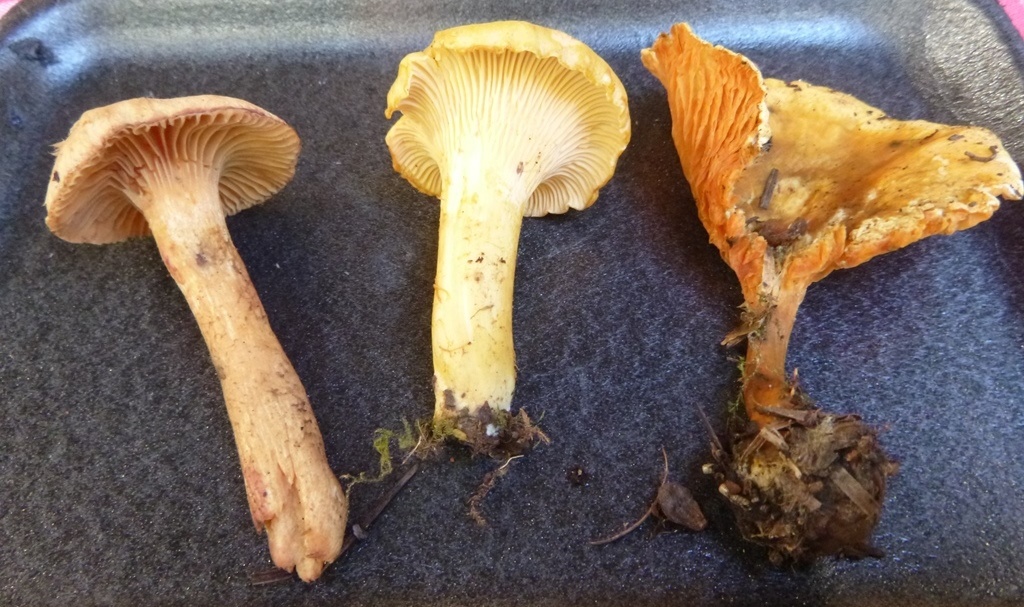
Chanterelle and look-alikes 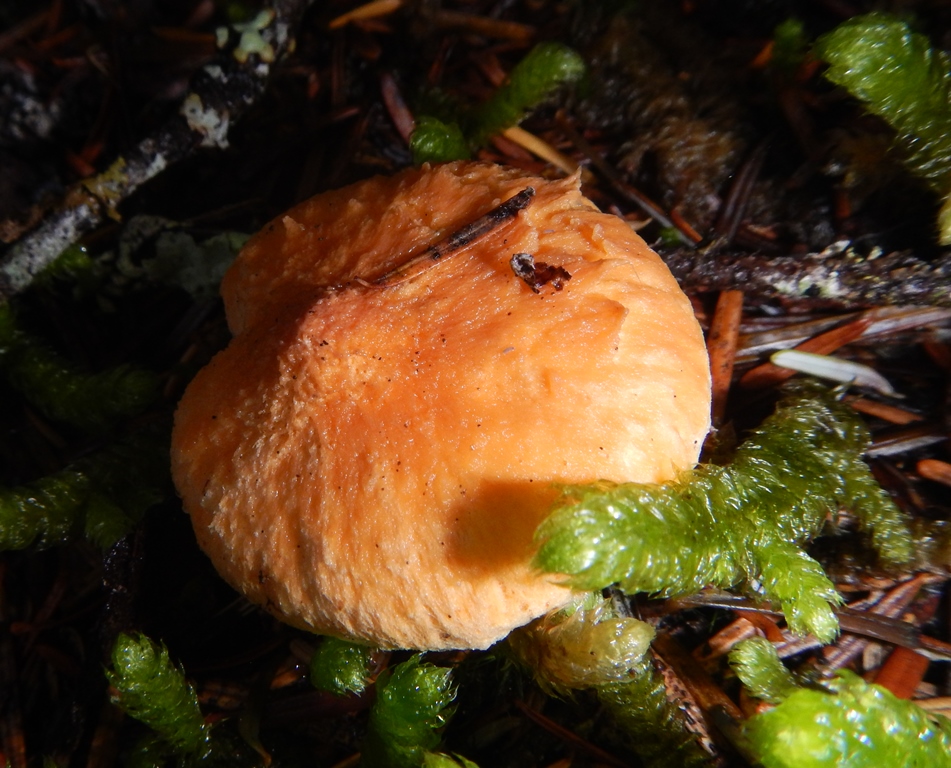
Chroogomphus tomentosus – cap 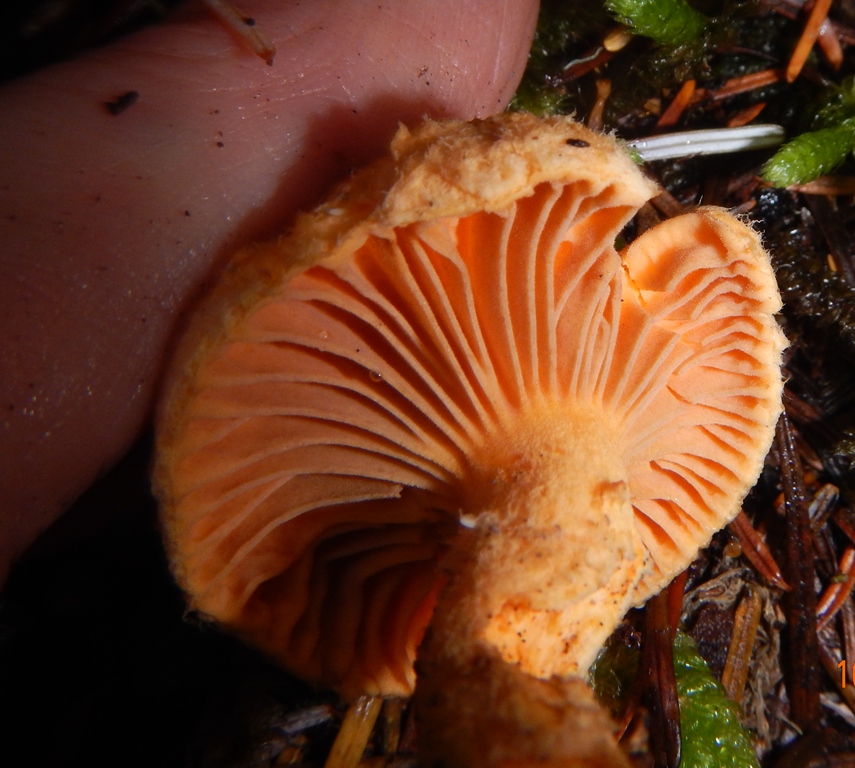
Chroogompnus tomentosus – underside
Happy foraging!