AGM – Hosted by Central Okanagan Naturalists – May 10 – 13, 2012. Details will be available in the Winter Magazine. Not to be missed – if Delta and Williams Lake (FGM/AGM respectively) are any indications of what to expect, Kelowna will be a “DO NOT MISS” event! The speakers will be fabulous and the outings, very informative! Mark this on your calendar and get your registration forms in early!
FGM – 2012 FGM is being co-hosted by Nanoose Naturalists and Arrowsmith Naturalists. Dates are September 27-30th, 2012. This event also should be circled as a no miss event. More info available in the Spring Magazine.
Club Deadlines
Club Grants from the Foundation – due into office by Jan 31, 2012
Deadline for resolutions for the AGM February 28, 2012
BC Nature Awards – nominations accepted up until February 28, 2012 – for both AGM & FGM
Rene Savenye Scholarship – Please apply by April 4, 2012
Camps & Bird Blitz’s Skagit Bird Blitz: May 4 through 6th – 2012 Saltspring Camp – June 4-8, 2012 Mt. Robson Bird Blitz – June 9 & 10, 2012 Manning Bird Blitz – June 15 – 17th, 2012 Lillooet Camp – Oct. 1-6th, 2012
IBA Interviews with Nature Canada
Anne Murray does a fantastic Interview on behalf of the IBA – Check out the link or the CBC Snowy Owl interview here
Issue 19
Date December 2011
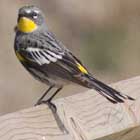
Yellow Rumped Warbler
Are you Opposed to the Northern Pipeline and Tanker Traffic
Visiting the Devils Garden – Link
George Monbiot is a British journalist who writes for The Guardian on environmental issues. Great Blog sight Link
Confused birds crash by the thousands in Utah – visit this article
Lost Atlantic puffin found thousands of kilometres from home: downtown Montreal – go to the Link
Journey of the Rat Hunters – Eradication of Rats in the Charlottes – Link
Tree Bombing – Link
From the Outdoor Recreational Council
Please follow the link below for the Canadian Environmental Assessment Agency’s News Release regarding a public comment period with respect to the Environmental Impact Statement for the Canpotex Potash Terminal proposed for Ridley Island near Prince Rupert.
The public comment period ends on January 20. Survey for all members/clubs
Have you completed the National Trails Survey yet?
Have the clubs, groups and other trail users and advocates in your area, or with whom you are regularly in touch, completed the Survey? If not, you have a couple of more weeks to do so, but please do it soon before Christmas is upon us! Final deadline December 31.
To complete the Survey Link
Update on progress to date (for those who wish to know how we got to this point)- It is now one year since trail representatives from across Canada met at the National Trails Roundtable in Banff.
Since that time a Working Group was formed and it has had the following calls and a meeting:
•Conference calls on January 13, February 17, March 16 and June 20 •A meeting at the Ontario Trailhead conference on April 19 in Niagara Falls Following decisions made at these meetings we have achieved the following:
•Merged the six so-called “vision statements” in the original Report into one Vision for Trails and Trail Collaboration •Incorporated this Vision in a revised report now known as the Summary Report which is a condensation of the original Report •Designed a National Trails Survey which is based on the Summary Report and which can be completed on the Survey Monkey website. •Drafted a News Release and Backgrounder to invite any and all trail users and enthusiasts to review the Summary Report and complete the National Trails Survey. See the attachments to this message. The News Release will provide you with the necessary links
Since then it has been completed by many individual trail enthusiasts and trail organizations in almost all Provinces and Territories (see response update below) Update of responses
As of November 14, we had received 307 responses to the English version of our survey. There were 251 individual responses and 56 responses on behalf of organizations. Following are the responses by Province and Territory: BC – 155 AB – 46 SK – 7 MB – 0 ON – 38 QC – 2 NB – 11 PE – 3 NS – 34 NL – 4 YK – 4 NT – 3 NU – 0 Total: 307 Following are the responses by trail use: ATV – 61 Canoe – a X-Country Ski – 3 Cycling – 5 (off road) Cycling – 4 (on road) Equestrian – 20 Mixed Use (Mot) -11 Mixed Use (Non Mot) 36 Mixed Use – 31 Mtn bike – 12 Off Road M/0C – 7 Snowmobile- 20 Walk/hike – 70 Other – 26 Total: 307
As you can see we have a few gaps and still some way to go in some regions. Please get the message out to anyone in your region or area of interest who may not yet have had a chance to complete the Survey. If you have any questions please contact me – Jeremy McCall at Congratulations to outdoor recreation groups in BC for showing the rest of Canada how to do it!
Christmas Bird Count – For Adults and Children!
The Christmas Bird Count listing is up on our sight(recently updated) and we are pleased to offer counts from the second annual Bird Count for Children.
Details on the 2nd Annual Bird Count for children (Dec 4):
Flocks of young birders are participating in Christmas Bird Count for Kids (CBC4Kids) events across the country! This year, Bird Studies Canada (BSC) organized and hosted two events, in British Columbia and Ontario, in addition to supporting several upcoming CBC4Kids counts. The first annual CBC4Kids in Vancouver, BC was held on Sunday, December 4 in Stanley Park and was co-hosted by the Stanley Park Ecology Society and the Young Naturalists Club of BC. Nine enthusiastic young birders observed, identified, and recorded 1874 birds of 53 species, including 150 Barrow’s Goldeneyes, 5 Black Oystercatchers, 12 Red Crossbills, and 307 Surf Scoters. In Ontario, 25 young naturalists collectively observed over 10,000 birds of 64 species during the second annual CBC4Kids in Port Rowan on Saturday, December 3. Highlights of the count included 141 Sandhill Cranes, 16 species of ducks, and 670 Tundra Swans. Originating in Sonoma Valley, California in 2007 by Tom Rusert and Darren Peterie, CBC4Kids events have spread throughout the United States and Canada. The CBC4Kids is an exciting way to engage youth and their families in a traditional bird-watching event, promoting nature appreciation and skills for monitoring birds, while contributing to citizen-science focused on birds. Thank you to our generous sponsors, The Gosling Foundation and TD-Friends of the Environment Foundation, for supporting these events, and thank you to all of the volunteer bird leaders and participants for a fun, bird-filled day; we hope to see you all out again next year!
Bird Friendly Building Design
16 December 2011 – A new and highly informative, free downloadable publication is now available from the American Bird Conservancy’s Collision’s Program on “Bird-Friendly Building Design.” The 58-page publication examines the mirror effect of windows, glass transparency, the “passage effect” caused by dark glass, and the dramatic effects of external and internal building lighting, all of which contribute to bird collisions. The publication also addresses building design, bird movements, and habitat and landscape designs which can either prevent or increase the collision problem. To view the publication and download a copy, select this link
Matsqui Trail – Open House
Open House #2 is coming up on Tuesday, January 17, 2012. Drop in to review the proposed vision, goals, and objectives for the park; view drawings of potential facilities, services, and recreational opportunities; talk to staff, and provide input on the draft concept. Help shape the park’s future! Mark your calendar: Matsqui Trail Regional Park Management Plan
Date: Tuesday, January 17, 2012
Time: 4 to 9 pm
Location: City of Abbotsford, Matsqui Centennial Auditorium (MCA)
Foyer, City Hall, 32315 South Fraser Way,
Abbotsford, BC, V2T 6N4
BC artist remembers horticulturist Henry Kock in new lichen species name
Victoria, BC. Artist Anne Hansen, who is well-known for her almost 300 paintings of the black oystercatcher, has just purchased the scientific-naming rights of a newly discovered lichen, in honour of her late husband Henry Kock.
Mr. Kock was a widely-sought horticulturist, dubbed “Mr. Arboretum” of the University of Guelph, Ontario, where he worked for 20 years. He died of brain cancer on December 25, 2005. His travels brought him to British Columbia in 1999, where he felt privileged to visit one of his heroes, sustainable forestry pioneer Merv Wilkinson of Ladysmith, BC. Wilkinson died last summer at age 97. The species-naming rights were donated to Ancient Forest Alliance as a fundraiser by Trevor Goward, a lichen scientist at the University of British Columbia, who recently discovered what will now be called Bryoria kockiana. Kock is remembered by gardeners, farmers, and naturalists for criss-crossing southern Ontario to give talks on habitat restoration, plant propagation and shelterbelt agriculture. He is the author of Growing Trees from Seed (Firefly Books Ltd., 2008). The book was finished by his botanical colleagues Paul Aird, John Ambrose, and Gerald Waldron. Hansen moved to British Columbia in 2007 to pursue her art. She says, “Henry was a tireless champion of biodiversity and inconspicuous species like toads, lichens and sedges. Organic gardening became his life’s work after an unfortunate early vocational exposure to pesticides. Many native gardens throughout southern Ontario owe their existence to Henry’s classes at the Arboretum and his travelling presentations to surrounding communities. His own garden, which he transformed from lawn to forest, was lovingly called the Hotel of the Trees. In his legendary slide shows, he referred to his suburban yard as a bed and breakfast for migrating songbirds.” Henry Kock established the Elm Recovery Project at the Arboretum, which now bears his name, as does a new greenhouse on the University of Guelph campus. “I feel like I got a bargain,” says Hansen. “Many people go into debt in December, for toys and gadgets that will soon be obsolete. Lichens have been around since ancient biological times. If we do something fast about climate change, lichens will be here far into the future. Naming a species after a beloved forest defender is my idea of a fabulous solstice celebration. I’m not the only one who’s noticed that the lichen looks like Henry’s beard.” Anne Hansen, artist, 250-381-7313,
New Report Shows Existing Pipeline Capacity Is More Than Enough to Accommodate Significant Oil Sands Growth, While Delivering Global Market Prices
VANCOUVER, BRITISH COLUMBIA, Dec 20, 2011 (MARKETWIRE via COMTEX) — A new report submitted to the Enbridge Northern Gateway federal review panel suggests the proposed Enbridge Gateway pipeline is unnecessary and puts the long-term energy security of Canadians at risk. Commissioned by ForestEthics for the review, and authored by geoscientist, David Hughes, a former scientist and research manager with the Geological Survey of Canada, the report debunks many of the rationales Enbridge has put forth to justify its proposed Northern Gateway pipeline. “The need for Northern Gateway is predicated on Enbridge’s projection that oil sands production will be more than triple 2010 levels by 2035,” says Hughes. “Sufficient export pipeline capacity already exists to accommodate oil sands expansion of 50% to 100% over 2010 levels by 2025. This pipeline is unnecessary as it is predicated on levels of oil sands production growth which would actually put Canadians’ long-term energy security at risk.” The report recognizes that there is sufficient demand from the U.S. for Canada’s projected export capacity and advocates conserving some of this non-renewable resource for Canadians, as opposed to exporting unrefined bitumen as quickly as possible, in the same way British Columbia exports raw logs. The report also takes aim at the vaunted price differential between West Texas Intermediate and Brent Crude, often cited as a rationale for building the pipeline. The report notes that near-term pipeline expansions and reversals to the U.S. Gulf Coast will close the differential price by 2015, eclipsing the need for a West Coast pipeline route. “Enbridge’s rationale for the Gateway pipeline falls apart no matter what angle you look at – from price differentials, to risks to existing jobs,” says Nikki Skuce, Senior Energy Campaigner with ForestEthics. “The need for this pipeline is pure fiction, but the risk of oil spills to affected communities and BC’s coastline are all too real.” The energy return on energy invested (EROEI) is only going to decrease given that oilsands producers have targeted the easier to extract deposits first. Of projects currently “under development”, which constitute 26 billion barrels, 88% are surface mineable, with an EROEI of 5.7:1, with only 12% recoverable by in situ methods, with an EROEI of 3.8:1 or less. Of the remaining purported 143 billion barrels, 92% are recoverable only by in situ methods. Thus expansion of oil sands production will require progressively higher energy inputs with correspondingly lower net energy yields to recover increasingly lower quality resources. The report “The Northern Gateway Pipeline: An Affront to the Public Interest and Long Term Energy Security of Canadians” is being submitted by ForestEthics to the National Energy Board this week as part of the Joint Review Process.
For a copy of the report please contact Nikki Skuce, Senior Energy Campaigner: 250-877-7762
Hometown Heroes Awards
The Hometown Heroes Award Program recognizes everyday heroes for their extraordinary superpowers in creating greener communities across Canada with three awards:
• Individual Award—a $10 000 cash-prize to donate to a local environmental group/cause of their choice • Group Award—a $10 000 cash-prize to support their environmental work • Small Business Award—permission to use the Award and the Earth Day Canada logo for one year to market and promote the business and/or an approved product.
For more information on the Hometown Heroes Award Program and to download the nomination packages, please visit at earthday.ca/hometown. Have questions? You can reach Hometown Heroes Lead, Stephanee Passant, by e-mail at or by telephone at 1-888-283-2784 (in Toronto 416-599-1991) ext. 114.
Keep Jasper as our national park, not a theme park! – from CPAWS
Your enews editor apologizes for the delay in getting this note out to you, deadline was Dec. 16.
FYI – Canada’s treasured Jasper National Park could be on its way to gaining a theme park-like attraction. Brewster Travel Canada, owned by a US-based company,wants to blast out the side of the cliff beside the Icefields Parkway to build the Glacier Discovery Walk. This would be a 400 metre walkway and massive glass-floored “skywalk” extending 30 meters over the Sunwapta Valley. CPAWS believes that this may signal the start of a renewed surge of inappropriate commercial development within our Rocky Mountain national parks that could put their ecological integrity at risk. We were able to stop this trend in the 1990s in Banff. Twenty years later, it’s time once again to take a stand to protect the natural wonders of our mountain national parks. What would this mean for you?
The stunning Tangle Ridge viewpoint on the Icefields Parkway would be privatized and visitors would have to pay fees ranging from $15 to $30 per person to access Brewster’s Glacier Discovery Walk. The remaining free public viewpoint would look onto the massive glass and metal structure, marring the natural canyon landscape — where today, mountain goats and sheep roam freely. What does this mean for the future of our National Parks? In our view, the Glacier Discovery Walk contravenes Parks Canada’s policy that says that “Only outdoor activities which promote the appreciation of a park’s purpose and objectives, which respect the integrity of the ecosystem, and which call for a minimum of built facilities will be permitted. By permitting the construction of this massive privatized “skywalk”, CPAWS believes Parks Canada would be creating a dangerous precedent for future commercial developments in our national parks that are more appropriate in theme parks, outside our treasured national parks. Don’t let this be a trend for future park development. to keep updated, please visit the CPAWS blogsite.
Promoting Bird Trails in BC
Below are excerpts from the Maine Birding Trails newsletter. It gives an insight of the impact of birding trails and the economic spin offs through Tourism in rural areas. This might be a good project to present to your city halls for funding of trail books! For more information on the original Florida model, please visit Florida Birding Trail
“If ever there was a state that could rest on its laurels, it’s Florida. The Sunshine State has already established a massive birding trail system, organized in four separate regions. The East Florida Region was rolled out in November 2002. It took several more years to finish the project, finalizing the South Florida Region in January 2006. But progress did not stop there. Building on the initial success, more sites were added to each of the four regions, with an addendum for each region available online until the next printing updates the maps.
Now Florida is pushing beyond even those updates. The state has launched a Rural County Initiative. In an effort to assist Florida’s rural counties and Rural Areas of Critical Economic Concern with their nature-based tourism programs, the state is seeking additional birding and wildlife sites away from the popular tourist areas. Florida’s problem is not that different from Maine’s predicament. While the Florida coast and retirement communities have been economically booming for years, interior counties and rural areas need help. Their trials and tribulations are akin to those faced by our state’s rural rim counties, though not to the extent that Maine is challenged. Nominations for new trail sites are being accepted in the 32 rural counties until mid-February next year. To be sure, Florida has many more resources than Maine. The Florida Birding Trail is a project undertaken by the Florida Fish and Wildlife Conservation Commission and it is funded and staffed by the state. By necessity, Maine’s trail is a collaborative effort that is dependent on the good will of state government and the cooperation of several key stakeholders. While Florida has been able to invest significantly in its trail, that state has not been immune to the national economic downturn. Except for the rural areas, new site nominations and subsequent maps have been pushed off to 2013. Florida is way ahead of Maine in installing road signs, but even they delayed signage for the South Florida region until more funds became available, and 48 newly added sites in the East Florida region have not yet been signed.”
PVC Pipes Deadly for Birds
I wonder how often researchers install pvc pipes to mark plot corners and centers….maybe this should be shared widely? TIME RUNS OUT ON BIRD-KILLING PIPES
Plastic PVC pipes have been used as mining claim markers for some time. Claim-holders used these popular 4-inch diameter white-colored plastic pipes because they are light, inexpensive, and easy to see. If uncapped, they are also bird-killers.
Small birds, mostly cavity-nesters, frequently investigate these pipe-openings, often after first perching on top. Once they enter a pipe, the birds become trapped; the width doesn’t allow for wing-opening, and the sides are far too smooth to allow climbing out. The pipe becomes a deadly trap. For example, two inspections in Nevada of 1,177 pipes in 2208 and 2009 revealed 957 dead birds. And again last month, 854 pipes inspected revealed 879 dead birds. Ash-throated Flycatchers and Mountain Bluebirds dominated the mortalities, but other victims included woodpeckers, shrikes, wrens, sparrows, Green-tailed Towhees, and even Western Screech-Owls. The Nevada practice of using open pipes was made illegal in 1993, but the law apparently wasn’t effective. The passage of a subsequent measure in 2009 required removal of the pipes, with a two-year grace-period. That grace period ended early last month. Open-ended pipe-markers could no longer be used, even though the claim itself might still be valid. Agencies and volunteers quickly began pulling out the pipes, often in an organized fashion. The Bureau of Land Management (BLM) and the Nevada Department of Wildlife (NVDOW) started extracting the pipes along with the Nevada Conservation Corps (an AmeriCorps program). The Las Vegas-based Red Rock Audubon Society has even sponsored volunteer pole-pulls. Their slogan: “Pull, baby, pull!” There is no way of knowing how many pipes are out there. According to Christy Klinger of the Nevada Department of Wildlife, the number is probably in the hundreds of thousands. The BLM issued more than a million mining claims across the state since 1976, and nearly 200,000 remain active today. There are almost 3.4 million mining claims on BLM lands in eleven western states and Alaska.
Fish Walk!!! ( Well, not really...but don't miss this chance to follow their journey!)Join the Morrison Creek Streamkeepers for a walk along Morrison Creek, starting at its confluence with the Puntledge River in Puntledge Park, to watch salmon spawning after their remarkable journey back from the ocean. Register here: form.jotform.com/262924316992264...
Thanks to community support, a property in Deep Bay is now protected, safeguarding its mature forests, salmon streams and diverse shoreline.Now, we’re helping restore this land so it can regenerate into a healthy forest.Join the Comox Valley land Trust and WolfTree for a hands-on day to rehabilitate the former homestead by planting trees and shrubsIf you'd like to volunteer your time, the work party is Sunday, October 25th, from 10:00 am to 3:00 pm.Meet at Rosewall creek Provincial Park parking lot at 9:50 to carpool to the deep bay restoration site.See this link or link in bio to register and for more information: www.jotform.com/form/262826298698277...
Comox Valley Nature’s Wetlands restoration group has been working on the Courtenay Rotary Trail removing invasive plants.Removing invasive plants ensures that native plants can thrive. A vigorous native plant population also provides food for insects and birds.Join us in liberating native plants from invasive thugs such as ivy.We meet at the end of 21st street in Courtenay, where it meets the Courtenay Rotary Trail near Dogwood Park. You’ll find us there every Sunday starting Oct 18 to mid-Dec, mid-Jan to March 14, from 1:00 to 3:30 Bring gloves and water, dress for the weather and wear sturdy shoes.For more information contact ...
Many people fear trees, especially big trees, and old trees. Join us on this guided walk and overcome those fears. Verna Mumby (ISA certified arborist), will take us through the basics of tree bio-mechanics; how trees dance and move, how they withstand wind loads, and the importance of tree roots. Understand how trees help each other during storms and how they communicate. This walk will take place in Filberg Park, Comox, on October 17th, from 11 a.m. to 12:30.This walk is on flat ground, on grass and well maintained paths. Check the weather and choose appropriate outerwear. The workshop will be cancelled in the event of strongwinds and heavy rain.REGISTRATION required using the link in our bio, or visit cvnature.ca/events/This event is free. Donations welcome.For more information, to add your name to a waitlist or to cancel your reservation, mail: . Details re meeting place will be sent to registrants. ...
Autumn is fast upon us, and the trees in the Comox Valley are beginning their transition into the winter season. CVN’s Comox Valley Trees team (formerly Trees of the Year) is inviting you to share how your favourite trees are changing with the season and preparing for the winter ahead. It could be a brilliant display of autumn foliage, a production of fruit, nuts or berries, or as a winter haven for wildlife. As the leaves fall, do they reveal an interesting or unique tree architecture, shape or silhouette? Perhaps you have discovered trees of interest in forgotten spaces or unusual or unexpected places, or trees with fungi or lichen.Send us the story of why you selected your tree of note. Include a brief description of the tree, a photograph, and the geographical location of the best viewing spot. Ideally the tree is in a public location to facilitate viewing.Please send your story to We will share your stories on our website and on CVN’s Facebook and Instagram pages.Also, be sure to check CVN’s Events calendar regularly for other Comox Valley Trees events such as knowledge walks.#treestories #comoxvalley#comoxvalleytrees #autumn...

 Fish Walk!!! ( Well, not really...but don't miss this chance to follow their journey!)Join the Morrison Creek Streamkeepers for a walk along Morrison Creek, starting at its confluence with the Puntledge River in Puntledge Park, to watch salmon spawning after their remarkable journey back from the ocean. Register here: form.jotform.com/262924316992264