Interesting tides and reads

This post is by Randal Mindell, leader of the CVN Shoreline Group, from an email to members of the group on April 15.


Hope this finds you all well. We just passed through a great set of spring tides over the weekend.  I know some of you got out there to enjoy them. This email will recount some of the interesting things out at this time of year as well as some recent literature that might be of interest. Remember you can always stop by (and contribute to) the group’s iNaturalist page to check on more than 1000 local observations and almost 270 shoreline species.

Intertidal Spring

Group members Roxanne and Mary-Lynn were keeping an eye on all sorts of echinoderms in the Willow Point area. In addition to watching as giant leather stars loitered and purple sea stars consumed limpets, they caught sight of the giant pink sea star, Pisaster brevispinus. These can grow up to 65 cm in diameter. I’m pretty sure the one at Willow Point on Friday was close to that boundary. Apparently it bulks up on sand dollars, geoducks and giant acorn barnacles. In the picture below, note the boots and purple sea stars for scale:

Giant pink sea star (Pisaster brevispinus)

Mystery Eggs and Shorebirds

If you look around sand bars at this time of year, you might catch these 1-2 cm gelatinous sacs of spirally arranged eggs. For years these had baffled me. I assumed they belonged to a type of polychaete worm because I had seen something similar around Boundary Bay that was found in association with the Pacific Lugworm. However, a scientist from California who specialized in marine gastropods pointed out that these in fact belong to the Albatross aglaja, Melanochlamys diomedia. The organism that lays them is a little black peanut-shaped marine slug. He is particularly interested in any observations people might have about birds that might feed on these egg sacs. If you are at Kye Bay, Seal Bay, Williams Beach or elsewhere and you see these and any birds feeding on them, you should record your observation.

Recent Publications

Like some other group members, I love the field guide called Between Pacific Tides. The original edition was written by Ed Ricketts and coauthors. Ricketts was the inspiration for the “Doc” character in Steinbeck’s Cannery Row. Earlier editions of Between Pacific Tides have a forward by Steinbeck which draws on shared experiences of the two from past marine biology expeditions (see Log from the Sea of Cortez). Anyways, Ricketts travelled to Comox and other locales in the 1930s. These natural history expeditions were recently reviewed in the Archive of Natural History journal. You can find an accessible preprint here.

Plainfin Midshipman

If you head out to cobbly, bouldery shores at this time of year, you might hear the mysterious sounds of the plainfin midshipman. This is an intertidal fish which can survive quite a long time without air. Like the penguin, this species finds males often responsible for the care of developing eggs. This recent paper (abstract only) shows how males in the species deal with the respiratory stresses of the intertidal.

History and Significance of Mariculture on the West Coast

We hear often about the Garry Oak ecosystems as an example of the historical landscape management for indigenous food systems. Along the shorelines of British Columbia is a record for food production systems stretching back just short of 12,000 years. This paper uses an example from Quadra Island to show changes in productivity and size of the giant butter clam over this large expanse of time. The authors point out that this method of mariculture was sustained over millenia at high levels of productivity and posit it as an example of the technology required for sustainable food systems going forward.

Posted in Shoreline and Marine | Comments Off on Interesting tides and reads

Citizen Science in BC Parks

CVN members may be interested in the following information that we received from Kelly Fretwell of the BC Parks Foundation. The text has been lightly edited for use on the website.


If you’re receiving this email I’ve likely contacted you previously about getting your outdoors/naturalist group involved with the BC Parks iNaturalist Project, a citizen science initiative of BC Parks, the BC Parks Foundation, the University of Victoria, and Simon Fraser University to collect nature observations using the free app and website iNaturalist. If this is new to you, you can find more information on the project at bcparksfoundation.ca/inaturalist.

I’m writing with a couple of project updates, a few resources to get started with iNaturalist and the BC Parks Project, and tips for staying involved and busy with iNaturalist and the BC Parks project during this current time of social/physical distancing. I’m also introducing Emma Griggs, who is taking over from me for the BC Parks Foundation’s citizen science projects as I move into a new science communications role with the Hakai Institute. Emma will be the BCPF contact for citizen science engagement going forward.

The BC Parks iNaturalist Project: 2020

We had big plans to expand the project this year and connect in-person with as many community groups across the province as we could, but those plans have of course been impacted by the pandemic in a number of ways, not least of which is the necessary closures of BC Parks trails and facilities.

In these difficult times I’m sure we would all like to lean on our shared love for the outdoors and nature, however doing so while maintaining the physical distancing needed to flatten the curve may not be possible, especially in the more densely populated areas of the province. With that in mind, here are some ideas to remain connected with nature and the BC Parks iNaturalist Project during the pandemic by becoming an “Armchair Naturalist”:

  • Check out the BC Parks iNaturalist Project page to browse all the observations that have been made so far in the different parks. Send us any crazy cool ones you come across!
  • Browse through the BC Parks observations and help identify observations of your favourite species groups.
  • Do you have old nature photos languishing on your hard drive, unseen by anyone but you? Upload those to iNaturalist!
  • Download the BC Parks Foundation’s themed PARKS bingo cards and scour your photo library for matching observations.
  • If you’re lucky enough to have a backyard or live in a more remote place where it’s easy and safe to get out into nature while maintaining the necessary 2m/6ft distance from others, go test out your new iNaturalist skills to be ready for when parks re-open.

New to iNaturalist? Resources to get started

And finally, subscribe to the BC Parks Foundation’s newsletter to stay up-to-date with any news or changes regarding this project and other BCPF work.

Posted in Miscellaneous | Comments Off on Citizen Science in BC Parks

“The Whales in Our Waters” recording available

If you missed the successful presentation by our March speaker via webinar, or you would like to view parts of it again, the recording of the presentation is now available here:

https://attendee.gotowebinar.com/recording/3257295906601688834

You just need to provide your name and email address to gain access.

For information about this talk, “The Whales in our Waters,” and the speaker, Aaron Purdy, see the original post.

Posted in Guest Speakers | Comments Off on “The Whales in Our Waters” recording available

“The Whales in Our Waters” Talk Rescheduled

After our first attempt to host a monthly talk as a webinar had technical problems and had to be abandoned, our speaker Aaron Purdy has kindly agreed to a new date. He will now present his talk, “The Whales in Our Waters: Conservation Through Citizen Science” on Sunday March 29, 2020 at 7:00 pm.

You need to register for the webinar using the following link:

https://attendee.gotowebinar.com/register/8515098937888047373

A personalized email “ticket” will be sent to you with a link to the actual webinar and instructions for ensuring (in advance) that your computer is set up appropriately.

For more information about this talk and the speaker, see the original post.

Posted in Guest Speakers | Comments Off on “The Whales in Our Waters” Talk Rescheduled

BCWF Workshop “Map Our Marshes” in June

BCWF Map Our Marshes workshop poster

CVN members may be interested in this free two-day workshop to be held in June by the BC Wildlife Federation. Here is their description:

“Wetlands can filter water, mitigate flooding, and provide critical habitat to hundreds of species. Unfortunately, wetlands are disappearing at an alarming rate and need our protection.”

“Come join us to learn about the different types of wetlands around Cumberland and how to map and protect them using technology such as GPS, Google Earth, and BC’s Community Mapping Network. No previous experience is necessary.”

For more information and to register, see .

Posted in Conservation and Restoration, Ecology, Miscellaneous, News | Comments Off on BCWF Workshop “Map Our Marshes” in June

CVN invites the public to learn about the whales in our waters

The Whales in Our Waters

Comox Valley Nature is pleased to host an online lecture by Aaron Purdy from the Ocean Wise Research Institute. The lecture entitled “The Whales in Our Waters: Conservation Through Citizen Science” is on Sunday March 22, 2020, 7:00 to 9:00 pm.

Given the current situation with the CoVid-19 virus, Comox Valley Nature has made arrangements to have a live, online webinar for Aaron’s presentation. To register, go to:

https://attendee.gotowebinar.com/register/7522842470023567873

Computer requirements can be checked at:   

https://link.gotowebinar.com/help-system-requirements-attendees

Priority will be given to CVN members. Free available seats will be allocated to non-members.  If you cannot get in, the session will be recorded and will be available later free of charge to the public on the CVN website.

Join Aaron Purdy to learn all about the whales in our waters. Aaron will discuss BC’s common cetaceans (whales, dolphins, and porpoises), the threats they face, and how Ocean Wise helps to mitigate these threats through research and conservation efforts. He will also describe how you can become a citizen scientist by acting as an observer for the BC Cetacean Sightings Network while out on your next coastal adventure. After this talk, you will have all the tools you need to jump in and do your part to protect BC’s cetaceans.

Aaron joined the Ocean Wise Marine Mammal Research team in 2019 as the Coordinator of the Southern Vancouver Island Cetacean Research Initiative (SVICRI). Through community outreach, research, and education, Aaron engages communities around Vancouver Island to increase awareness of cetaceans in our local waters, talk about the conservation issues they face, and what community members can do to help protect these iconic creatures. Aaron spent several years performing marine mammal and other charismatic megafauna research and is a skilled and experienced marine educator.

This is an excellent opportunity for the public to learn more about conservation efforts to protect the whales is our waters.

Posted in Guest Speakers | Comments Off on CVN invites the public to learn about the whales in our waters

General Meeting March 15 2020 has been moved

The General Meeting from March 15 , 2020 has been moved to hopefully March 22, 2020 as a Webinar Meeting.

further information via weekly email.

Posted in Guest Speakers, News | Comments Off on General Meeting March 15 2020 has been moved

March 1, 2020 Sunday Bird Walk – Cumberland Marsh

New birders are welcome to join experienced birders for this early Spring bird watching outing to Cumberland Marsh. This walk will be about 1.5 km in length on level pathways. We will be bird watching for about 2 hours.

Meet at 9am in the Canadian Tire parking lot, near the Boston Pizza end close to Cliffe Avenue. We will car pool and depart at 9:10.  Leader will be Kelly Kline.

Posted in Birds, Field Trips, Weekend Walks | Comments Off on March 1, 2020 Sunday Bird Walk – Cumberland Marsh

NatureKids: Upcoming Explorer Days, March & April 2020

March 8: Seaside Treasures – We will go on a beach walk at Goose Spit Park to find and identify different beach items. Note: the time will be earlier than usual (11am to 1pm) to match with low tide times. More details will be sent out closer to the date.

April 19: (tentative date) Location and details to be announced.

Posted in Field Trips, NatureKids | Comments Off on NatureKids: Upcoming Explorer Days, March & April 2020

NatureKids Explorer Day Report – Fun in the Forest – Feb. 9, 2020

Hello NatureKids families! 

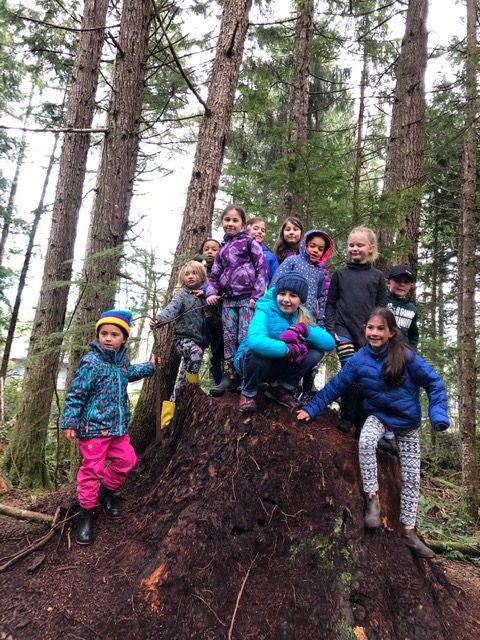
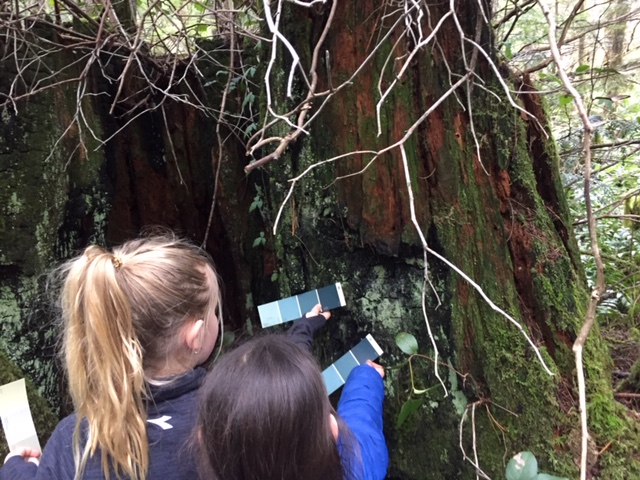
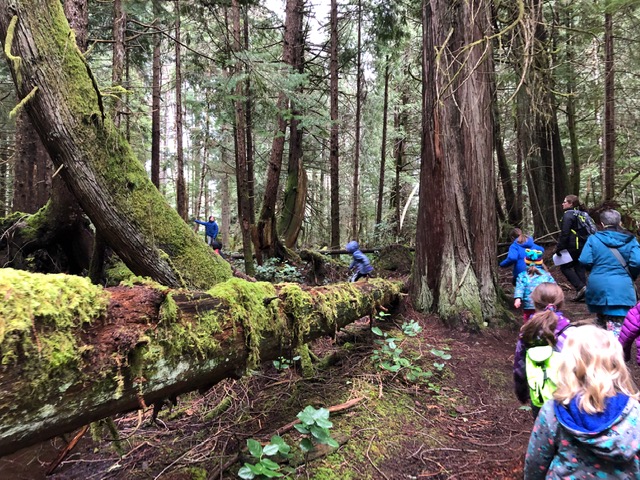
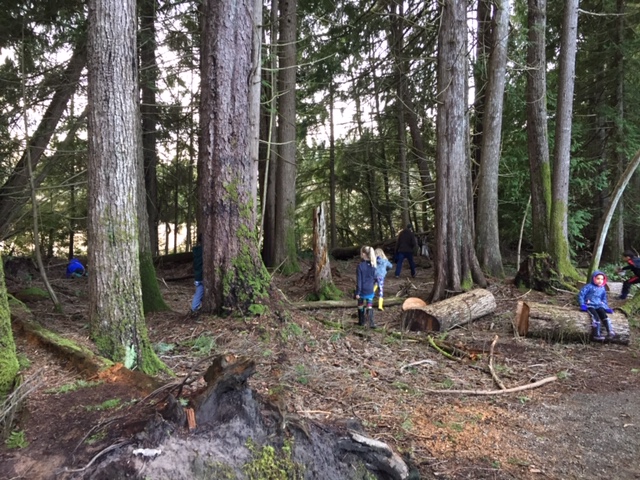
What a refreshing afternoon in the Seal Bay Park forest. We learned how forests can be magical by providing us with many different things such as homes, food, jobs, products, clean water, and oxygen. Not only do forests fight climate change (which makes them pretty cool) but they help us to refresh and reset, allowing for us to feel re-energized for the day or week ahead! Some of our fun forest activities included a colour palette hunt to see how forests can be a source of inspiration for colours, and hiding amongst the flora in a game of Camouflage to see how animals can use the forest for protection.

Here are a few photos from our Explorer Day, and you can see more on our Comox Valley NatureKids Facebook page.

Posted in Field Trips, NatureKids | Comments Off on NatureKids Explorer Day Report – Fun in the Forest – Feb. 9, 2020