Recording for talk on Marine Protected Area targets

Comox Valley Nature members recently attended the following webinar presented by the Canadian Society of Environmental Biologists:

Title: Canada’s Approach to Achieving Marine Protected Area Targets
Speaker: Isabelle Jubinville (Oceana Canada)
Date: Tuesday, April 11, 2023

If you missed this event or would like to see it again, CSEB has made the recording available here. To access it you will need to provide your name and email address.

For more information about this talk, see the announcement in our earlier post.

Posted in Conservation and Restoration, Guest Speakers, Shoreline and Marine | Comments Off on Recording for talk on Marine Protected Area targets

Spring botany notes

Notes and photos by Alison M. distributed to the Botany/Mycology Group on April 13. Click a photo to enlarge it.

Spring is a little slow again this year! A few of our early flowers are reluctantly appearing…

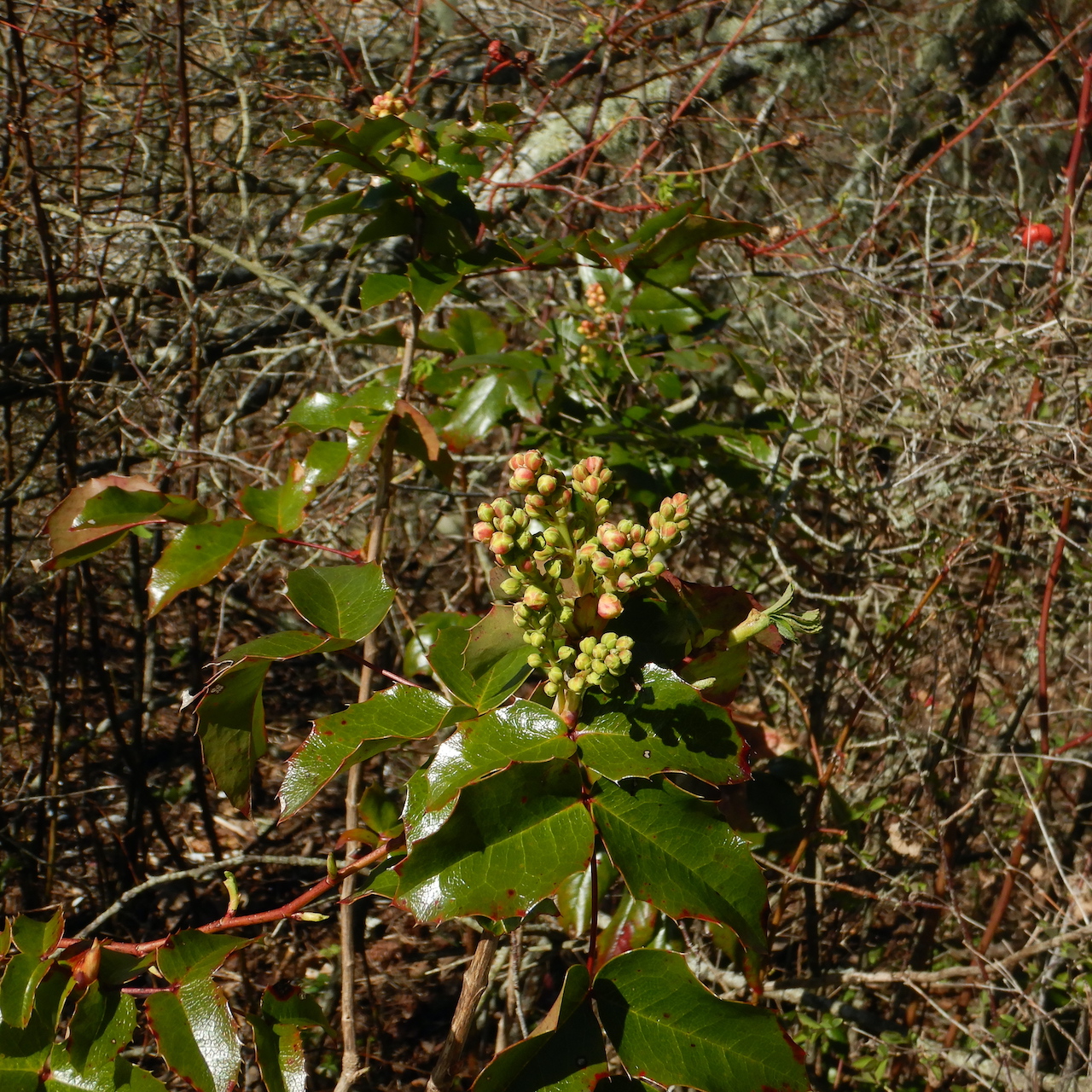
On Tuesday at that tiny little park at Ships Point, which is nicely sheltered from the arctic winds and south-facing, we did find a couple of Erythronium oregonum (photo 1) in bloom, as well as some Berberis aquifolium (photo 2) with part of the flower head open.

(1) Erythronium oregonum
(2) Berberis aquifolium

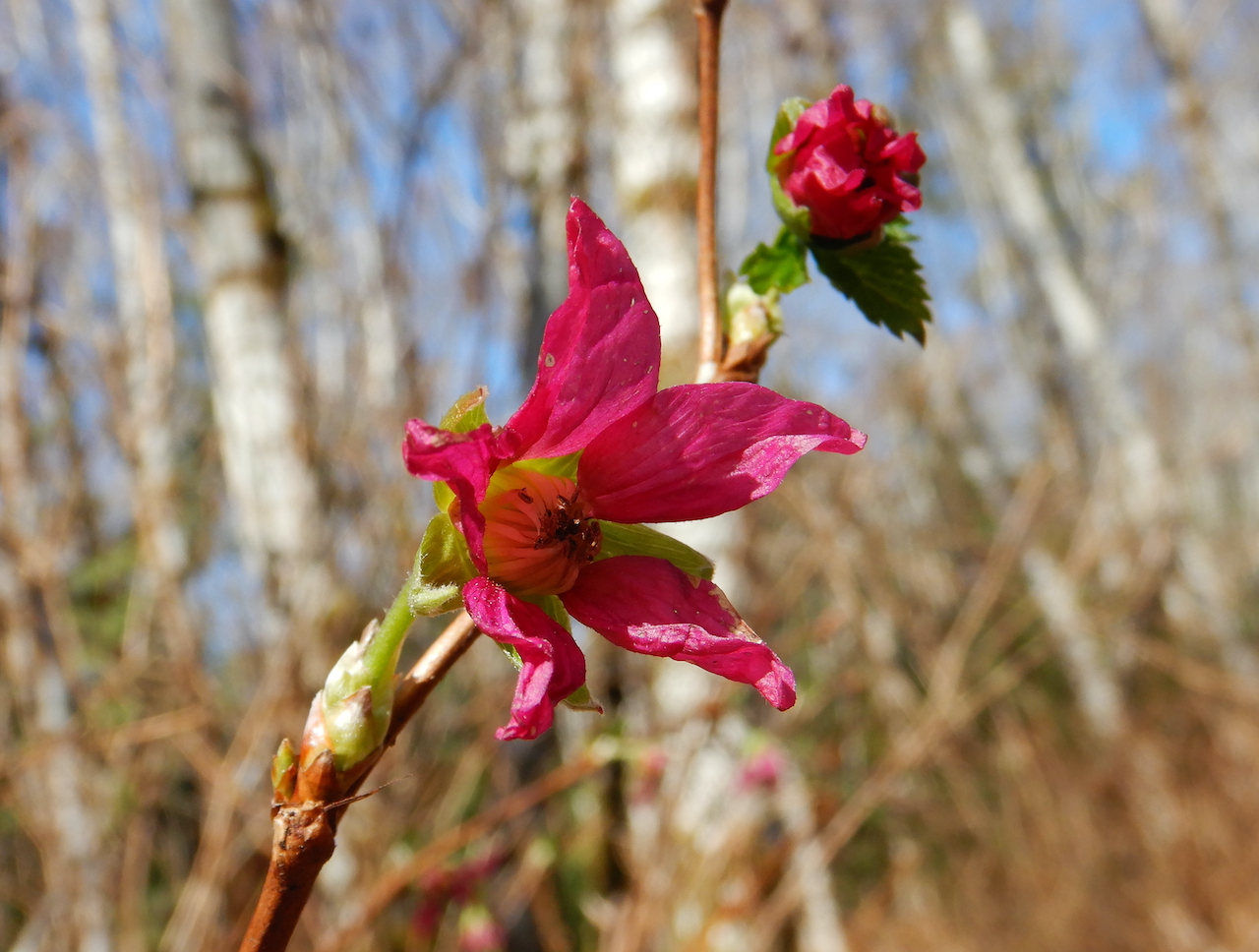
The Fritillaria affinis – chocolate lily – was still in bud form, but should be out soon. And in the conservation area along the dike, a few Rubus spectabilis (photo 3) were highly visible in the bright sunlight.

(3) Rubus spectabilis

On our stretch of the Tsolum floodplain the Erythronia are still in bud, but the Petasites frigidus – sweet coltsfoot (photo 4) – has just pushed its way through the silt and opened. Some years I have found it in January!

(4) Petrasites frigidus

And on the Sunday walk in Cumberland we passed by the area behind the Japanese townsite where there is a substantial spread of Petasites japonicus – Japanese butter-burr (photo 5), which goes back to the time when the Japanese planted it as one of their early spring greens (fuki). In both species the flower heads appear first, and the leaves develop later, so at this point the leaves are still very small.

(5) Petasites japonicus
Posted in Plants and fungi | Comments Off on Spring botany notes

Kitty Coleman botany highlights

From an email by Jocie to the Botany Group on March 18. Click a photo to enlarge it.

We had a brilliant sunny day for our March 13 walk at Kitty Coleman Beach Provincial Park, and thanks to Robbie we enjoyed a fireside picnic lunch!  The herring spawn was in full swing with gulls and sea lions active on the water. We saw a good mix of things: lichens, fungi, new green leaves appearing, and of course the “big fir.” (Not to mention an ant colony.)

Here are a few highlights. Thanks to Veronique for many of the photos:.

  1. The big Douglas fir is worth a visit!
  1. Dwarf mistletoe on western hemlock. In the genus Arceuthobium (not sure which species).
  1. Siberian miner’s lettuce (Claytonia sibirica) is often found in the woods and at the base of trees.
  1. Farinose cartilage lichen (Ramalina farinacea).
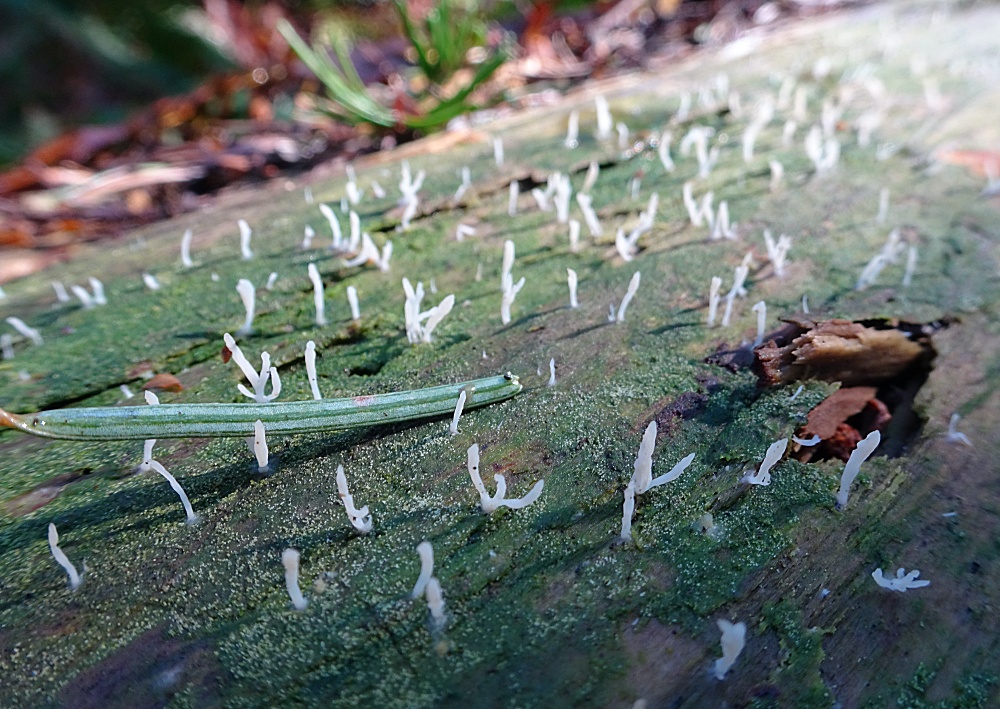
  1. White green-algae coral (Multiclavula mucida) this was one of our more unusual finds of the day!
  1. Nuttall’s toothwort leaves (Cardamine nuttallii).
  1. Pacific sanicle leaves (Sanicula crassicaulis).
  1. Western thatching ant (Formica obscuripes).
  1. Botany group: A good turnout!
  1. Botany group: On the hunt.
  1. Botany group: Post-walk picnic.
Posted in Field Trips, Insects and arachnids, Plants and fungi | Comments Off on Kitty Coleman botany highlights

Recording for talk on wrecked and abandoned vessels strategy

Comox Valley Nature, facilitated by the Canadian Society of Environmental Biologists, recently presented the following webinar:

Title: Update on the National Strategy to address Canada’s wrecked and abandoned vessels
Speaker: Donavan Jacobsen (Transport Canada)
Date: Sunday, March 19, 2023

If you missed this event or would like to see it again, CSEB has made the recording available here. To access it you will need to provide your name and email address.

For more information about this talk, see the announcement in our earlier post.

Posted in Guest Speakers, Shoreline and Marine | Comments Off on Recording for talk on wrecked and abandoned vessels strategy

Learn about amphibian populations in old-growth microclimates

Comox Valley Nature is pleased to host the following free online lecture:

Title: Amphibian Populations in the Old-growth Microclimates of British Columbia
Speaker: Mark Thompson
Date: Sunday, April 16, 2023
Time: 7:00 p.m. PT

This webinar is facilitated by the Canadian Society of Environmental Biologists and is open to the public (see the registration link below).

Globally, amphibians are declining at an alarming rate, yet few are listed. North America has lost over 85% of its wetlands, and agriculture and secondary growth conversion is extensive. The International Union for Conservation of Nature (IUCN) lists 35 extinct species, 146 possibly extinct species, two extinct in the wild species (known only by living members kept in captivity). Are microclimates saving amphibians? Are remnant patches of old-growth sufficient for their continued survival? The presentation will address these questions.

About the speaker

Mark Thompson is an adjunct professor at the University of Northern British Columbia, a professional biologist, and an ecologist at EcoLogic Consultants Ltd. His expertise lies in herpetology and landscape ecology, with a focus on population concepts. Mark has managed numerous research projects involving amphibians, wetlands, and wildlife generally (e.g., caribou, polar bears, and marmots). He works in both field and office on issues concerning wildlife management in terrestrial and aquatic environments. He is committed to aligning his work with First Nations in conservation science.

Registration

“Seating capacity” for the talk is limited, and you need to register in advance. You can check the computer requirements for attendees here.

Register here

After registering, you will receive a confirmation email with instructions for joining the webinar.

If you are new to Comox Valley Nature, find out more about us here.

Although CVN lectures are free, donations of any size from non-members who attend are always appreciated ($4.00 is suggested).

Posted in Amphibians and reptiles, Conservation and Restoration, Guest Speakers | Comments Off on Learn about amphibian populations in old-growth microclimates