Over a dozen intrepid naturalists braved the wind & rain for an excursion along the Courtenay Riverway , 3.5 km one-way from Simms Park to the Millard Estuary on Sept. 28.
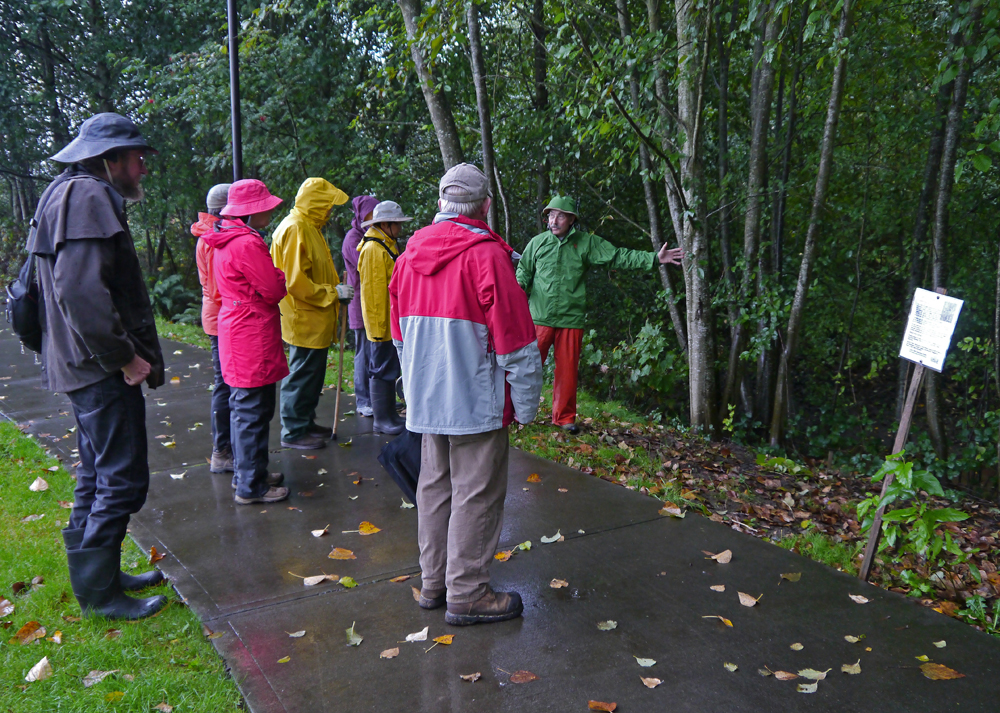
Knotweed Removal Area in Simms Park
At Simms Park, Frank Hovenden of CV Nature explained some of the history of the area, at one time all part of the estuary. Simms Park is one of the areas along the Courtenay River where CV Nature is tackling invasive Japanese knotweed with varying degrees of success.
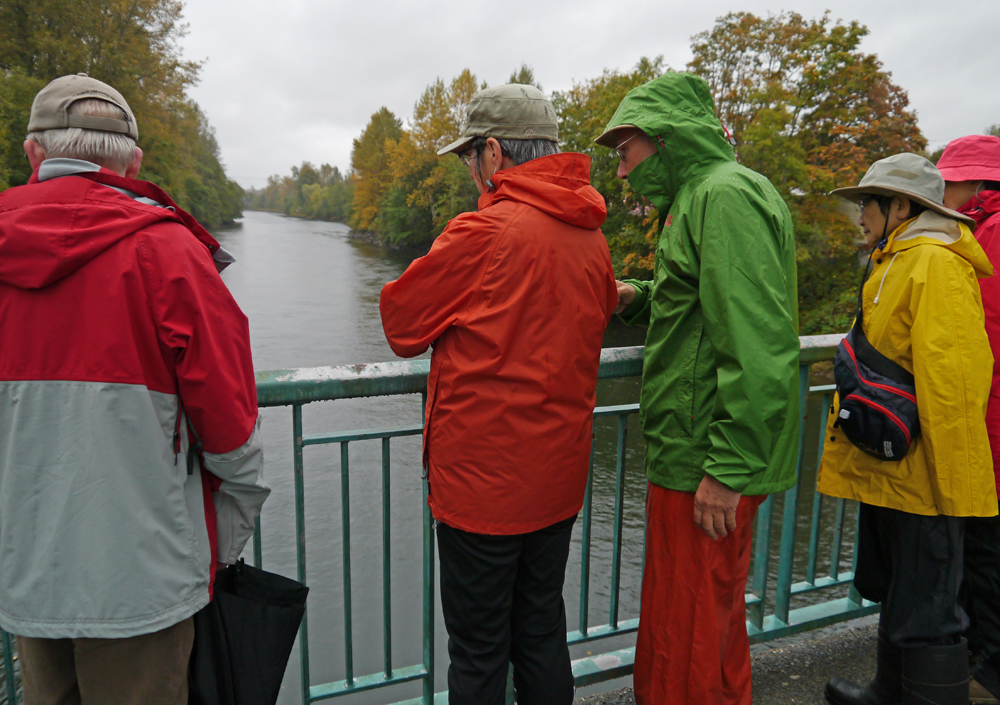
Fifth St Bridge over the Courtenay River
The Courtenay River is the short channelized stretch downstream from the confluence of the Puntledge & Tsolum Rivers to Comox Bay, but once the Puntledge & Tsolum were separated all the way to what is now called Hollyhock Flats in the Courtenay River Estuary. The Tsolum meandered through what is now the Comox Bay Farm area.
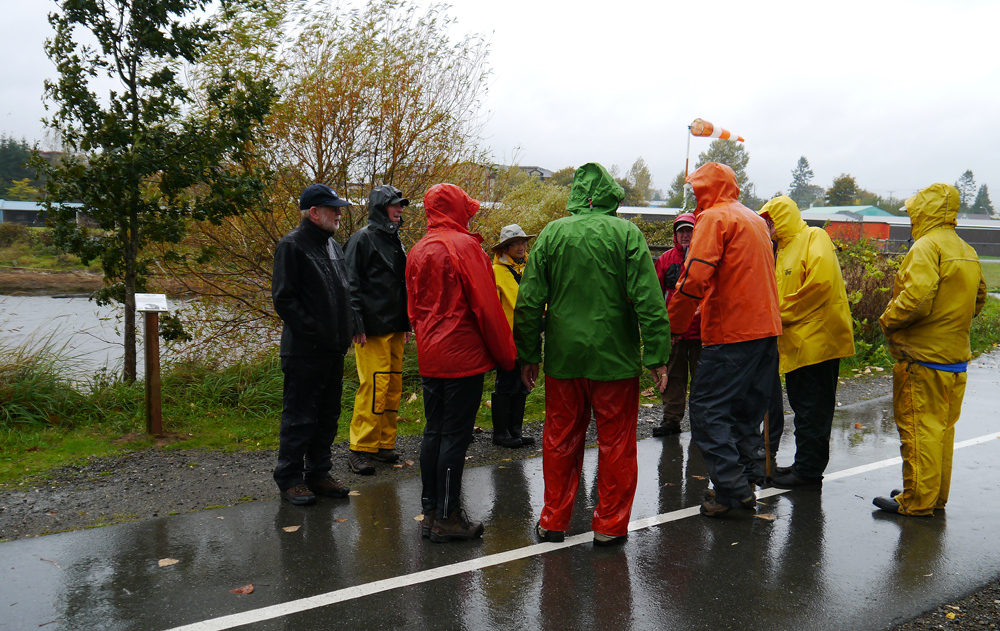
Airpark at Proposed Lagoon Opening
Dan Bowen & Bill Heidrick of Project Watershed joined the group at the Airpark, to describe plans for increasing fish habitat at the Courtenay River by opening up some of the channels.
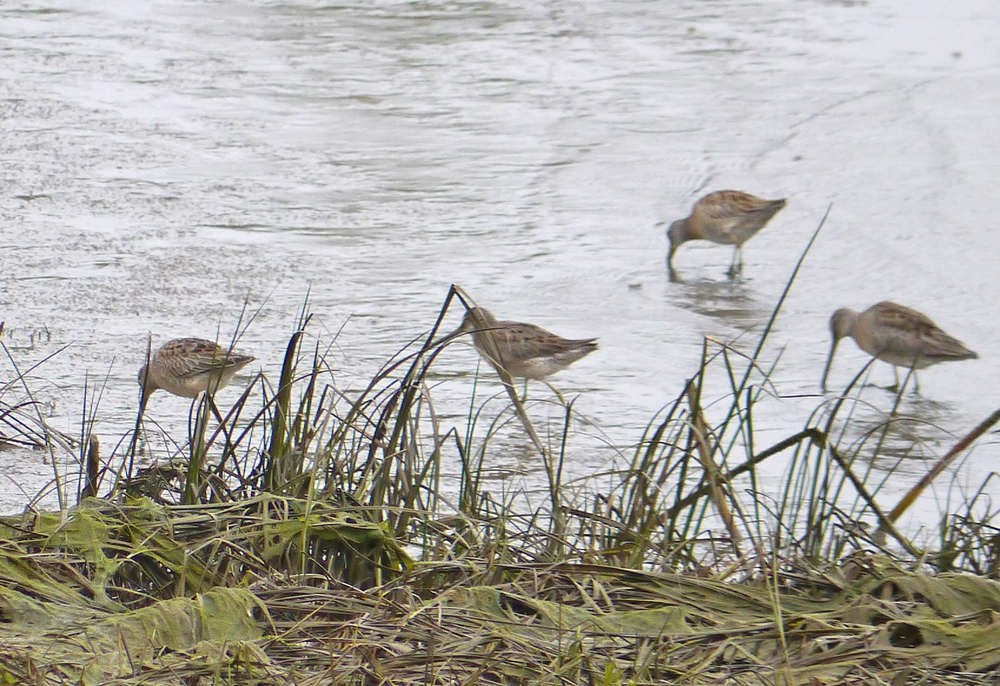
Dowitchers in Lagoon
Several dowitchers were foraging in the Airpark Lagoon, along with several Hooded Mergansers. Once a sewage pond for the City of Courtenay, this area was opened back up to the estuary 20 years ago & re-naturalization began. A current proposal is to connect the lagoon to the river to allow tidal water to flow through once again.
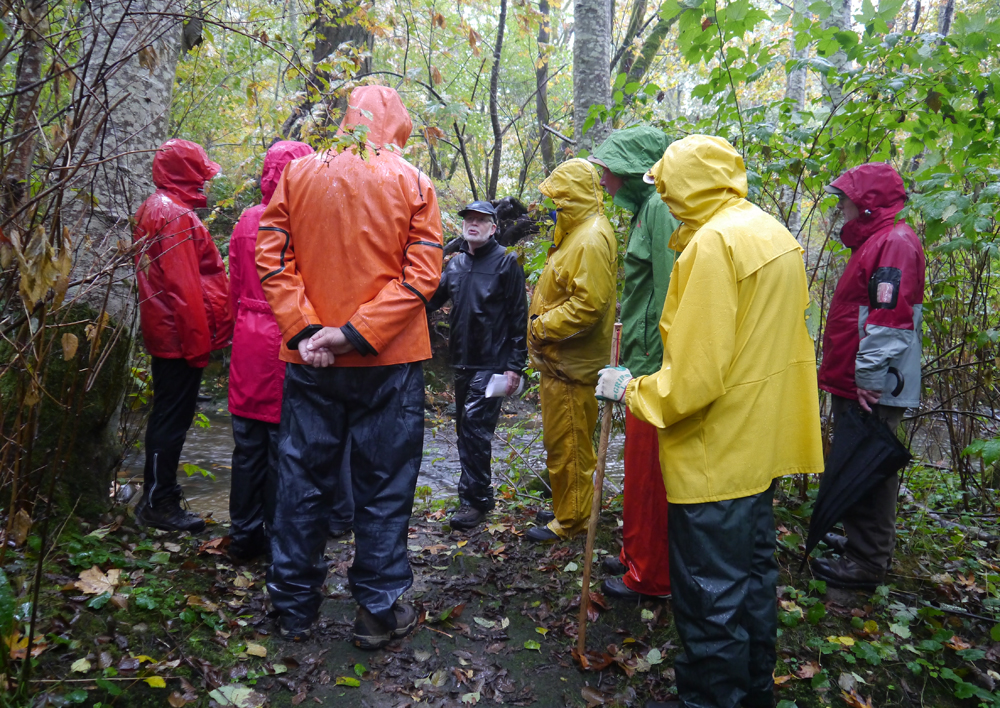
Millard Conservation Area
Farther downstream, a flock of dozens of Common Mergansers braved the winds at the Millard Estuary. In the more sheltered woods of the Millard Conservation Area, Steve Williams of the Millard-Piercy Watershed Stewards pointed out the largest cottonwood in the area. At the fish counting weir, he explained the fish & water quality monitoring of the Stewards & their efforts to deal with increasing urban impacts in the watershed.