BC Nature Scholarship deadline for submissions – June 2, 2017
FGM 2017 – Your hosts North Okanagan Naturalists invite you to join them for “Lakes, Grasslands, Forests” in Vernon, September 21 – 23, 2017. Registration information will be in the Summer Magazine and on the BC Nature Website.
Nature-lovers across BC are expressing concern over a proposed new method for managing wildlife in the province. Speaking on behalf of BC Nature, the federation of naturalist clubs across BC, president Dr. Alan Burger said “Our members are alarmed by recent statements by government ministers indicating that wildlife management might be handed over to an external agency supported by special interest groups, specifically hunters and guide-outfitters”. This model of wildlife management will undoubtedly work against the interests of the vast majority of British Columbians, added Burger. For the complete press release, please follow this Link
Issue 58
Date April 2017
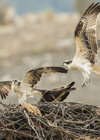
Young Osprey – Lillooet
BCnature Summer Magazine
Members receiving or downloading “electronic” pdf versions of our magazine, you will be notifed after the long weekend in May of the availability of the Summer Magazine. Members receiving Canada Post versions (Paper) – can expect to see the magazine in their mailboxes by the first week of June.
About Town Events and outings in your area!
March for Science Vancouver is a local satellite march for the global phenomenon March for Science taking place on April 22, 2017 (Earth Day). We want to ensure that the march is inclusive, with scientists and science supporters from a wide range of disciplines and backgrounds. Website for more information or search Facebook for March for Science.
Children and Nature Network Conference April 18-21, 2017, For Events Listing
Interesting Links, Articles and Websites
From the Prince George Citizen – Birding updates from Prince George Article Link
From Coast Mountain News – Ooligan Grease Camp – Bella Coola Article Link
New Species added to the Species at Risk Act (Good news that protection is now afforded these species, bad news that we have to have this protection at all!) Link to Nature Canada Website
Spring brings increasing interest in bat health and public reports of bats
Fortunately for the bats of BC, it has been a quiet winter. The BC Community Bat Program, in collaboration with the Province of BC, is on the lookout for signs of White-Nose Syndrome (WNS). WNS is a fungal disease harmless to humans but responsible for the deaths of millions of insect-eating bats in eastern North America. WNS was first detected in Washington State in March 2016. To monitor the spread of this disease, Community Bat Program coordinators have been collecting reports of unusual winter bat activity across southern BC and ensuring that dead bats are sent to the Canadian Wildlife Health Centre lab for disease testing. To-date, no WNS has been reported in the province.
We are asking the public to report dead bats or any sightings of daytime bat activity to the Community Bat Project (CBP) as soon as possible (1-855-922-2287 ext 24 or )” says Mandy Kellner, coordinator of the BC Community Bat Program. Reports of unusual bat activity will help focus research, monitoring and protection efforts. How can you help? Through Citizen Science, please visit Link
News From Our Peace Region
From the Fish and Wildlife Compensation program
$2.2 million for fish and wildlife Caribou, bats, migratory birds, moose, Bull Trout, Arctic Grayling, and wetland and riparian species will benefit from the 26 projects approved by our Peace Region Board. Work will continue this year as part of our multi-year project to gather data on mercury levels in fish in the Williston and Dinosaur reservoirs. We will also continue our multi-year project to investigate limiting factors affecting moose in the Peace Region, alongside the Provincial moose study. Our Peace Region Board approved approximately $2.2 million for fish and wildlife projects. Read our 2017 – 2018 project list.
More than 100 projects across B.C. A total of 102 fish and wildlife projects, valued at $9.4 million, have been approved by our three regional Boards. The conservation and enhancement projects will start after April 1, 2017 in our Coastal, Columbia and Peace Regions, and conclude by March 2018. Each one went through a three-stage review and evaluation process. And each project addresses one or more conservation priorities from our action plans.
BC Nature AGM and FGM Conferences
For members who have not entertained attending a BC Nature Annual General Meeting (AGM) or Fall General Meeting (FGM) – you’re missing out on some great nature education, presentations and even greater field trips (walks and talks.)
The misnomer in our “conferences” is that participants are not trapped in meetings all day. Instead, the host BC Nature Club transforms these meeting rooms into presentation class rooms and then extends these classrooms to the great “out of doors.” Our BCN club members (local experts) lead walks and talks in their local parks and surrounding area on a variety of nature topics.
A day of presentations from experts in their fields, on a variety local nature topics, followed by a day and a half of field trips are the norm on these conference weekends.
Not to mislead you, there are a few hours of business that must be conducted in order that we carry on as a Society, but even these meetings are very enlightening for nature! Lively discussions on Conservation of Nature and other Nature Related topics are the norm at these meetings.
Think about attending one of these great conferences in the future. What a chance (from a Naturalists Point of View) to be educated on the area of our host BC Nature club town!
Fish Walk!!! ( Well, not really...but don't miss this chance to follow their journey!)Join the Morrison Creek Streamkeepers for a walk along Morrison Creek, starting at its confluence with the Puntledge River in Puntledge Park, to watch salmon spawning after their remarkable journey back from the ocean. Register here: form.jotform.com/262924316992264...
Thanks to community support, a property in Deep Bay is now protected, safeguarding its mature forests, salmon streams and diverse shoreline.Now, we’re helping restore this land so it can regenerate into a healthy forest.Join the Comox Valley land Trust and WolfTree for a hands-on day to rehabilitate the former homestead by planting trees and shrubsIf you'd like to volunteer your time, the work party is Sunday, October 25th, from 10:00 am to 3:00 pm.Meet at Rosewall creek Provincial Park parking lot at 9:50 to carpool to the deep bay restoration site.See this link or link in bio to register and for more information: www.jotform.com/form/262826298698277...
Comox Valley Nature’s Wetlands restoration group has been working on the Courtenay Rotary Trail removing invasive plants.Removing invasive plants ensures that native plants can thrive. A vigorous native plant population also provides food for insects and birds.Join us in liberating native plants from invasive thugs such as ivy.We meet at the end of 21st street in Courtenay, where it meets the Courtenay Rotary Trail near Dogwood Park. You’ll find us there every Sunday starting Oct 18 to mid-Dec, mid-Jan to March 14, from 1:00 to 3:30 Bring gloves and water, dress for the weather and wear sturdy shoes.For more information contact ...
Many people fear trees, especially big trees, and old trees. Join us on this guided walk and overcome those fears. Verna Mumby (ISA certified arborist), will take us through the basics of tree bio-mechanics; how trees dance and move, how they withstand wind loads, and the importance of tree roots. Understand how trees help each other during storms and how they communicate. This walk will take place in Filberg Park, Comox, on October 17th, from 11 a.m. to 12:30.This walk is on flat ground, on grass and well maintained paths. Check the weather and choose appropriate outerwear. The workshop will be cancelled in the event of strongwinds and heavy rain.REGISTRATION required using the link in our bio, or visit cvnature.ca/events/This event is free. Donations welcome.For more information, to add your name to a waitlist or to cancel your reservation, mail: . Details re meeting place will be sent to registrants. ...
Autumn is fast upon us, and the trees in the Comox Valley are beginning their transition into the winter season. CVN’s Comox Valley Trees team (formerly Trees of the Year) is inviting you to share how your favourite trees are changing with the season and preparing for the winter ahead. It could be a brilliant display of autumn foliage, a production of fruit, nuts or berries, or as a winter haven for wildlife. As the leaves fall, do they reveal an interesting or unique tree architecture, shape or silhouette? Perhaps you have discovered trees of interest in forgotten spaces or unusual or unexpected places, or trees with fungi or lichen.Send us the story of why you selected your tree of note. Include a brief description of the tree, a photograph, and the geographical location of the best viewing spot. Ideally the tree is in a public location to facilitate viewing.Please send your story to We will share your stories on our website and on CVN’s Facebook and Instagram pages.Also, be sure to check CVN’s Events calendar regularly for other Comox Valley Trees events such as knowledge walks.#treestories #comoxvalley#comoxvalleytrees #autumn...